
Chicken Prego Rolls
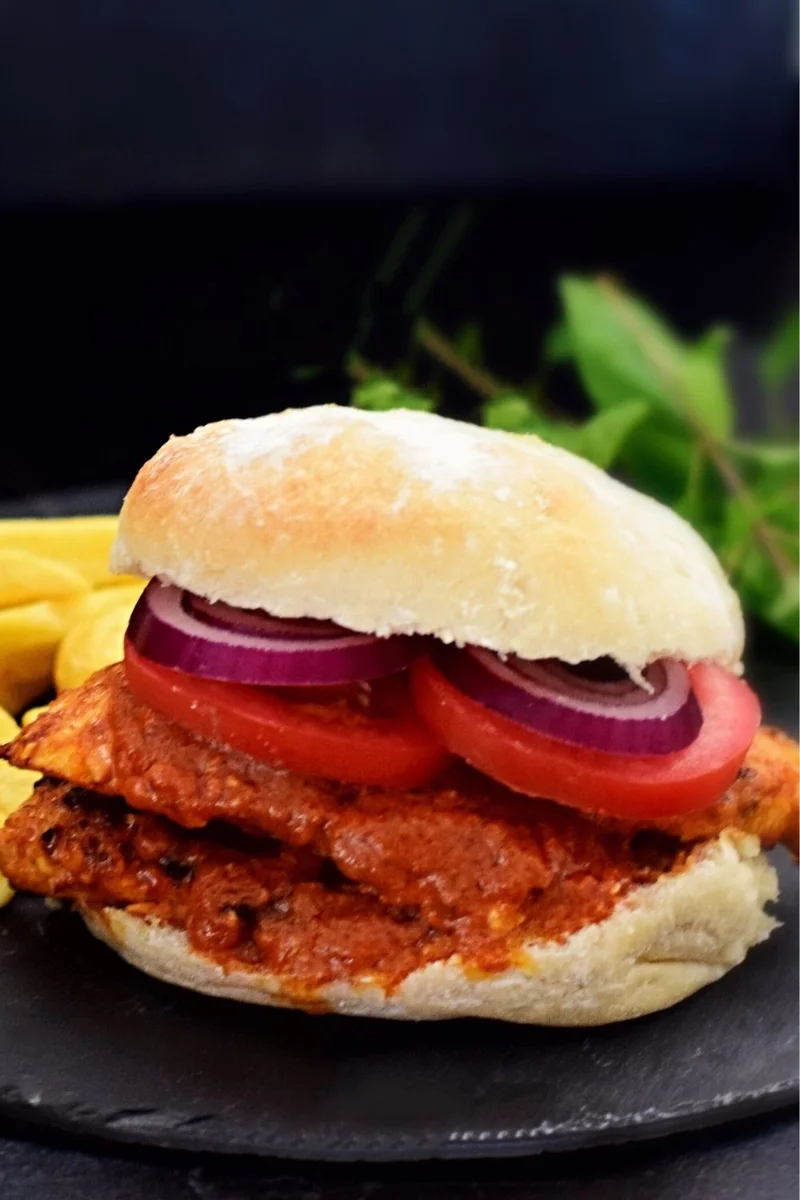
These Chicken Prego Rolls pair pan-fried, harissa- and peri-peri-marinated chicken with soft Portuguese rolls, tomato and onion. Make them for a filling, hands-on lunch or an easy dinner with a spicy, tangy sauce.
Ingredients
- 8Portuguese rolls
- 8chicken breasts
- to tastetomato
- to tasteonion
- 2 tbsp (30 ml)harissa paste
- ¼ cup (60 ml)peri-peri sauce
- ½ cup (120 ml)tomato sauce or passata
- 3 tbsp (45 ml)fresh lemon juice
- 3 tbsp (45 ml)olive oil
- 1 tsp (5 ml)sugar
- 1 tsp (5 ml)salt
- 3 large clovesgarlic, minced
Instructions
- 1
Mix the sauce
Combine the ingredients for the Prego sauce in a bowl and mix thoroughly.
- 2
Flatten the chicken
Put each chicken breast between plastic wrap or in a zip-lock bag. Using the flat side of a meat mallet, gently pound from the centre out towards the edges.
- 3
Marinate the chicken
Reserve some sauce for later. Put the chicken breasts in a bowl, pour the rest of the marinade over them and refrigerate for 1 hour.
- 4
Fry the chicken
Heat 3 tbsp oil in a large pan over high heat. Fry 2 chicken breasts at a time, depending on the size of your pan, for 1½ minutes on each side, ensuring they are fully cooked. Baste with the reserved sauce. Cook the remaining 6 breasts in the same way, adding more oil if needed.
- 5
Build the rolls
Halve the rolls and place the chicken on one half of each. Drizzle with more sauce if you like; peri-peri sauce also works well. Add sliced onion and tomato, then close each roll with its other half.
What are Chicken Prego Rolls?
A prego is a Portuguese sandwich traditionally associated with steak; this version uses chicken instead. It brings together a seasoned, hot-fried filling and a soft roll with fresh tomato and onion.
Sauce balance: Harissa and peri-peri bring heat, while tomato and lemon add tang. Setting some sauce aside gives you extra to baste the chicken and drizzle over the assembled rolls.
Nutrition and macros by portion
The nutrition label shows one serving as written: 450 calories, 40g protein, 48g carbs, 13g fat.
| Portion | Adjustment | kcal | Protein | Carbs | Fat |
|---|---|---|---|---|---|
| Lighter | More salad, less bread | 315 kcal | 28g | 34g | 9g |
| This serving | As written | 450 kcal | 40g | 48g | 13g |
| Hungry | Add an extra roll | 675 kcal | 60g | 72g | 20g |
The chicken supplies most of the protein, while the rolls provide much of the carbohydrate. Olive oil and the sauces contribute fat, and the rolls and sauces also add to the overall energy and salt. Balance the plate with salad or vegetables alongside a roll.
The sauce and marinade
Mixing: Stir the sauce ingredients together before adding them to the chicken so the garlic, seasonings and spicy sauces are distributed evenly.
Marinating: The chicken rests in the fridge for 1 hour. Keep the portion reserved for basting separate from the raw-chicken marinade.
Get even pieces of chicken
Flattening: Pounding the breasts gently from the centre towards the edges helps them cook more evenly in the brief frying time. Use the flat face of the mallet and stop once the pieces are a more uniform thickness.
Frying and doneness
Small batches: Fry 2 breasts at a time, or fewer if the pan is crowded. The method gives 1½ minutes per side, but the chicken must be fully cooked before serving; cooking time can vary with thickness and pan heat.
Basting: Brush or spoon on the reserved sauce as the chicken cooks. Avoid using sauce that has been in contact with raw chicken unless it is thoroughly cooked.
Assembling the rolls
Fresh topping: Slice the tomato and onion while the chicken cooks, then add them to the roll with the chicken. Their fresh texture contrasts with the warm filling.
Sauce: Add extra reserved sauce or peri-peri sauce to taste. Use a light drizzle if you want the bread to stay easier to hold.
What to serve alongside
A simple green salad or a serving of cooked vegetables works well alongside the rolls. For a more substantial meal, serve them with chips or roasted potatoes.
Recipe notes & tips
- Pound the chicken gently so the pieces cook evenly without tearing.
- Keep the reserved sauce separate from the marinade that touches raw chicken.
- Fry in batches that leave space around each breast.
- Slice the tomato and onion thinly so they sit neatly in the rolls.
- Taste the sauce before marinating and adjust the heat with the peri-peri sauce you use.
Variations
- Milder sauce: Reduce the peri-peri sauce and add more tomato sauce.
- Extra lemon: Add a little more lemon juice to the sauce for a brighter tang.
- More crunch: Add crisp lettuce to the rolls with the tomato and onion.
- Cheesy filling: Add a slice of cheese to each roll while the chicken is hot.
- Sauce on the side: Serve extra peri-peri sauce separately so everyone can adjust the heat.
Common mistakes to avoid
- Crowded pan: The chicken can cook unevenly; fry just 2 breasts at a time or fewer if needed.
- Uneven thickness: Thick sections may take longer to cook; pound the breasts gently towards an even thickness.
- Using all the sauce as marinade: There will be none left for basting; set some aside before adding the rest to the chicken.
- Guessing doneness from time alone: Check that the thickest part is fully cooked, as breast size and pan heat vary.
- Soggy rolls: Too much sauce can soak the bread; drizzle it on gradually just before serving.
How to store
Refrigerate leftover cooked chicken in a covered container within 2 hours and use within 3 days. Store the chicken separately from the rolls and fresh toppings, then reheat the chicken until piping hot before assembling.
Frequently asked questions
How long should the chicken marinate?
The method specifies 1 hour in the refrigerator. Keep it chilled while it marinates.
Can I use chicken thighs instead?
Yes, but they may need a different cooking time depending on their size and thickness. Make sure they are fully cooked before serving.
Can I make the sauce ahead?
You can mix the sauce ahead and keep it covered in the fridge. Set aside the portion for serving or basting before it comes into contact with raw chicken.
How can I make the rolls less spicy?
Use less peri-peri sauce and choose a milder version if available. Keep extra sauce on the side so diners can add it to taste.
Can I cook the chicken without a frying pan?
The method is written for frying in a pan. If using another cooking method, allow for different timings and check that the chicken is fully cooked.
Cook it from the original
This recipe comes from tamarindnthyme.com. Their page has the author’s own photos, notes and tips — the best place to cook it from.
Open the recipe on tamarindnthyme.com