
Rice Paper Dumplings with Hoisin Sauce
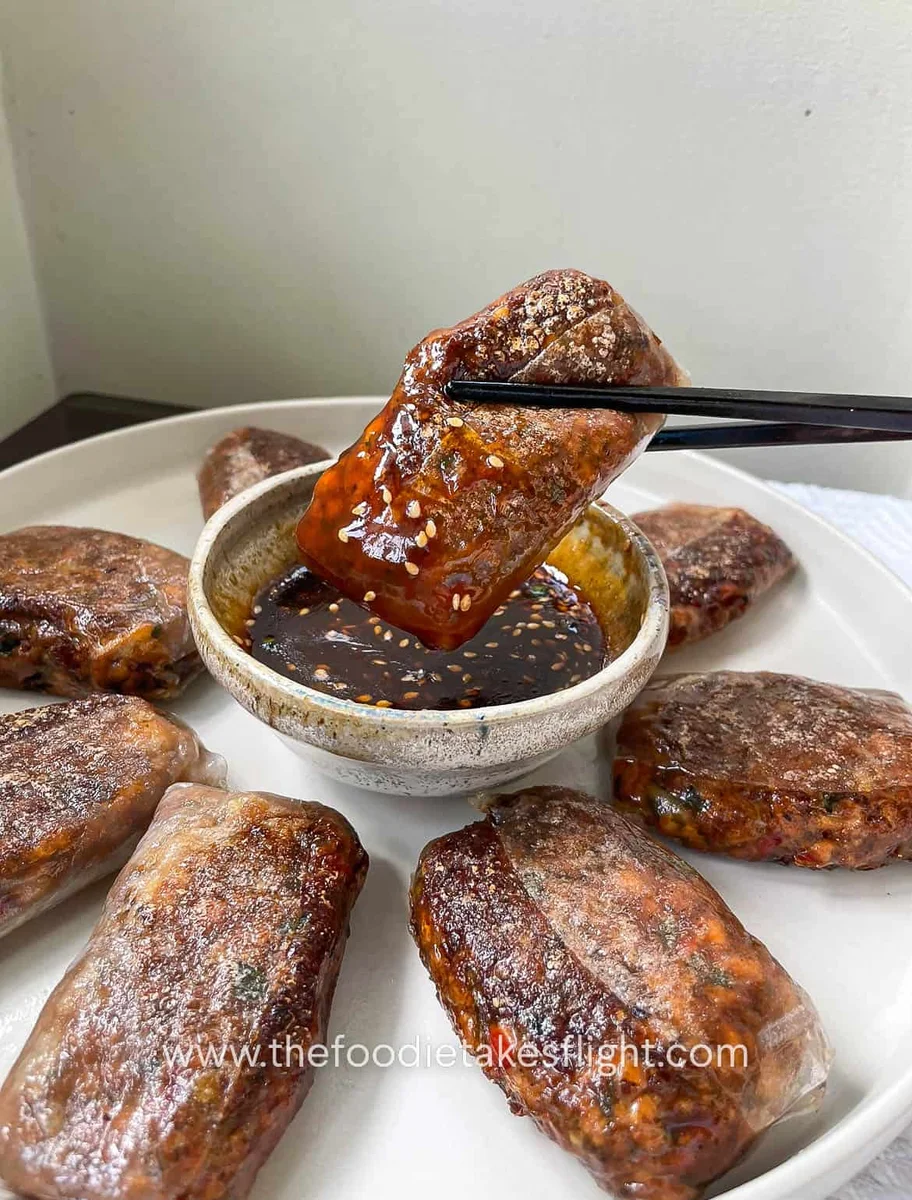
Crisp pan-fried rice paper dumplings filled with tofu, mushrooms and vegetables, served with a tangy, savoury hoisin dipping sauce. They bring together dumpling-style filling and the chewy wrapper of spring rolls, with a pan-fried finish that is straightforward to cook at home.
Ingredients
- ½ mediumred onion, diced
- 1spring onion, chopped
- 1 smallcarrot, peeled
- 4 leavescabbage
- 147 g (5.2 oz)fresh mushrooms of your choice
- ½ smallred pepper
- 255 g (9 oz)extra-firm tofu, drained and pressed
- 7.5 ml (½ tbsp)neutral oil
- 30–45 ml (2–3 tbsp)vegetarian oyster sauce
- 7.5 ml (½ tbsp)dark soy sauce
- A dashground black pepper
- 10–15 ml (2–3 tsp)sesame oil
- 24 g (3 tbsp), or more as neededcornflour
- 30 ml (2 tbsp)hoisin sauce
- 22.5 ml (1½ tbsp), adjust to tasterice vinegar
- 15 ml (1 tbsp)soy sauce
- 10–15 ml (2–3 tsp)chilli oil
- 5 ml (1 tsp), adjust to tastesugar
- 2.5 ml (½ tsp)sesame seeds
- To tastespring onion, chopped
- 15 sheetsrice paper
- As neededneutral oil
Instructions
- 1
Prepare vegetables
For a quicker filling, pulse the carrot, onion, cabbage, mushrooms and red pepper in a food processor. Process them separately or together; finely chopped vegetables are easier to pack into the dumplings.
- 2
Cook the vegetables
Heat ½ tbsp neutral oil in a large non-stick pan over medium heat. Add the red onion and spring onion and sauté for 1–2 minutes, until tender and aromatic. Add the remaining chopped vegetables and cook for 3–4 minutes, letting them soften and excess water evaporate.
- 3
Season the filling
Crumble the tofu into the pan. Stir in the vegetarian oyster sauce and dark soy sauce, then cook over medium heat for 4–5 minutes so excess moisture evaporates and the tofu takes on a minced texture. Taste and add more vegetarian oyster sauce if desired, then finish with the sesame oil.
- 4
Bind and cool
Transfer the filling to a bowl and mix in the cornflour. Check that a spoonful can be shaped and holds together, adding more cornflour if needed. Leave the filling to cool before assembling the dumplings.
- 5
Mix the sauce
Combine the hoisin sauce, rice vinegar, soy sauce, chilli oil, sugar and sesame seeds in a small bowl. Taste and adjust the seasoning to your preference.
- 6
Wrap the dumplings
Set out a large bowl of room-temperature water and lightly oil a plate or other flat surface. Quickly dip one rice paper sheet so the whole surface is wet, then lift it out and let excess water drip off. Place it flat and leave it for a few seconds to soften; if it is still too dry, it may tear.
- 7
Fill and fold
Spoon one heaped tablespoon of filling just below the centre of the rice paper and press it into a compact shape. Fold the bottom edge over the filling, pressing down, then fold in the left and right sides. Fold the dumpling towards the top and seal it firmly, then set it on the oiled surface. Repeat with the remaining filling and rice paper to make 15 dumplings.
- 8
Pan-fry dumplings
Heat a large non-stick pan over medium heat. Arrange the dumplings with the thicker, more solid-white wrapper side down and cook for 3–4 minutes, until bubbles appear and the base is crisp. Turn them over and cook the other side until crisp; the thinner wrapper side will need less time. Cook in 2–3 batches if needed, and serve freshly cooked with the hoisin sauce or another dipping sauce.
- 9
Reheat leftovers
Store leftovers in an airtight container for up to 1 week. Reheat in a pan or air fryer until warmed through and lightly crisp on the outside.
What are rice paper dumplings?
These are pan-fried parcels inspired by Chinese-style dumplings and Vietnamese fresh and fried spring rolls. Their rice paper wrapper turns chewy inside and crisp at the edges when cooked in a pan.
This version uses a vegetable-and-tofu filling and a hoisin-based dipping sauce. Finely chopping the filling helps it pack neatly into the wrapper.
Nutrition and macros by portion
The nutrition label shows one serving as written: 54 calories, 2g protein, 5g carbs, 3g fat.
| Portion | Adjustment | kcal | Protein | Carbs | Fat |
|---|---|---|---|---|---|
| Lighter | Use less dipping sauce | 38 kcal | 1g | 4g | 2g |
| This serving | As written | 54 kcal | 2g | 5g | 3g |
| Hungry | Serve a larger portion | 81 kcal | 3g | 8g | 5g |
The rice paper and vegetables contribute most of the carbohydrates, while the tofu supplies much of the protein. The cooking oil, sesame oil and chilli oil are the main sources of fat. For a more balanced plate, serve a portion with a generous side of greens or salad.
A filling that holds together
Vegetables: Carrot, cabbage, mushrooms and pepper provide a varied filling, while the onion and spring onion are softened first for flavour.
Tofu: Pressed extra-firm tofu is crumbled into the pan and cooked until excess moisture has evaporated, giving the filling a more compact texture.
Cornflour: Stir it through once the filling is transferred to a bowl. A spoonful should hold its shape when pressed; add a little more cornflour if it does not.
Manage the moisture
Cook the chopped vegetables for 3–4 minutes, then give the tofu its full 4–5 minutes in the pan. Evaporating excess liquid at these stages makes the filling easier to fold and less likely to make the wrappers soggy.
Let the filling cool before shaping. Warm filling can soften the rice paper before the dumplings reach the pan.
Handle rice paper gently
Dip each sheet quickly rather than soaking it. Rice paper continues to soften after it leaves the water, so a brief rest on the work surface makes it pliable without turning it too fragile.
Pack the filling firmly and fold the wrapper around it with even pressure. Lightly oil the plate where you set each dumpling to help prevent sticking.
Look for a crisp base
Start with the thicker, more solid-white side facing down. Cook over medium heat for 3–4 minutes and look for bubbles and a crisp base before turning.
The thinner side crisps more quickly, so keep an eye on it after flipping. Work in 2–3 batches if the pan is crowded; the dumplings need room to brown.
Serve straight from the pan
These dumplings are at their best freshly cooked, when the exterior is crisp and the centre remains chewy. Serve them with the hoisin, vinegar, soy and chilli oil dip.
Offer extra chopped spring onion or another dipping sauce at the table if you like. A simple side of steamed greens or a fresh salad can round out the meal.
Recipe notes & tips
- Press the tofu well before cooking so there is less moisture to evaporate in the pan.
- Pulse the vegetables briefly so they are finely chopped but not turned into a purée.
- Taste the filling before adding cornflour and adjust the vegetarian oyster sauce as needed.
- Keep the rice paper dip brief; the sheet will soften further as it rests.
- Oil the plate where you place wrapped dumplings to make them easier to lift.
- Cook in batches if necessary so the dumplings have space to crisp.
Variations
- More heat: Add extra chilli oil to the dipping sauce.
- Milder dip: Leave out the chilli oil and adjust the vinegar and sugar to taste.
- Different mushrooms: Use another fresh mushroom variety in the same quantity.
- Extra greens: Add more finely chopped cabbage to the filling and cook off its moisture.
- Alternative dip: Serve the dumplings with another dipping sauce of your choice.
Common mistakes to avoid
- Soaking the rice paper: It can become too fragile; dip each sheet quickly and let it soften on the work surface.
- Filling while warm: Warm filling can soften the wrappers; cool it before assembling.
- Leaving excess liquid: The filling may be difficult to shape; cook the vegetables and tofu until the moisture evaporates.
- Overfilling the wrappers: They can be difficult to seal; use one heaped tablespoon and compress it firmly.
- Crowding the pan: The dumplings may not crisp evenly; cook them in 2–3 batches if needed.
- Turning too soon: The base may not have crisped; wait for bubbles and a crisp underside before flipping.
How to store
Keep leftovers in an airtight container in the fridge for up to 1 week. Reheat in a pan or air fryer until warmed through and lightly crisp on the outside; the wrappers are best freshly cooked.
Frequently asked questions
Can I make these dumplings ahead?
The filling can be prepared ahead and cooled before use. The dumplings are best cooked just before serving, as the rice paper wrapper is at its crispest then.
Can I air-fry the dumplings?
The recipe recommends pan-frying for a crispier exterior. Leftovers can be reheated in an air fryer until warm and lightly crisp.
How do I stop the rice paper tearing?
Dip it quickly rather than soaking it, then give it a few seconds on the work surface to soften. If it still feels too dry, let it rest briefly before folding.
Why is my filling too wet?
The vegetables or tofu may need more time in the pan. Cook until excess moisture has evaporated, then check that a spoonful holds together after adding the cornflour.
How many dumplings does this make?
The listed quantities make 15 dumplings.
What can I serve with them?
Serve them with the hoisin-based dipping sauce, or another dip of your choice. Steamed greens or a fresh salad make a simple accompaniment.
Cook it from the original
This recipe comes from thefoodietakesflight.com. Their page has the author’s own photos, notes and tips — the best place to cook it from.
Open the recipe on thefoodietakesflight.com