
Easy Greek Orzo Salad
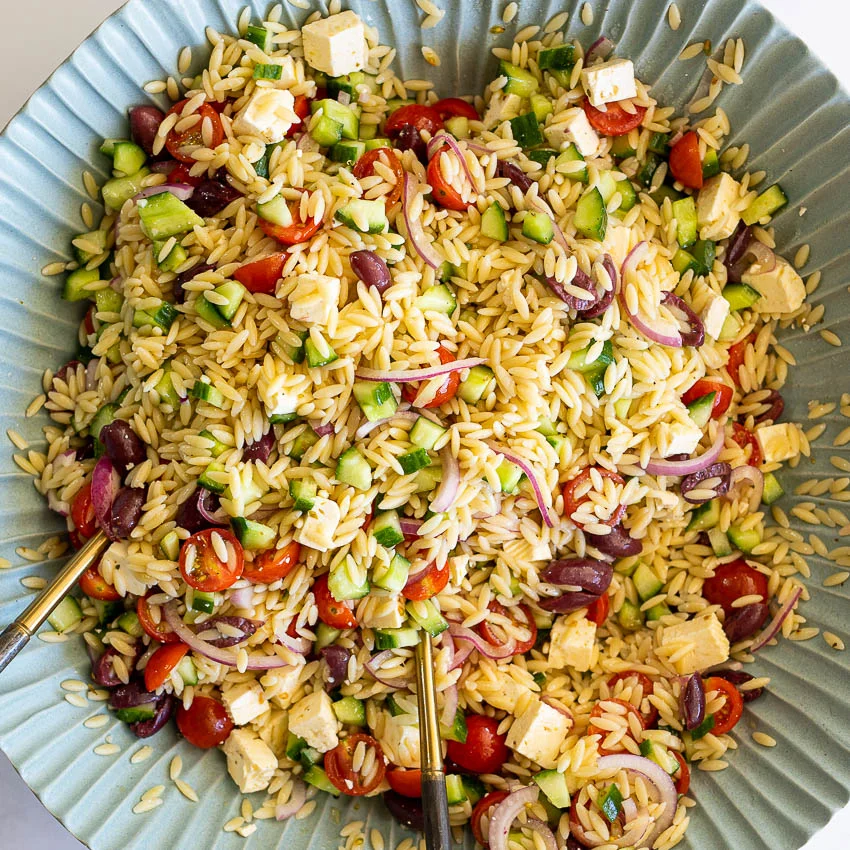
This Greek-style orzo salad combines pasta, crisp cucumber, tomatoes, Kalamata olives and feta with a bright homemade vinaigrette. It comes together in about 25 minutes and works well as a make-ahead lunch or a side for a shared meal.
Ingredients
- 500 g (1 lb)orzo pasta
- 1 largeEnglish cucumber
- 500 g (1 lb)cherry tomatoes
- 1red onion
- 200 g (7 oz)Kalamata olives
- 200 g (7 oz)feta cheese
- 60 ml (¼ cup)extra virgin olive oil
- 30 ml (2 tbsp)red wine vinegar
- 30–45 ml (2–3 tbsp), to tastefresh lemon juice
- 1 clove, mincedgarlic
- 1 tspdried oregano
- 2 tspsalt
- 1 tspblack pepper
Instructions
- 1
Boil the water
Bring a large pot of salted water to the boil.
- 2
Cook the orzo
Add the orzo and cook for 8–10 minutes, or follow the packet instructions, until al dente.
- 3
Drain and rinse
Drain the orzo, rinse it under cold water and set it aside.
- 4
Chop the vegetables
Chop the cucumber, tomatoes and red onion. If your olives are not pitted, remove the stones.
- 5
Cube the feta
Cut the feta into cubes, then put it in a large bowl with the orzo and the other ingredients.
- 6
Mix the dressing
Whisk together all the dressing ingredients. Alternatively, shake them in a jar; the dressing can be kept in the refrigerator for up to 5 days.
- 7
Toss and serve
Pour the dressing over the salad and toss until everything is well combined. Serve immediately.
What is Greek orzo salad?
Orzo is a small, rice-shaped pasta used in dishes across the Mediterranean, including Greek cooking. In this salad, it takes the place of a grain while the familiar Greek-inspired pairing of feta, olives, tomatoes and cucumber brings salty, fresh and tangy flavours.
The recipe works because the pasta is cooked until just firm, then cooled before being tossed with the vegetables and dressing. That keeps the salad easy to serve and gives the vinaigrette a chance to coat each piece.
Nutrition and macros by portion
The nutrition label shows one serving as written: 336 calories, 15g protein, 37g carbs, 15g fat.
| Portion | Adjustment | kcal | Protein | Carbs | Fat |
|---|---|---|---|---|---|
| Lighter | Less oil, more cucumber | 235 kcal | 11g | 26g | 11g |
| This serving | As written | 336 kcal | 15g | 37g | 15g |
| Hungry | Larger orzo portion | 504 kcal | 23g | 56g | 23g |
The orzo provides most of the carbohydrates, while olive oil and feta contribute much of the fat; feta also adds protein, alongside the pasta. For a more balanced plate, pair a serving with extra vegetables or a source of lean protein.
Choosing the ingredients
Orzo: Look for the small, rice-shaped pasta and check the packet for its recommended cooking time. The stated 8–10 minutes is a guide; the texture is more important than the clock.
Olives and feta: Kalamata olives bring a briny note, while feta adds a creamy, salty contrast. If the olives are not already pitted, remove their stones before adding them.
Getting the pasta right
Al dente: Taste the orzo near the end of its cooking time; it should be tender but still have a slight bite. Overcooked pasta can become soft when mixed with the dressing.
Cooling: Rinse the drained pasta with cold water as directed. This stops the cooking and cools it for the salad; let it drain well so excess water does not dilute the vinaigrette.
Preparing the vegetables
Even pieces: Chop the cucumber, tomatoes and onion into pieces that are easy to eat alongside the small pasta. Smaller, fairly even pieces help distribute the ingredients through the bowl.
Feta: Cube the cheese before combining it with the rest of the salad. Fold the mixture together gently if you want the cubes to stay distinct.
Balancing the vinaigrette
Acidity: Red wine vinegar and lemon juice provide the dressing’s sharpness, while olive oil rounds it out. Add 2 tablespoons of lemon juice first, then adjust towards 3 tablespoons to taste.
Seasoning: Garlic, dried oregano, salt and black pepper season the dressing. Whisk them with the oil and acids, or shake everything together in a jar until combined.
Serving the salad
Timing: The recipe says to serve the salad immediately after tossing, when the vegetables are crisp and the pasta is cool. If you prepare the dressing ahead, keep it refrigerated for up to 5 days and mix it again before using.
Pairing: Serve it alongside grilled vegetables, fish or chicken, or offer it as part of a spread with bread and other salads. It is substantial enough to work as a light lunch on its own.
Recipe notes & tips
- Check the orzo a minute before the packet’s suggested time is up so it does not lose its bite.
- Drain the rinsed pasta thoroughly before adding it to the bowl.
- Taste the dressing after whisking and adjust the lemon juice to suit your preference.
- Use pitted olives to save time, or remove the stones before mixing if needed.
- Cut the vegetables into similarly sized pieces for an even mix in each serving.
- If making the dressing ahead, store it in a sealed jar in the refrigerator for up to 5 days.
Variations
- Add herbs: Stir in chopped parsley or fresh oregano for an extra herbal note.
- Use a different tomato: Replace cherry tomatoes with chopped ripe tomatoes.
- Add leafy greens: Fold in a handful of chopped spinach just before serving.
- Make it more lemony: Add lemon juice gradually until the dressing has the tang you like.
- Try another olive: Use another pitted olive variety if Kalamata olives are unavailable.
Common mistakes to avoid
- Overcooking the orzo: Check it near the end of the cooking time and drain once it is al dente.
- Leaving pasta water behind: Drain the rinsed orzo well so it does not water down the dressing.
- Adding the dressing all at once: Pour it over the salad and toss thoroughly to coat the ingredients evenly.
- Forgetting olive stones: Check whether the olives are pitted and remove any stones before serving.
- Making the dressing too sharp: Start with 2 tablespoons of lemon juice and add more to taste.
How to store
Store leftover salad in a covered container in the refrigerator and eat within 3 days for the best texture. The pasta may absorb some dressing as it sits; toss before serving, and avoid reheating because this is intended to be served cold.
Frequently asked questions
Can I make Greek orzo salad ahead?
Yes. You can prepare the dressing up to 5 days ahead and keep it in the refrigerator. For the freshest texture, toss it with the salad close to serving.
Should I rinse the orzo after cooking?
Yes. This method calls for rinsing it under cold water to stop the cooking and cool the pasta before it goes into the salad.
How do I know when the orzo is al dente?
Taste a piece near the end of cooking. It should be tender but still have a slight firmness in the centre.
Can I use pitted olives?
Yes. The recipe allows for pitted olives; if yours still have stones, remove them before adding the olives to the bowl.
Can I serve this salad cold?
Yes. The pasta is rinsed with cold water before it is combined with the vegetables and dressing, so the salad is served cool.
Cook it from the original
This recipe comes from simply-delicious-food.com. Their page has the author’s own photos, notes and tips — the best place to cook it from.
Open the recipe on simply-delicious-food.com