
Easy Sarson Ka Saag (Stovetop & Instant Pot)
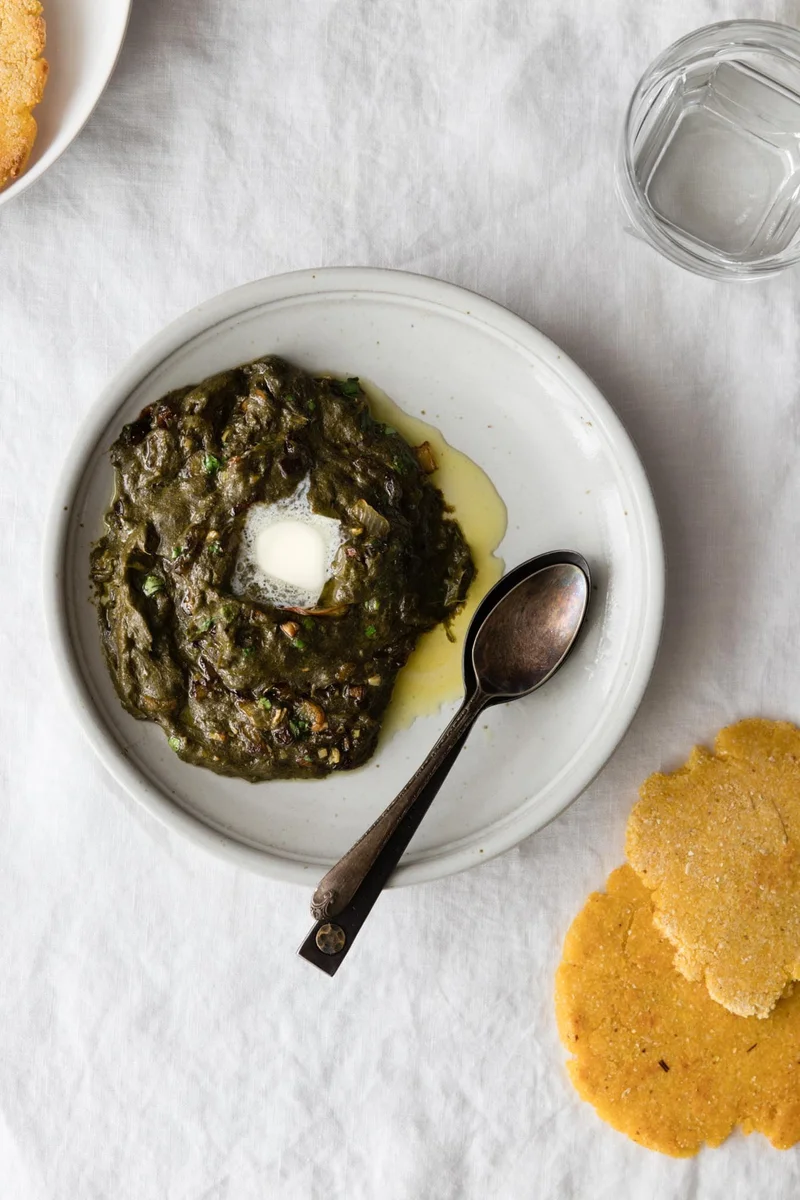
Sarson ka saag is a gently spiced Punjabi curry of mustard greens and spinach, finished with an onion, ginger and ghee tadka. This recipe gives you stovetop and Instant Pot methods for a comforting meal to serve with roti or another bread.
Ingredients
- 475 ml (2 cups)water, for the stovetop method
- 2 bunchesmustard greens, washed, tough stems removed and roughly chopped
- 1 bunchspinach, washed, tough stems removed and roughly chopped; or baby spinach or 140–170 g (5–6 oz) frozen spinach
- 3–4small Thai or bird’s-eye green chillies, stalks removed and roughly chopped
- 4–5garlic cloves, left whole to crush later
- ¼ tspturmeric powder
- 1¼ tspkosher salt
- 30 g (¼ cup)yellow corn flour or finely ground cornmeal; or chickpea flour (besan) or masa harina
- 1½ tbspdried fenugreek leaves (methi)
- 60 ml (¼ cup)neutral oil
- 3 tbspghee or butter, or more oil
- 1 smallonion, finely chopped
- 2 tbspminced ginger
- 2–3 tbspchopped coriander leaves
- 1 patbutter, for serving
Instructions
- 1
Stovetop method
Follow steps 2–6 for the stovetop version.
- 2
Simmer the greens
Heat a preferably non-stick 4.7-litre (5 qt) Dutch oven over medium heat. Add the mustard greens, spinach, chillies, garlic, turmeric, salt and 475 ml (2 cups) water; there is no need to mix. Cover and simmer for 1 hour.
- 3
Blend the saag
Turn off the heat, uncover and stir, crushing the garlic cloves as you go. Use an immersion blender, or transfer the mixture to a food processor, and blend to a rough purée. Remove any tough stems you find.
- 4
Add flour and fenugreek
Turn the heat to medium-high, add the corn flour and cook for 3–5 minutes to cook out its raw taste. Stir in the dried fenugreek leaves and taste, adding salt if needed.
- 5
Loosen the saag
Reduce the heat to low-medium and stir in 235 ml (1 cup) water, preferably boiling. Let the saag simmer while you make the tadka, stirring occasionally; add up to 120 ml (½ cup) more water if it needs thinning.
- 6
Make the tadka
Heat a medium frying pan over medium-high heat. Add the oil, ghee and onion; sauté until the onion is deep golden, about 6–8 minutes. Add the ginger and sauté for 1 minute, then stir the tadka into the saag. Mix in the coriander, add a pat of butter on top and serve with makai roti, regular roti, corn tortilla, naan or another bread.
- 7
Instant Pot method
Follow steps 8–12 for the Instant Pot version.
- 8
Pressure-cook the greens
Pour the water into the Instant Pot, then add the mustard greens, spinach, chillies, garlic, turmeric and salt; mixing is not necessary. Secure the lid, seal the vent and cook at High Pressure for 20 minutes. Let the pressure release naturally for at least 5 minutes, then manually release the rest. Press Cancel.
- 9
Blend the saag
Open the lid and stir the greens, crushing the garlic cloves as you go. Blend to a rough purée with an immersion blender, or transfer to a food processor. Remove any tough stems you find.
- 10
Add flour and fenugreek
Select Sauté and set it to High. Add the corn flour and cook for 3–5 minutes to cook out its raw taste, then stir in the dried fenugreek leaves.
- 11
Adjust the seasoning
Add 235 ml (1 cup) water, preferably boiling, and stir until it is absorbed into the saag. Taste and add salt if needed; if the mixture is too thick, add up to 120 ml (½ cup) more water. Press Cancel to turn off the Instant Pot.
- 12
Make the tadka
Heat a medium frying pan over medium-high heat. Add the oil, ghee and onion; sauté until the onion is deep golden, about 6–8 minutes. Add the ginger and sauté for 1 minute, then stir the tadka into the saag. Mix in the coriander, add a pat of butter on top and serve with makai roti, regular roti, corn tortilla, naan or another bread.
What is sarson ka saag?
Sarson ka saag is a Punjabi dish made by cooking mustard greens until tender and blending them into a thick, rustic curry. Spinach is often combined with the mustard leaves to round out their strong, slightly bitter flavour.
This version builds flavour in two stages: the greens are cooked and blended first, then finished with a hot onion-and-ginger tadka. Corn flour helps give the purée body, while dried fenugreek adds an earthy, fragrant note.
Nutrition and macros by portion
The nutrition label shows one serving as written: 237 calories, 1g protein, 11g carbs, 22g fat.
| Portion | Adjustment | kcal | Protein | Carbs | Fat |
|---|---|---|---|---|---|
| Lighter | Use less finishing butter | 166 kcal | 1g | 8g | 15g |
| This serving | As written | 237 kcal | 1g | 11g | 22g |
| Hungry | Serve with extra roti | 356 kcal | 2g | 17g | 33g |
The greens and corn flour provide most of the carbohydrates, while the oil, ghee and finishing butter account for much of the fat. The recipe lists little protein per serving, so serve it with a protein-rich accompaniment such as dal, alongside roti or another bread to make the plate more balanced.
Choosing and preparing the greens
Mustard greens: Remove the tough stems and roughly chop the leaves so they cook down more evenly. Their assertive flavour is the defining taste of the dish.
Spinach: This softens the mustard greens’ pungency and contributes to the curry’s smooth texture. Baby spinach can be used as a convenient alternative, and the recipe also lists frozen spinach as a substitute.
Cooking and blending
Stovetop: The greens, aromatics and seasonings simmer covered in water for 1 hour. The leaves should be cooked enough to blend into a tender, rustic purée.
Instant Pot: Pressure-cook the greens on High for 20 minutes, then allow at least 5 minutes of natural release before releasing the remaining pressure. Blend after cooking, and remove any tough stems you notice.
Getting the texture right
Corn flour: Cook it with the puréed greens for 3–5 minutes so it thickens the saag without leaving a raw flour taste. Stir regularly as you add it.
Water: The recipe adds 1 cup after the flour and fenugreek, with up to another ½ cup available if the mixture is too thick. Add the extra water gradually and stop when the saag is loose enough to stir comfortably.
The finishing tadka
Onion: Take the time to sauté it until deep golden, about 6–8 minutes; this is the main cue given for the tadka’s doneness. Add the ginger afterwards and cook for 1 minute.
Finish: Stir the tadka through the saag, then add the chopped coriander and a pat of butter. This final layer of aromatic oil and richness contrasts with the soft, earthy greens.
What to serve alongside
Traditionally minded pairings include makai roti, while regular roti, naan or a corn tortilla also work well for scooping up the thick curry. Choose the bread you have to hand and serve it warm.
For a fuller meal, pair the saag with a simple side of rice or another vegetable dish. Keep accompaniments relatively plain so the mustard greens and tadka remain the focus.
Recipe notes & tips
- Remove the tough mustard-green stems before chopping the leaves.
- Keep the garlic cloves whole during cooking so they can be crushed into the greens later.
- Blend to a rough purée rather than aiming for a completely smooth texture.
- Cook the onion until deep golden before adding the ginger.
- Add any extra water in small amounts so the saag does not become too thin.
- Taste after adding the fenugreek and adjust the salt before serving.
Variations
- Swap the spinach: Use baby spinach or the listed frozen spinach alternative.
- Change the flour: Use chickpea flour or masa harina in place of corn flour.
- Adjust the heat: Use fewer green chillies for a milder saag.
- Use more oil: Replace the ghee or butter in the tadka with additional neutral oil.
- Choose your bread: Serve with makai roti, regular roti, corn tortilla or naan.
Common mistakes to avoid
- Leaving tough stems in: Remove them before cooking, or pick them out after blending.
- Skipping the flour cooking: Cook it with the saag for 3–5 minutes to lose its raw taste.
- Adding all the extra water at once: Start with the stated cup and add more gradually only if needed.
- Rushing the onion: Sauté until deep golden, about 6–8 minutes, before adding the ginger.
- Blending too finely: Stop at a rough purée for the texture described in the recipe.
How to store
Refrigerate leftover saag in a covered container and use within 3–4 days. Reheat gently in a saucepan, stirring and adding a splash of water if it has thickened; add fresh butter when serving if desired.
Frequently asked questions
Can I make sarson ka saag without mustard greens?
Mustard greens give the dish its characteristic flavour, so replacing them will change the result. The recipe specifically offers baby spinach or frozen spinach as alternatives for the spinach, not as a full substitute for the mustard greens.
Can I use frozen spinach?
Yes. The ingredient list gives 140–170 g (5–6 oz) frozen spinach as an alternative to the fresh spinach. Add it with the other greens.
How do I know when the saag is thick enough?
It should be a thick, rustic purée that is easy to stir. Add the optional extra water gradually if it seems too stiff.
Can I make this in an Instant Pot?
Yes. Cook the greens at High Pressure for 20 minutes, wait at least 5 minutes for natural pressure release, then manually release what remains. Blend and finish the saag and tadka as directed.
What can I serve with sarson ka saag?
The recipe suggests makai roti, regular roti, corn tortilla, naan or another bread. These are useful for scooping up the thick greens.
Can I prepare the saag ahead?
You can cook and refrigerate it, then reheat gently before serving. Stir in a little water if it has thickened, and prepare the tadka for the finish.
Cook it from the original
This recipe comes from teaforturmeric.com. Their page has the author’s own photos, notes and tips — the best place to cook it from.
Open the recipe on teaforturmeric.com