
Bloomin’ Loaded Baked Potatoes
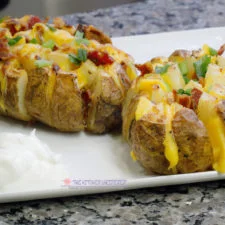
These blooming baked potatoes are cut into wedges that fan out as they cook, then filled with melted cheddar and crispy bacon. They make a hearty, hands-on side or a satisfying meal with a simple salad.
Ingredients
- 4 largeRusset baking potatoes
- 1 tablespoon (15 ml)olive oil
- 1–2 teaspoons (5–10 ml)kosher salt
- 4 slicescrispy bacon, crumbled
- 4–5 slicescheddar cheese, cut into smaller pieces
- to tastegreen onions, for garnish
- to tastesour cream
Instructions
- 1
Preheat the oven
Heat the oven to 200°C (400°F), with a rack in the middle. Line a rimmed baking sheet with foil.
- 2
Cut the potato tops
Lay one potato on its side and slice off a piece about 6 mm (¼ inch) from the top, making an oval opening.
- 3
Make the rings
With a small paring knife, make cuts into the top to form rings spaced about 6 mm (¼ inch) apart. Cut almost to the bottom, but do not pierce through the other side.
- 4
Cut the undersides
Turn the potato so it rests on the cut side. Use the tip of a sharp knife to make cuts all around, leaving an uncut rectangular section about 2.5 cm (1 inch) wide to help the potato bloom.
- 5
Repeat with potatoes
Turn the first potato back over, then repeat the cutting steps with the remaining potatoes.
- 6
Season the potatoes
Arrange the potatoes on the baking sheet with the oval ring-cut sides facing up. Drizzle with olive oil and sprinkle with salt.
- 7
Bake until tender
Bake for 45 minutes. Take the potatoes out, drizzle more olive oil over the tops and bake for another 10 minutes.
- 8
Add cheese and bacon
Carefully tuck the cheese pieces into the potato wedges without forcing them apart. Add the bacon and bake for 5 minutes, or until the cheese has melted.
- 9
Garnish and serve
Transfer the potatoes to plates and top with green onions. Serve the sour cream on the side.
What are blooming baked potatoes?
A blooming potato is cut so its sections open out during baking, much like a blooming onion. This version turns a familiar baked potato into a shareable, loaded dish with cheddar, bacon and fresh toppings.
The recipe relies on deep cuts that stop short of separating the potato. That intact section helps hold it together while the cuts fan open in the oven.
Nutrition and macros by portion
The nutrition label shows one serving as written: 570 calories, 19g protein, 71g carbs, 24g fat.
| Portion | Adjustment | kcal | Protein | Carbs | Fat |
|---|---|---|---|---|---|
| Lighter | Less cheese and sour cream | 399 kcal | 13g | 50g | 17g |
| This serving | As written | 570 kcal | 19g | 71g | 24g |
| Hungry | Larger potato portion | 855 kcal | 29g | 107g | 36g |
Most of the carbohydrates come from the potatoes, while the olive oil, cheddar, bacon and sour cream contribute much of the fat. The cheese, bacon and sour cream also provide some protein. Balance the plate with a green salad or vegetables alongside.
The potatoes and their cuts
Russet potatoes: their starchy flesh is suited to baking, while the skin helps the cut potato keep its shape.
Careful cutting: make the rings close together and cut almost to the bottom, but not through it. The uncut rectangular section on the underside is important for keeping the potato in one piece.
Getting the texture right
Oil and salt: drizzle the cut potatoes before baking so the exposed surfaces are seasoned and can brown. The second drizzle goes on after the first 45 minutes in the oven.
Doneness: the wedges should have opened and the potato should be tender. Take care when adding the cheese so you do not pry the wedges apart.
When to add the toppings
Cheddar and bacon: add these after the potatoes have baked for 55 minutes, then return them to the oven for 5 minutes. This short final bake melts the cheese without putting the toppings in for the full cooking time.
Green onions and sour cream: add the green onions after baking and serve the sour cream alongside, so the hot potato stays crisp around the edges.
Serving the potatoes
Serve them hot as a substantial side or as the centre of a casual meal. A crisp green salad or simply dressed vegetables make a fresh contrast to the cheese and bacon.
Put extra sour cream on the table if you like, and let everyone add it to their own portion.
Recipe notes & tips
- Choose potatoes of a similar size so they cook at roughly the same pace.
- Use a sharp, small knife to make the rings without cutting all the way through.
- Keep the rectangular section on the underside intact to help each potato hold together.
- Tuck the cheese gently into the cuts rather than pulling the wedges open.
- Serve soon after baking, while the cheese is melted and the potato edges are at their crispest.
Variations
- Use another cheese: Swap the cheddar for another cheese that melts well.
- Add extra herbs: Scatter chopped chives over the potatoes with the green onions.
- Make it meat-free: Leave out the bacon and finish with extra green onions.
- Add a little heat: Serve with sliced fresh chilli for a spicy topping.
- Serve with a salad: Pair each potato with crisp leaves and a sharp dressing.
Common mistakes to avoid
- Cutting right through: The potato may fall apart; stop just short of the bottom.
- Removing the support section: Leave the rectangular underside section uncut so the potato can bloom while staying attached.
- Forcing in the cheese: The wedges can break; ease the pieces into the openings.
- Adding toppings too early: Put the cheese and bacon on only after the first 55 minutes of baking.
- Skipping the second oil drizzle: Add it after 45 minutes, then bake for the additional 10 minutes.
How to store
Refrigerate leftovers in an airtight container for up to 3 days. Reheat in an oven at 180°C until hot; the microwave works too, though the potato skin will be softer.
Frequently asked questions
How do I keep the potatoes from falling apart?
Do not cut through the bottom, and leave the 2.5 cm (1 inch) rectangular section uncut as directed. Handle the potatoes gently when adding the cheese.
Can I prepare the potatoes ahead?
You can make the cuts ahead and keep the potatoes covered in the refrigerator until ready to bake. For the best texture, bake and add the toppings shortly before serving.
How can I tell when the potatoes are done?
They should have opened out, and the flesh should be tender when pierced with a knife. The recipe then adds the toppings for a final 5 minutes to melt the cheese.
Can I use a different type of potato?
Russets are the specified choice and their shape and starchy texture suit this method. Other large baking potatoes may work, but the result can vary with their size and texture.
Can I reheat leftovers?
Yes. Reheat them in the oven at 180°C until hot, or use a microwave for convenience; the oven is better for restoring some crispness.
Cook it from the original
This recipe comes from thekitchenwhisperer.net. Their page has the author’s own photos, notes and tips — the best place to cook it from.
Open the recipe on thekitchenwhisperer.net