
Peanut Noodles (Easy!)
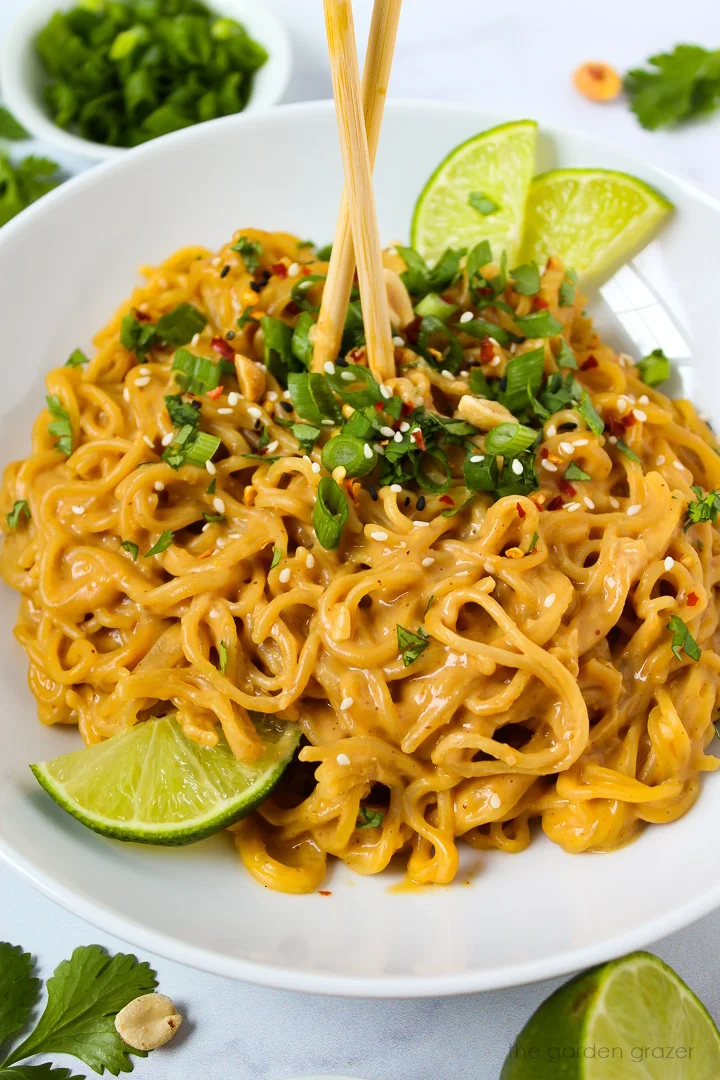
These quick peanut noodles pair chewy ramen with a creamy, savoury-sweet sauce brightened with lemon and rice vinegar. They are ready in about 20 minutes and can be served warm or chilled.
Ingredients
- 227 g (8 oz)ramen noodles (use gluten-free noodles if desired)
- 125 g (½ cup)smooth natural peanut butter
- 30 ml (2 tbsp)maple syrup
- 22.5 ml (1½ tbsp)tamari
- 30 ml (2 tbsp)fresh lemon juice
- 10 ml (2 tsp)rice vinegar
- 5 ml (1 tsp)toasted sesame oil (omit for an oil-free version)
- 1–2 clovesgarlic
- 10 ml (2 tsp)freshly grated ginger
- As neededhot water, to thin the sauce to your preferred consistency
- To tastemung bean sprouts, chopped peanuts, sesame seeds, coriander, fresh lime juice, spring onion, sriracha, red pepper flakes or other desired toppings
Instructions
- 1
Cook the noodles
Cook the noodles according to the packet instructions, taking care not to overcook them. Drain thoroughly.
- 2
Make the sauce
Meanwhile, mince the garlic and grate the ginger. Put all the peanut sauce ingredients except the water in a medium mixing bowl. Heat 180 ml (¾ cup) water until just below boiling. Add it a couple of tablespoons at a time, whisking gradually for about 20–30 seconds until the sauce reaches your preferred thickness. About 120 ml (½ cup) water is usually enough.
- 3
Toss together
As soon as the noodles are cooked and drained, add them to the bowl of sauce and toss gently to coat. The sauce will thicken further as it combines with the noodles.
- 4
Add toppings
Finish with any toppings you like, such as mung bean sprouts, fresh coriander, peanuts, spring onions, sesame seeds or red pepper flakes. Serve warm or chilled.
What are peanut noodles?
Peanut noodles are noodles coated in a sauce made with peanut butter, usually balanced with savoury and sharp flavours. They appear in many forms across Asian-inspired cooking; this particular version uses ramen and a quick, no-cook sauce.
Creamy peanut butter gives the sauce body, while lemon juice and rice vinegar keep it lively. The method is simple: cook the noodles, whisk the sauce, then toss everything together.
Nutrition and macros by portion
The nutrition label shows one serving as written: 428 calories, 16g protein, 55g carbs, 17g fat.
| Portion | Adjustment | kcal | Protein | Carbs | Fat |
|---|---|---|---|---|---|
| Lighter | Use less peanut butter | 300 kcal | 11g | 39g | 12g |
| This serving | As written | 428 kcal | 16g | 55g | 17g |
| Hungry | Add extra noodles | 642 kcal | 24g | 83g | 26g |
The noodles provide most of the carbohydrates, while peanut butter contributes much of the fat and some of the protein; the tamari also adds sodium. Pair a serving with extra vegetables, such as sprouts or other crunchy greens, for a more balanced plate.
Choosing the noodles
Ramen: Use the packet directions as your guide, since cooking times vary. If you need a gluten-free meal, choose noodles labelled gluten-free and check that the other ingredients, especially the tamari, suit your needs.
Getting the sauce smooth
Hot water: Adding hot water gradually makes it easier to work the peanut butter into a smooth sauce. Begin with a few tablespoons, whisk, and add more until it is pourable but still coats a spoon.
Flavour balance: The maple syrup softens the sharpness of the lemon and vinegar, while garlic, ginger and tamari add savoury depth. Taste the finished sauce and adjust its thickness with water rather than adding it all at once.
Keeping the noodles springy
Drain well: Excess cooking water can dilute the sauce, so give the noodles a thorough drain before adding them to the bowl.
Toss promptly: Mix the hot noodles with the sauce while they are still warm. They will absorb some sauce, which also thickens as it meets the noodles.
Warm or chilled
These noodles can be eaten either warm or chilled, making them handy for a quick meal or a make-ahead lunch. If the sauce firms up as the noodles cool, loosen it with a small splash of water and toss again.
Topping and serving ideas
Crunch: Mung bean sprouts, chopped peanuts and sesame seeds add contrast to the soft noodles.
Freshness and heat: Coriander, spring onions and lime juice bring freshness, while sriracha or red pepper flakes add a spicy finish. Add toppings just before serving for the best texture.
Recipe notes & tips
- Measure the peanut butter before starting so the sauce comes together quickly.
- Grate the ginger finely so it blends evenly into the sauce.
- Add hot water in small amounts and stop once the sauce coats the noodles well.
- Drain the noodles thoroughly to keep the sauce from becoming watery.
- Keep crunchy toppings separate until just before serving.
- If serving chilled, loosen the sauce with a splash of water before tossing again.
Variations
- Gluten-free noodles: Swap in noodles labelled gluten-free and check the tamari label as well.
- More heat: Stir sriracha or red pepper flakes into the sauce to taste.
- Extra crunch: Top with chopped peanuts, sesame seeds and mung bean sprouts.
- Fresh finish: Add chopped coriander, spring onion and a squeeze of lime.
- Oil-free sauce: Leave out the toasted sesame oil, as suggested in the recipe.
Common mistakes to avoid
- Overcooking the noodles: Follow the packet timing and drain as soon as they are tender.
- Adding all the water at once: Whisk in a little at a time so the sauce does not become too thin.
- Skipping the drain: Drain the noodles well to avoid watering down the peanut sauce.
- Making the sauce too thick: Add hot water gradually until it loosens enough to coat the noodles.
- Waiting to combine: Toss the noodles with the sauce soon after draining so they coat evenly.
How to store
Store leftovers in an airtight container in the fridge for up to 3 days. Serve chilled, or reheat gently in a pan or microwave with a splash of water, stirring until loosened and warmed through.
Frequently asked questions
Can I make these noodles gluten-free?
Yes. Use gluten-free noodles and check that your tamari and other packaged ingredients are labelled gluten-free.
Can I serve the noodles cold?
Yes, the recipe can be served warm or chilled. If the sauce thickens after chilling, add a little water and toss again.
How much water should I add to the sauce?
Add it gradually until the sauce reaches the thickness you like. The recipe uses about 120 ml (½ cup) from the 180 ml (¾ cup) heated.
What can I use instead of ramen?
Use another noodle you enjoy, following its packet instructions. For a gluten-free option, choose noodles labelled gluten-free.
Can I make the sauce ahead?
You can mix the sauce ingredients ahead, then add hot water gradually to loosen it before tossing with the noodles.
Which toppings work well?
Try mung bean sprouts, chopped peanuts, sesame seeds, coriander, spring onion, lime juice, sriracha or red pepper flakes.
Cook it from the original
This recipe comes from thegardengrazer.com. Their page has the author’s own photos, notes and tips — the best place to cook it from.
Open the recipe on thegardengrazer.com