
Mooli Paratha (Daikon Radish Paratha) - Beginner-Friendly Recipe!
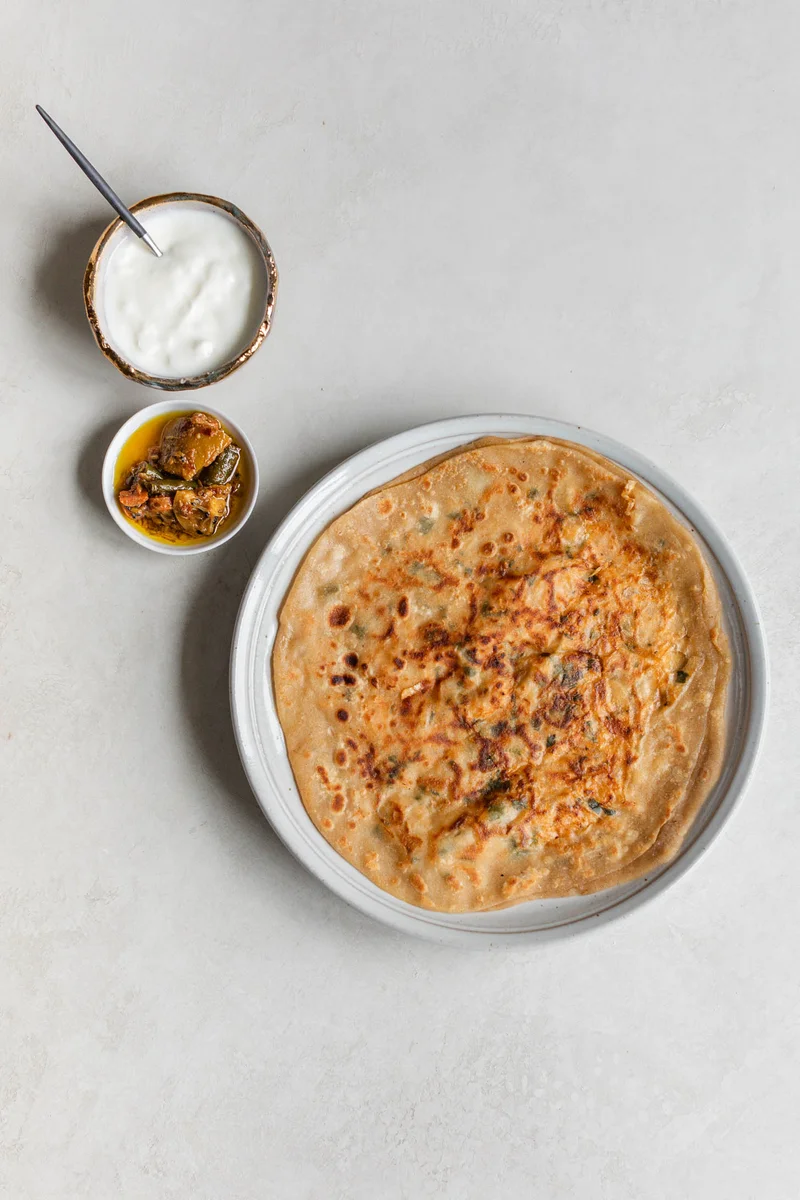
Mooli paratha is a Punjabi flatbread filled with spiced daikon radish, cooked on a griddle until golden and crisp. This version keeps the filling simple and explains how to squeeze out the radish and seal the dough so it is easier to handle.
Ingredients
- 2 mediumdaikon radishes (mooli), peeled and ends removed
- 15 g (⅓ cup)finely chopped coriander leaves and tender stems
- 1green chilli, finely chopped (deseed to reduce the heat, if desired)
- ¾ tspred chilli powder
- 1½ tsp, plus more to tastekosher salt
- 2 batchesprepared atta dough (use twice the quantity in your dough recipe)
- as neededsoftened butter, ghee or spreadable butter
Instructions
- 1
Shred the radish
Finely shred the mooli using a food processor’s fine shredder attachment. Alternatively, cut it into chunks and pulse in the processor until finely chopped, similar in texture to chopped onion.
- 2
Squeeze out moisture
Take a handful of the radish and squeeze it firmly between your palms, wearing gloves if you prefer. Put the squeezed radish in a large bowl and repeat with the rest, removing as much excess water as possible.
- 3
Season the filling
Add the coriander, green chilli, red chilli powder and salt to the radish. Mix well with your hands, or gloved hands, working the seasoning through the mixture.
- 4
Roll dough rounds
Take two golf-ball-sized pieces of atta dough, about 55–60 g each. Lightly dust the underside of each piece, shape it into a ball by rolling it forwards and drawing it back towards the middle with your fingers, then roll each into a small circle about 13 cm (5 inches) across. Spread 1 tsp butter on one side of each round.
- 5
Fill and seal
Spread 46 g (¼ cup plus 1 tbsp) of filling over one round, leaving about 6 mm (¼ inch) clear around the edge. Place the other round on top, buttered side down, and press the edges together to enclose the filling, rotating and gently stretching the edge as you seal.
- 6
Stretch the paratha
Gently stretch the sealed paratha with your hands, pulling at the edges or passing it from hand to hand, until it is at least 18 cm (7 inches) across before using a rolling pin.
- 7
Roll it larger
Dust the paratha lightly with dry atta and roll it out to about 23 cm (9 inches). Some moisture may escape, and air bubbles may form; tap the bubbles out or open an edge to release the air if needed.
- 8
Cook until crisp
Meanwhile, heat a tawa or griddle over medium heat. Carefully place the paratha on it, flattening thick edges and tidying the round shape. When the underside begins to cook, spread butter over the top, then flip and press with a flat spatula while moving the paratha around the pan. Keep buttering, flipping and pressing as needed until both sides are thoroughly cooked, golden and crisp, about 5 minutes per paratha. Transfer to a paper-towel-lined plate and repeat with the remaining parathas.
- 9
Serve straight away
Serve immediately with achaar, plain yoghurt or yoghurt sweetened with a little sugar.
What is mooli paratha?
Mooli paratha is an Indian flatbread associated with Punjabi cooking, filled with mooli, the long white radish also known as daikon. It is often eaten for breakfast, though its crisp, savoury filling makes it welcome at other meals too.
This version sandwiches a finely chopped, well-seasoned radish mixture between two dough rounds. Squeezing the radish dry and sealing the edges helps keep the filling inside as the paratha is stretched and cooked.
Nutrition and macros by portion
The nutrition label shows one serving as written: 17 calories, 1g protein, 4g carbs, 1g fat.
| Portion | Adjustment | kcal | Protein | Carbs | Fat |
|---|---|---|---|---|---|
| Lighter | Use less butter | 12 kcal | 1g | 3g | 1g |
| This serving | As written | 17 kcal | 1g | 4g | 1g |
| Hungry | Serve an extra paratha | 26 kcal | 2g | 6g | 2g |
The atta dough provides most of the carbohydrates, while butter or ghee contributes much of the fat. The daikon filling adds some carbohydrates, but the listed ingredients do not provide a substantial protein source; yoghurt on the side can help make the plate more balanced.
Get the radish ready
Fine chopping: Shred the mooli finely so the filling is easy to spread and less likely to poke through the dough. If using a food processor, stop once it resembles finely chopped onion rather than a paste.
Remove water: Squeeze the radish in handfuls and press out as much liquid as you can. This is the key preparation step for a filling that is easier to enclose and roll.
Build a secure filling
Leave a border: Keep about 6 mm (¼ inch) clear around the edge of the lower dough round so there is room to seal it. Too much filling close to the rim can make the edges difficult to close.
Seal gently: Press the two rounds together around the filling, rotating the paratha as you go. Stretch the sealed edges gently rather than pulling hard in one place.
Stretch before rolling
Hand stretching: Start by easing the paratha outwards with your hands until it is at least 18 cm (7 inches) across. This helps widen it before the rolling pin thins the dough.
Final rolling: Dust lightly with dry atta and roll to about 23 cm (9 inches). If a little filling moisture escapes or an air bubble appears, the recipe allows for this; release trapped air at an edge if necessary.
Cook for a crisp finish
Steady heat: Use medium heat and give the paratha time to cook through. The method takes about 5 minutes per paratha, with repeated flipping and pressing for even browning.
Doneness cues: Look for golden, crisp surfaces on both sides. Move the paratha around the tawa as you press it so it cooks evenly.
Serve it with
Cool and tangy: Serve hot with plain yoghurt alongside the crisp, spiced bread. Achaar is another suggested accompaniment.
A touch of sweetness: For a sweeter contrast, serve with yoghurt mixed with a little sugar, as the recipe author prefers.
Recipe notes & tips
- Squeeze the mooli in small handfuls to remove as much liquid as possible.
- Chop the radish finely so it stays easier to contain in the dough.
- Keep a narrow border free of filling to make sealing simpler.
- Stretch the sealed paratha by hand before finishing it with the rolling pin.
- Cook over medium heat for longer rather than using high heat if you want a crisp result.
- Press and move the paratha around the tawa to encourage even cooking.
Variations
- Reduce the heat: Deseed the green chilli before chopping it.
- Increase the heat: Use a hotter green chilli, such as a Serrano.
- Adjust the seasoning: Add more salt to the radish mixture to taste.
- Choose the cooking fat: Use ghee or spreadable butter instead of softened butter.
- Sweeten the side: Stir a little sugar into plain yoghurt before serving.
Common mistakes to avoid
- Wet filling: Squeeze the radish firmly in handfuls before seasoning it.
- Coarse radish: Chop or shred it more finely so it is easier to enclose.
- Filling at the edge: Leave about 6 mm (¼ inch) clear for sealing.
- Rushing the stretch: Gently widen the paratha by hand before using the rolling pin.
- High heat: Keep the tawa at medium so the paratha has time to cook through and crisp.
- Uneven cooking: Press and move the paratha around the pan as you flip it.
How to store
These parathas are best served immediately, while crisp. If you have leftovers, cool them, store them in an airtight container in the refrigerator and reheat in a pan until hot; they may be less crisp than freshly cooked ones.
Frequently asked questions
Can I make the filling less spicy?
Deseed the green chilli to reduce its heat. You can also adjust the amount of red chilli powder to suit your preference.
Why do I need to squeeze the mooli?
The radish contains excess moisture, which can make the filling harder to seal and roll. Squeezing it dry helps the paratha hold its shape.
What if the filling leaks while rolling?
A little moisture may ooze out, which the recipe notes is fine. Make sure the edges are sealed and roll gently; the escaped filling can cook into crisp bits on the griddle.
What should I do about air bubbles?
Tap them firmly to release the air, or open an edge briefly to let the air out.
How can I tell when the paratha is cooked?
It should be thoroughly cooked and golden and crisp on both sides. Allow about 5 minutes per paratha, flipping and pressing as needed.
What can I serve with mooli paratha?
Serve it with achaar, plain yoghurt or yoghurt sweetened with a little sugar.
Cook it from the original
This recipe comes from teaforturmeric.com. Their page has the author’s own photos, notes and tips — the best place to cook it from.
Open the recipe on teaforturmeric.com