
Victoria Sponge Cake
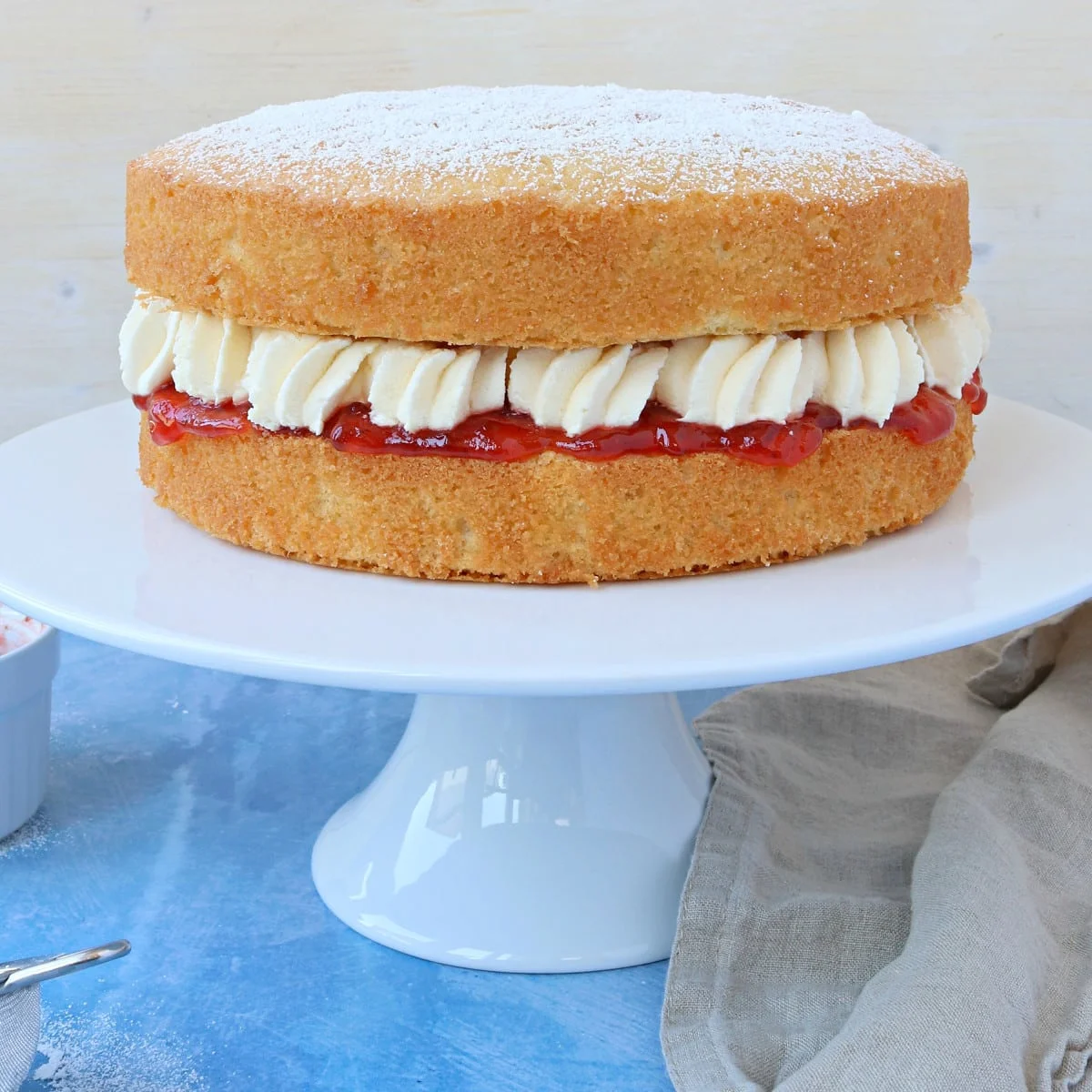
Victoria sponge is a classic British layer cake with soft vanilla sponge, fruit jam and whipped cream. It makes a celebratory centrepiece but is simple to bake and share.
Ingredients
- 235 gUnsalted butter or baking spread
- 235 gCaster sugar
- 4 largeEggs
- 235 gSelf-raising flour
- 1 tspVanilla extract
- 170 gStrawberry or raspberry jam
- 300 mlDouble cream
- 1 tbsp (optional)Icing sugar
- 1 tsp (optional)Vanilla extract
- 1 tbspIcing sugar
Instructions
- 1
Prepare the tins
Heat the oven to 160°C fan/180°C/350°F/Gas Mark 4. Grease two cake tins at least 5 cm (2 inches) deep, each 20 cm (8 inches) across, and line their bases with baking paper.
- 2
Cream butter and sugar
In a large bowl, beat the butter or baking spread with the caster sugar using an electric mixer or stand mixer for 3–4 minutes, until pale and fluffy. You can beat by hand, though an electric mixer gives the best results.
- 3
Add eggs and vanilla
Add the eggs and vanilla extract, then whisk until the mixture is fully combined.
- 4
Fold in flour
Gently whisk in the self-raising flour with a hand whisk, or fold it in with a silicone spatula, stopping when no flour is visible.
- 5
Divide the mixture
Split the cake mixture between the prepared tins; use scales if you want to make the amounts even.
- 6
Bake the sponges
Bake for 20–25 minutes, until golden and a skewer inserted into the centre comes out clean. Let the sponges cool completely, either in the tins or turned out onto cooling racks.
- 7
Level the cakes
If the sponges have domed tops, trim them with a cake leveller or knife. Level the bottom layer so the upper sponge can sit neatly on it.
- 8
Whip the cream
Whip the double cream with the optional icing sugar and optional vanilla extract using an electric whisk, until soft peaks form. You can whisk by hand, but it takes longer.
- 9
Spread the jam
Place one sponge on a serving plate or cake stand and spread the jam over it.
- 10
Add the cream
Pipe or spread the whipped cream over the jam. Alternatively, put the cream on first and spread the jam on top.
- 11
Stack and finish
Set the second sponge on top and dust with the remaining icing sugar, or decorate as you prefer.
- 12
Serve and store
Serve immediately. If made with whipped cream, refrigerate leftovers; if made with jam alone or jam and buttercream, keep in an airtight container in a cool place and eat within 2–3 days.
What is a Victoria sponge?
This British layer cake pairs two light sponge cakes with jam and, in this version, whipped double cream. It is named for Queen Victoria, and its straightforward layers have made it a familiar teatime and celebration cake.
Equal weights of butter or baking spread, sugar and flour give the sponge its classic balance. Creaming the fat and sugar until fluffy helps make the texture light enough to contrast with the rich filling.
Nutrition and macros by portion
The nutrition label shows one serving as written: 441 calories, 5g protein, 46g carbs, 27g fat.
| Portion | Adjustment | kcal | Protein | Carbs | Fat |
|---|---|---|---|---|---|
| Lighter | Use less cream | 309 kcal | 4g | 32g | 19g |
| This serving | As written | 441 kcal | 5g | 46g | 27g |
| Hungry | Serve a larger slice | 662 kcal | 8g | 69g | 41g |
The cake’s carbohydrates mainly come from the flour, caster sugar and jam; butter and double cream contribute most of the fat, while eggs and cream provide some protein. Pair a slice with fresh fruit, or serve it after a meal with a less rich main course.
Choose the right ingredients
Self-raising flour: it provides the raising agent, so use it as listed rather than plain flour unless you are following a separate tested substitution.
Jam: strawberry or raspberry both work well. Choose a spreadable jam so it can be layered without pressing hard on the cooled sponge.
Cream: double cream whips into a rich filling. The optional vanilla and icing sugar flavour and sweeten it; taste as you go if you prefer a less sweet filling.
Cream the mixture well
Butter and sugar: beat for the full 3–4 minutes, until the mixture looks fluffy. This step helps incorporate air before the eggs and flour go in.
Flour: fold it in gently and stop as soon as no dry flour remains. Overmixing at this stage can make the sponge less tender.
Check the bake
Oven: preheat before the tins go in, and bake at 160°C fan or 180°C conventional. Avoid opening the door early, as the sponges need time to set.
Doneness: look for golden tops and a skewer that comes out clean from the centre. Cool the cakes fully before adding cream, or the filling may soften and slide.
Build neat layers
Level: if a sponge has domed, trim it once it is cool. A flat bottom layer makes the finished cake steadier.
Filling: spread the jam gently, then add the cream without pushing it right to the edge. You can reverse the order and put the cream beneath the jam, as the method suggests.
Serve with a simple pairing
A light dusting of icing sugar is enough to finish the cake without covering its layers. Slice with a sharp knife, wiping the blade between cuts for cleaner portions.
Serve with tea or coffee, or add fresh berries on the side. Keep accompaniments simple so the jam and cream remain the focus.
Recipe notes & tips
- Bring the butter and eggs to room temperature before mixing for an easier-to-combine batter.
- Scrape down the bowl while creaming so the butter and sugar are evenly mixed.
- Weigh the mixture into the tins if you want the layers to bake to a similar height.
- Let the sponges cool completely before trimming or filling them.
- Whip the cream only until soft peaks form so it stays smooth and spreadable.
Variations
- Use raspberry jam: choose it instead of strawberry for a sharper fruit layer.
- Add lemon: use a little lemon zest in the sponge for a citrus note.
- Make it jam-only: omit the cream for a simpler filling.
- Add fresh berries: scatter a few sliced berries over the cream before stacking.
- Change the finish: leave off the icing sugar and decorate the top with a little extra whipped cream.
Common mistakes to avoid
- Under-creaming: beat the butter and sugar for the full 3–4 minutes until fluffy.
- Overmixing the flour: fold just until the last visible streaks disappear.
- Uneven layers: divide the batter carefully, using scales if helpful.
- Opening the oven too soon: wait until the minimum baking time before checking the cakes.
- Filling warm sponge: cool both layers completely before adding jam and cream.
- Overwhipping the cream: stop at soft peaks so it remains easy to spread.
How to store
Because this version contains whipped cream, cover and refrigerate leftovers and eat them promptly. If made with jam alone or jam and buttercream instead, keep it in an airtight container in a cool place and eat within 2–3 days.
Frequently asked questions
Can I make the sponges ahead?
Yes. Bake and cool the sponges, then keep them covered until you are ready to fill and assemble the cake.
How do I know when the sponges are baked?
They should be golden, and a skewer inserted into the centre should come out clean. Begin checking at 20 minutes.
Can I use plain flour instead?
The recipe specifies self-raising flour. Plain flour will not provide the same raising unless you adjust it using a suitable baking formula.
Can I assemble the cake in advance?
It is best assembled close to serving, especially with whipped cream. Keep an assembled cream-filled cake refrigerated.
Can I leave out the vanilla or icing sugar in the cream?
Yes. Both are optional in the cream, so you can omit either or both to suit your taste.
Why should I level the bottom sponge?
A flat surface helps the upper layer sit securely rather than wobbling on a dome.
Cook it from the original
This recipe comes from thebakingexplorer.com. Their page has the author’s own photos, notes and tips — the best place to cook it from.
Open the recipe on thebakingexplorer.com