
Vegan Irish Soda Farls
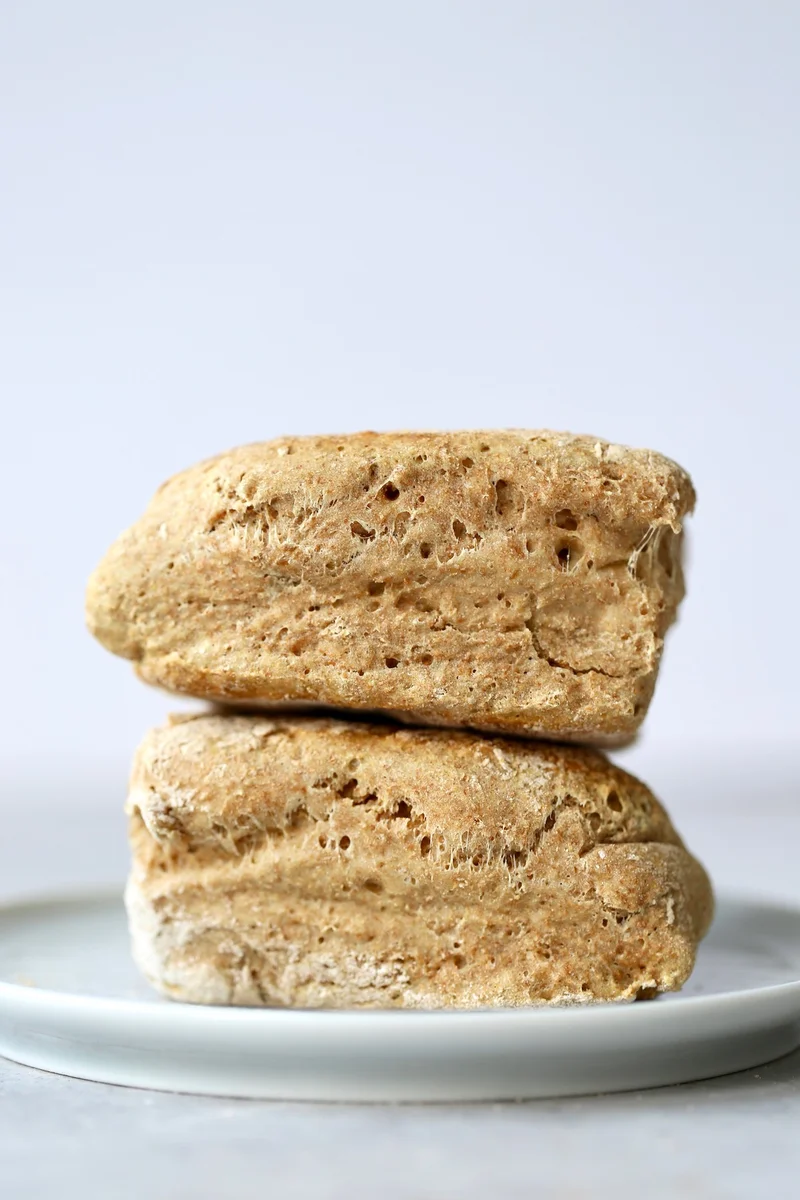
These vegan Irish soda farls are quick, griddle-cooked bread wedges made with a simple dough and a dairy-free vinegar-and-milk mixture. They are a handy choice when you want warm bread without waiting for yeast to rise.
Ingredients
- 1 tablespoonapple cider vinegar
- 225 ml (1 cup minus 1 tablespoon)non-dairy milk
- 250 g (2 cups; half white flour and half wholemeal flour, if using the author's blend)flour
- ½ teaspoonsalt
- 1 teaspoonbicarbonate of soda
Instructions
- 1
Heat the skillet
Set a skillet over medium-low heat to preheat.
- 2
Curdle the milk
Put 1 tablespoon of apple cider vinegar in a 1-cup measure, top it up with non-dairy milk and stir carefully. Leave it for about 5 minutes to curdle while you prepare the dry ingredients.
- 3
Mix dry ingredients
Whisk the flour and salt together in a mixing bowl.
- 4
Sift in soda
Sift the bicarbonate of soda into the bowl.
- 5
Add the milk
Make a well in the middle of the dry ingredients and pour in the prepared buttermilk mixture.
- 6
Form the dough
Work quickly to combine the wet and dry ingredients, then knead very lightly until a dough forms.
- 7
Shape the round
Turn the dough out onto a lightly floured surface and shape it into a circle about 1.3 cm (½ inch) thick.
- 8
Cut into wedges
Cut the dough circle into four equal pieces.
- 9
Cook the farls
Dust the base of the hot pan with a little flour. Cook the farls for 6–8 minutes on each side, or until golden brown.
What are soda farls?
Soda farls are a traditional Irish griddle bread, leavened with bicarbonate of soda rather than yeast and shaped into a round before being cut into wedges. The name refers to the quarters, or farls, cut from the dough.
This version uses non-dairy milk soured with vinegar in place of buttermilk. Cooking the wedges in a skillet keeps the method quick and gives them a browned outside.
Nutrition and macros by portion
The nutrition label shows one serving as written: 170 calories, 5g protein, 33g carbs, 1g fat.
| Portion | Adjustment | kcal | Protein | Carbs | Fat |
|---|---|---|---|---|---|
| Lighter | Smaller farl with vegetables | 119 kcal | 4g | 23g | 1g |
| This serving | As written | 170 kcal | 5g | 33g | 1g |
| Hungry | Serve an extra farl | 255 kcal | 8g | 50g | 2g |
Most of the carbohydrates come from the flour, while the non-dairy milk contributes some protein; the recipe contains very little added fat. Serve a farl with vegetables and a protein-rich accompaniment to round out the meal.
The flour and raising agent
Flour choice: The recipe suggests using half white flour and half wholemeal flour. That blend gives a balance of a lighter crumb and a heartier flavour.
Bicarbonate of soda: Sifting it into the flour helps distribute the raising agent through the dough. The vinegar-soured milk provides the acidity it needs to work.
Make the dairy-free buttermilk
Milk mixture: Stir the vinegar into the non-dairy milk and leave it to stand for about 5 minutes. It may look slightly curdled; that is expected for this substitute.
Timing: Use the resting time to whisk the flour and salt, so the dough can be mixed as soon as the milk is ready.
Handle the dough gently
Quick mixing: Combine the wet and dry ingredients promptly once the milk has curdled. Knead only very lightly, stopping when a dough forms.
Shaping: Pat or roll the dough into a circle about 1.3 cm thick on a lightly floured surface. Keeping the thickness even helps the wedges cook at a similar rate.
Cook until golden
Pan heat: Preheat the skillet over medium-low heat. A gentler setting gives the centres time to cook before the outsides become too dark.
Doneness: Cook each side for 6–8 minutes and look for a golden-brown surface. If the farls colour too quickly, reduce the heat.
How to serve them
Fresh from the pan: Serve the farls warm, alongside soup or a savoury meal. Their plain, hearty flavour also works well with a spread or a topping of your choice.
For a meal: Pair them with a source of protein and vegetables to make a more balanced plate.
Recipe notes & tips
- Measure the vinegar and milk carefully so the liquid mixture totals one cup.
- Let the milk stand for about 5 minutes while you prepare the dry ingredients.
- Sift the bicarbonate of soda to help it mix evenly through the flour.
- Knead only lightly; stop as soon as the dough comes together.
- Keep the farls close to 1.3 cm thick for more even cooking.
- Use medium-low heat and adjust it if the outside browns before the centres cook.
Variations
- Wholemeal blend: Use half white flour and half wholemeal flour as suggested in the recipe.
- Different non-dairy milk: Choose an unsweetened non-dairy milk for a more neutral flavour.
- Herb addition: Fold finely chopped herbs into the dry ingredients for a savoury variation.
- Seeded dough: Mix seeds into the flour before adding the milk mixture.
- Serve with soup: Pair warm farls with a bowl of soup for a simple meal.
Common mistakes to avoid
- Skipping the resting time: Give the vinegar and milk about 5 minutes to curdle before mixing.
- Over-kneading: Work the dough only lightly, just until it forms.
- Uneven shaping: Make the dough circle a consistent 1.3 cm thick so the wedges cook evenly.
- Pan too hot: Lower the heat if the farls turn golden too quickly on the outside.
- Crowding the skillet: Cook in batches if needed so the farls can sit flat in the pan.
How to store
Let leftover farls cool, then keep them in an airtight container at room temperature for up to 2 days. Reheat in a dry skillet over low heat until warmed through.
Frequently asked questions
Can I use a different non-dairy milk?
Yes. Use a non-dairy milk you normally cook with, keeping the amount the same. The vinegar is included to sour it for the dough.
How do I know when the milk is ready?
After about 5 minutes, it may look slightly curdled. Stir it carefully before adding it to the flour.
Why should I avoid kneading the dough for long?
The method calls for only very light kneading. Stop once the ingredients come together into a dough.
How thick should the dough be?
Shape it into a circle about 1.3 cm (½ inch) thick before cutting it into four pieces.
Can I cook the farls on higher heat?
The recipe calls for medium-low heat. If they brown too quickly, lower the heat so the centres have time to cook.
Cook it from the original
This recipe comes from theconscientiouseater.com. Their page has the author’s own photos, notes and tips — the best place to cook it from.
Open the recipe on theconscientiouseater.com