
Easy Mutton Karahi (Goat/Lamb Karahi) - Restaurant-Style!
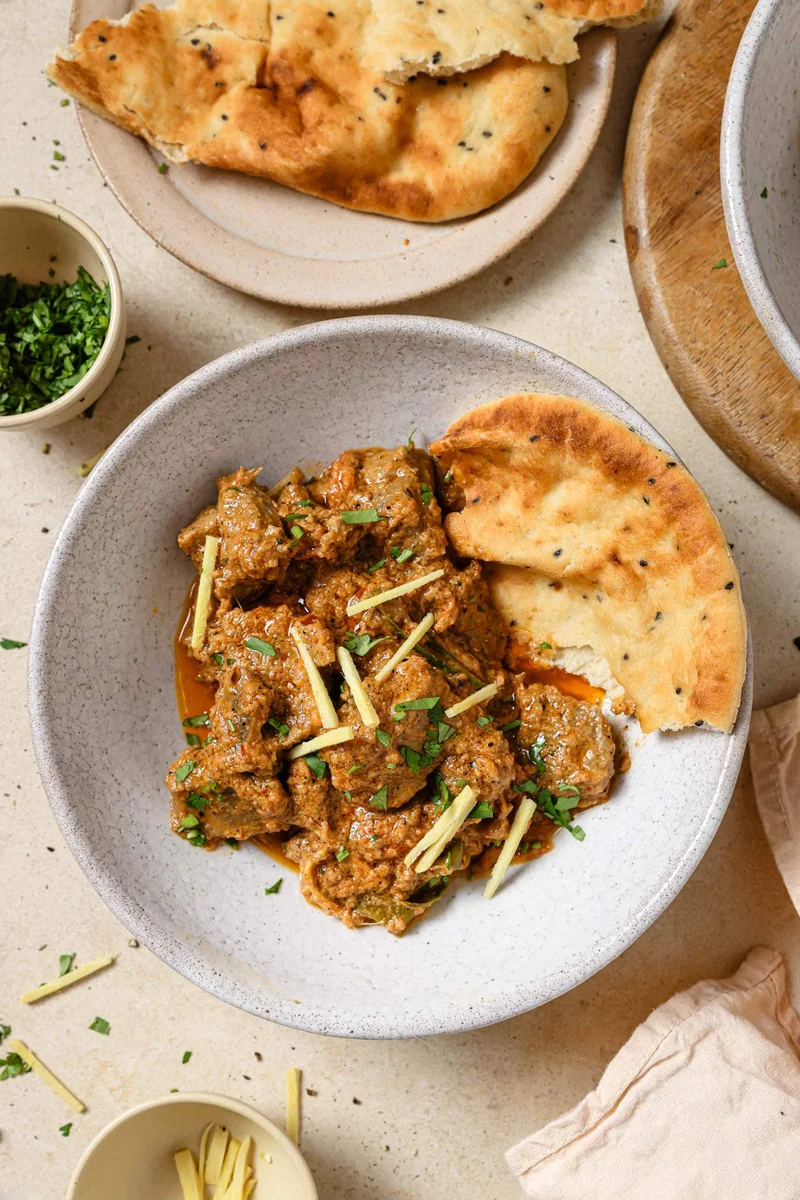
This one-pot mutton karahi cooks goat or lamb until tender, then simmers it in a tomato, chilli and spice masala finished with yoghurt and butter. It takes time, but the stages are straightforward and build a rich, glossy sauce to serve with naan or roti.
Ingredients
- 680 g (1.5 lb)bone-in goat or lamb meat
- 360 ml (1.5 cups)water
- 7.5 ml (1/2 tbsp)crushed garlic
- 7.5 ml (1/2 tbsp)crushed ginger
- 1/2 smallyellow onion, chopped
- 1/4 tspground black pepper
- 1 tspkosher salt
- 80–120 ml (1/3–1/2 cup)neutral oil
- 2 mediumSerrano or Indian finger chilli peppers, halved lengthways or left whole for less heat
- 4–5 clovesgarlic, finely chopped or crushed with a mortar and pestle
- 1.3 cm (1/2 inch)ginger, finely chopped or crushed with a mortar and pestle
- 5 mediumripe Roma or vine tomatoes, cored and halved lengthways
- 1 1/2 tspground coriander
- 1 tspcumin powder or cumin seeds
- 1 tspKashmiri red chilli powder
- 1/2 tspred chilli flakes
- 1/2 tspkosher salt
- 45 ml (3 tbsp)plain whole-milk yoghurt, whisked
- 1–2 tbspsalted butter
- 1 tsp, plus more for garnishblack peppercorns, freshly ground with a mortar and pestle
- 1/2 tsplemon juice
- 3–4 smallgreen Thai or bird’s-eye chilli peppers, slit in half
- 1 tbspginger, julienned
- 2 tbspcilantro, finely chopped
- 60 ml (1/4 cup)water, for the tomatoes
- 120 ml (1/2 cup), if neededwater, to help the tomatoes break down
Instructions
- 1
Simmer the meat
Set a large, heavy-bottomed pan over high heat. Add the meat, 360 ml water, crushed garlic and ginger, chopped onion, 1/4 tsp ground black pepper and 1 tsp salt; stir, submerging the meat as much as possible. Bring to a gentle boil, then lower the heat to low-medium, cover and simmer for at least 1 hour 15 minutes, stirring halfway through. The meat should be cooked and break when pressed with a wooden spoon, but not yet be falling off the bone. If it does not break, cover and cook for another 10–15 minutes. Some water will remain.
- 2
Sear the meat
Raise the heat to high and sauté for 7–8 minutes, stirring occasionally, until most of the water has evaporated and the meat’s fat is visible. To avoid overcooking the meat, push it to one side while the water boils. Add the oil and the two halved or whole green chilli peppers, then sauté for 2–3 minutes, until the meat is lightly seared. Stir in the chopped or crushed garlic and ginger and sauté for 1 minute.
- 3
Steam the tomatoes
Add 60 ml water and the halved tomatoes, and stir. Lower the heat to medium, cover and simmer for 6–7 minutes. As the skins loosen, remove them with tongs. The time depends on how ripe the tomatoes are; they will begin releasing their own liquid.
- 4
Mash the tomatoes
Turn the heat up to high and sauté for 10 minutes, stirring now and then. Gently press the tomatoes with a wooden spoon to help them blend into the masala; it is fine if some pieces remain at this point.
- 5
Cook the spices
Add the ground coriander, cumin powder or seeds, Kashmiri chilli powder, chilli flakes and 1/2 tsp salt. Sauté for another 5 minutes, gently mashing the tomatoes until they break down into the curry. Taste and add salt if needed.
- 6
Check the sauce
If the karahi becomes too reduced before the tomatoes have broken down, add 120 ml water and continue mashing. The sauce should turn glossy, with oil separating and gathering around the sides of the pan. The meat should be tender and break easily when pressed with a wooden spoon.
- 7
Stir in yoghurt
Add the whisked yoghurt and sauté gently for 2–3 minutes, until it blends into the karahi and the oil separates again.
- 8
Finish and serve
Lower the heat and stir in the butter, freshly ground black peppercorns and lemon juice. Garnish with the slit green chillies, julienned ginger, cilantro and more freshly ground black pepper, if desired. Turn off the heat and serve with naan, roti or another bread.
What is mutton karahi?
Karahi is a South Asian curry named for the deep, round cooking pan traditionally used to make it. Versions vary across the region, but meat, tomatoes, ginger, garlic and assertive spices are common foundations.
This version first simmers bone-in goat or lamb until nearly tender, then cooks it down with tomatoes and spices. That two-stage approach helps the meat soften while giving the sauce time to become concentrated and glossy.
Nutrition and macros by portion
The nutrition label shows one serving as written: 386 calories, 24g protein, 11g carbs, 28g fat.
| Portion | Adjustment | kcal | Protein | Carbs | Fat |
|---|---|---|---|---|---|
| Lighter | Use less oil | 270 kcal | 17g | 8g | 20g |
| This serving | As written | 386 kcal | 24g | 11g | 28g |
| Hungry | Larger portion with naan | 579 kcal | 36g | 17g | 42g |
The meat provides most of the protein, while the tomatoes and onion contribute carbohydrates. The oil and butter supply much of the fat; pair a serving with vegetables or salad alongside the bread to round out the plate.
Why cook the meat first?
Bone-in pieces need a longer, gentler start than the tomato masala does. Simmering them with water, onion, crushed garlic and ginger gets the meat most of the way to tender before the faster, higher-heat stages begin.
Stop when the meat breaks under pressure but is not falling off the bone. It will cook further as the water evaporates and the tomatoes reduce.
Choose ripe tomatoes
Tomatoes: ripe Roma or vine tomatoes soften readily and supply much of the sauce’s liquid. Halving them lengthways makes their skins easier to lift away once they have steamed.
Spices: ground coriander and cumin bring earthy warmth, while Kashmiri chilli powder and flakes add heat. The fresh green chillies and black pepper add a sharper finish.
Build the masala patiently
Evaporation: after simmering the meat, let most of the remaining water cook away before adding oil. Pushing the meat aside gives the liquid room to boil while helping keep the meat from overcooking.
Bhunai: the repeated sautéing and gentle mashing lets the tomatoes break down and the spices blend into the sauce. Keep stirring and pressing the tomatoes rather than rushing this stage.
Watch the texture
Tomatoes: after their covered simmer, the skins should loosen and the tomatoes should start to release liquid. Remove the skins as they become easy to lift with tongs.
Finished sauce: look for a glossy appearance and oil beginning to line the sides of the pan. The meat should break easily under a wooden spoon; if the sauce gets too thick before the tomatoes collapse, add the recipe’s extra water.
Keep the heat under control
The recipe moves between a gentle covered simmer and high-heat sautéing, so adjust the burner at each stage rather than leaving it at one setting. Stir occasionally during the meat’s long simmer and more attentively as the sauce reduces.
Add the yoghurt over gentle heat and sauté just until it blends in and the oil separates again. Finish on low heat so the butter, pepper and lemon juice mix through without prolonged cooking.
Serve it with bread
Naan or roti is a natural match for the rich, tomato-based sauce and makes it easy to scoop up the meat and masala. Serve the bread alongside the karahi rather than stirring it into the pan.
The fresh ginger, cilantro and green chillies add a bright, aromatic contrast to the cooked-down sauce. Use the garnish to suit the heat you want at the table.
Recipe notes & tips
- Use properly ripe tomatoes so they soften and release their liquid during cooking.
- Keep the meat at a gentle simmer until it breaks under a wooden spoon but is not yet falling off the bone.
- Push the meat to one side while the remaining cooking water boils away to limit extra cooking.
- Remove tomato skins only once they loosen easily, as the time depends on ripeness.
- Mash the tomatoes gradually during the sautéing stages to help them dissolve into the masala.
- Whisk the yoghurt before adding it so it is ready to stir into the karahi.
Variations
- Choose the meat: use bone-in goat or lamb, as directed, for the same slow-simmered method.
- Reduce the heat: leave the larger green chillies whole rather than halving them.
- Use cumin seeds: swap them for the cumin powder, as allowed in the ingredient list.
- Adjust the oil: use the lower end of the listed range for a less oily finish.
- Vary the garnish: add more or less green chilli and black pepper to suit the table.
Common mistakes to avoid
- Boiling the meat hard: keep it at a simmer so it cooks gently and stays manageable for the later stages.
- Cooking the meat until it falls apart: stop when it breaks under pressure, as it will continue cooking in the karahi.
- Adding oil before the water evaporates: let most of the liquid boil off first so the meat can sear.
- Rushing the tomatoes: continue the sautéing and mashing until they break down into the sauce.
- Letting the sauce reduce too far: add the specified 120 ml water if the tomatoes are still intact and the karahi is too thick.
- Adding yoghurt over high heat: lower the burner first and sauté gently until the yoghurt blends in.
How to store
Cool leftovers and refrigerate them in a covered container for up to 3 days. Reheat gently in a covered pan until hot throughout, adding a splash of water if the sauce has thickened; stir occasionally.
Frequently asked questions
Can I use goat or lamb?
Either bone-in goat or lamb works in this recipe. The cooking cues are more useful than relying on the clock alone: simmer until the meat breaks under pressure, then finish it in the masala.
Can I make this in an Instant Pot?
The provided method is for a heavy-bottomed pan and does not include Instant Pot timings or pressure settings. Use a pressure-cooker version with instructions specific to your appliance rather than guessing at a setting.
How do I know when the meat is ready?
After the first simmer, it should break when pressed with a wooden spoon but should not be falling off the bone. It is ready at the end when it breaks easily.
Can I make the karahi less spicy?
Leave the two larger green chillies whole, as the recipe suggests, and use fewer green chillies for the garnish. The chilli powders and flakes also contribute heat, so adjust those to taste.
Why is there still liquid after simmering the meat?
Some water is expected to remain after the meat’s first simmer. The next high-heat stage evaporates most of it before the oil and chillies are added.
What should I serve with mutton karahi?
Serve it with naan, roti or another bread, as suggested in the method. The bread is useful for scooping up the sauce.
Cook it from the original
This recipe comes from teaforturmeric.com. Their page has the author’s own photos, notes and tips — the best place to cook it from.
Open the recipe on teaforturmeric.com