
Slow braised lamb shanks
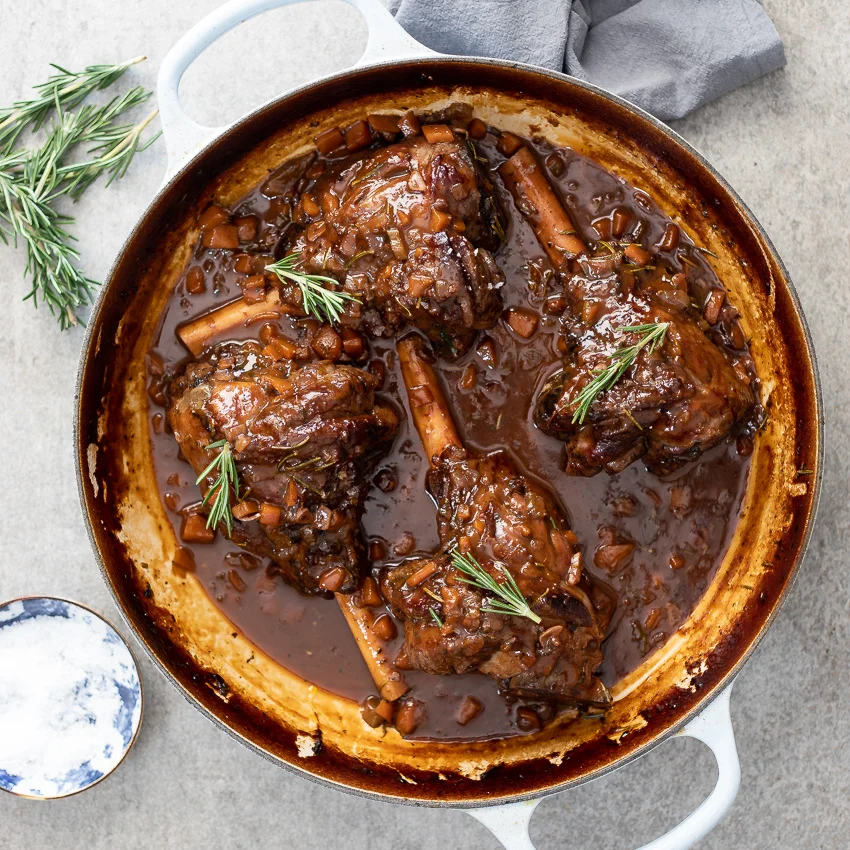
These South African-style braised lamb shanks cook slowly in a rich red wine, vegetable and stock sauce until tender. They make a warming centrepiece for a relaxed meal, with the oven doing most of the work.
Ingredients
- 30 ml (2 tbsp)olive oil
- 4lamb shanks
- 1 largeonion, finely chopped
- 2 largecarrots, peeled and finely chopped
- 2celery ribs, finely chopped
- 4garlic cloves, thinly sliced
- 2 sprigsfresh rosemary
- 1bay leaf
- 30 ml (2 tbsp)tomato paste
- 375 ml (1½ cups)red wine
- 500 ml (2 cups)lamb or beef stock
- to tastesalt and pepper
Instructions
- 1
Preheat the oven
Heat the oven to 160°C (320°F).
- 2
Brown the shanks
Season the lamb shanks generously with salt and pepper. Brown them on both sides in a large, deep ovenproof pan or pot, then lift them out and set aside.
- 3
Make the sauce
In the same pan, fry the onion, carrot, celery and garlic until soft and fragrant. Add the rosemary, bay leaf and tomato paste, and cook for 30 seconds. Pour in the red wine and stock, bring to a simmer, then return the lamb shanks to the sauce.
- 4
Braise the lamb
Cover the pan with a lid and put it in the oven. Braise for 2–3 hours, until the lamb is soft and succulent. Check the shanks halfway through cooking and add more stock if necessary.
- 5
Serve the shanks
Remove the pan from the oven and serve.
What are braised lamb shanks?
Lamb shanks are a hardworking cut from the lower leg, suited to long, gentle cooking until the meat turns tender. Braising means first browning the meat, then cooking it covered with liquid.
This South African recipe pairs the shanks with red wine, stock and aromatic vegetables. Browning first and then letting the oven work slowly gives the sauce depth while helping the meat soften.
Nutrition and macros by portion
The nutrition label shows one serving as written: 277 calories, 28g protein, 8g carbs, 8g fat.
| Portion | Adjustment | kcal | Protein | Carbs | Fat |
|---|---|---|---|---|---|
| Lighter | More vegetables, less potato | 194 kcal | 20g | 6g | 6g |
| This serving | As written | 277 kcal | 28g | 8g | 8g |
| Hungry | Add potatoes or bread | 416 kcal | 42g | 12g | 12g |
The lamb provides most of the protein and fat, while the vegetables and wine contribute much of the carbohydrate. Serve a shank with plenty of vegetables and a moderate portion of potatoes or bread to balance the plate.
Why brown the shanks first?
Browning: Give the shanks room in the pan and turn them so both sides develop colour. This step builds savoury flavour in the pan for the sauce.
Pan choice: Use a deep ovenproof pot or pan with a lid, large enough to hold the shanks and liquid. If the shanks are crowded, brown them in batches.
Building the red wine sauce
Vegetables: Finely chopped onion, carrot and celery soften into the sauce as they cook. Slice the garlic thinly so it perfumes the base without needing a long cooking time.
Tomato paste: Cook it with the herbs for 30 seconds before adding liquid, as the method directs. The wine and stock then loosen the browned flavour from the pan.
How to tell when the lamb is tender
Timing: The recipe gives a 2–3 hour braising window at 160°C. Begin checking towards the earlier end, as the exact time can vary with the size of the shanks.
Doneness: The meat should feel soft and succulent rather than firm. If it is still tough, cover the pot and continue cooking, checking again later.
Keep the braise covered
A close-fitting lid helps keep moisture in during the long oven cook. Check the shanks halfway through and add more stock if the sauce needs it.
Try to keep the shanks sitting in the sauce as they braise. Avoid repeatedly lifting the lid, which lets heat escape and makes the cooking less steady.
What to serve with lamb shanks
Serve the shanks with the red wine sauce spooned over the top. Mashed potatoes, polenta or crusty bread are useful for catching the sauce.
For a lighter contrast, add a green vegetable or a crisp salad. The recipe makes six servings from four shanks, so divide the meat and sauce evenly at the table.
Recipe notes & tips
- Pat the shanks dry before browning to help them colour in the pan.
- Brown the shanks in batches if they do not fit in a single layer.
- Keep the pan at a gentle simmer when you add the wine and stock.
- Check the liquid level halfway through braising and top up with stock if needed.
- Let the shanks rest briefly after cooking so they are easier to serve.
Variations
- Use beef stock: Swap it for lamb stock if that is what you have available.
- Add mushrooms: Stir sliced mushrooms into the softened vegetables for an earthy variation.
- Change the herbs: Use thyme instead of rosemary for a different herbal note.
- Make it alcohol-free: Replace the red wine with extra stock, noting that the sauce will have a different flavour.
- Serve with polenta: Spoon the sauce over soft polenta to make a hearty accompaniment.
Common mistakes to avoid
- Crowding the pan: The shanks may steam instead of brown; brown them in batches.
- Skipping the browning: The sauce misses the browned flavours from the meat; colour the shanks before setting them aside.
- Boiling the sauce hard: A fierce simmer can make the braise less gentle; bring it just to a simmer before covering.
- Uncovered braising: Too much liquid can evaporate; keep the pot covered in the oven.
- Stopping too soon: Lamb can remain firm if it has not cooked long enough; continue braising until soft and succulent.
How to store
Cool leftovers promptly and refrigerate in a covered container for up to 3 days, or freeze for up to 3 months. Reheat gently in a covered pan until piping hot, adding a splash of stock if the sauce has thickened.
Frequently asked questions
Can I make these lamb shanks ahead?
Yes. Cook them through, cool and refrigerate them with the sauce. Reheat gently in a covered pan until piping hot.
Can I cook the shanks for longer than 3 hours?
The recipe gives a 2–3 hour cooking time. If the meat is not yet soft at the end of that period, keep it covered in the oven and check it again later.
What can I use instead of red wine?
Use extra lamb or beef stock. The sauce will taste different, but the shanks can still be braised in the liquid.
Can I use a roasting tin instead of a pot?
Use a deep ovenproof pan or pot with a lid, as the recipe specifies. A roasting tin without a lid may not hold moisture as well during braising.
What should I serve with the sauce?
Mashed potatoes, polenta or crusty bread all work well for soaking it up. Add a green vegetable or salad alongside.
Cook it from the original
This recipe comes from simply-delicious-food.com. Their page has the author’s own photos, notes and tips — the best place to cook it from.
Open the recipe on simply-delicious-food.com