
Bolivian pork roll
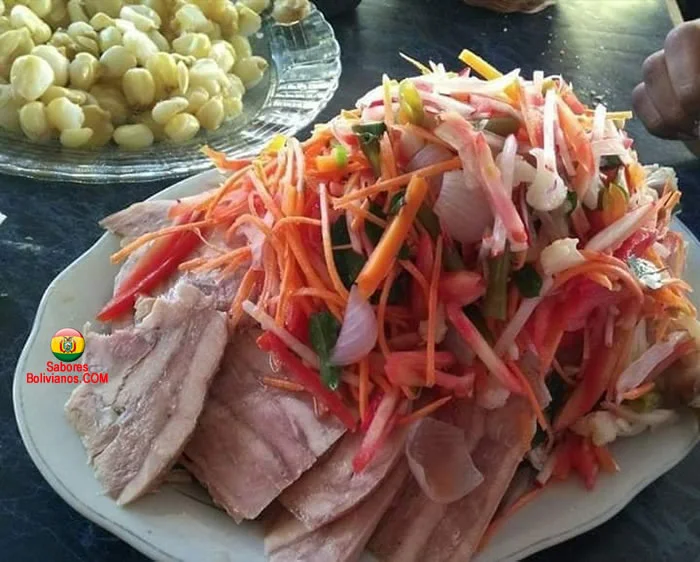
This Bolivian pork roll layers thin slices of marinated pork over pork skin, then cooks them slowly and presses the roll into slices. It takes advance preparation, but makes a richly seasoned dish that can be served cold or at room temperature.
Ingredients
- 1 piecepork skin
- 3 tablespoons (45 ml)salt
- abundantwater
- as neededpork loins
- 240 ml (1 cup)vinegar
- to tastepepper
- to tastecumin
- to tasteoregano
- to tastegarlic
- to tastechilli
- to tasteparsley
- to tastemint
- to tastesalt
Instructions
- 1
Clean and soak
Wash the pork skin and scrape it with a knife to remove all the hairs. Put it in a container with plenty of water and 3 tablespoons of salt, cover, and leave it overnight.
- 2
Slice the pork
On the same day you prepare the skin, cut the pork loins into thin slices and place them in a container.
- 3
Make the marinade
Blend 240 ml (1 cup) of vinegar with the pepper, cumin, oregano, garlic, chilli, parsley, mint and salt. Coat the pork slices with the sauce and leave them to marinate overnight, as you do with the skin.
- 4
Layer the filling
The next day, drain the skin. Lay a sheet of cling film on the work surface and spread the skin lengthways on top. Arrange the pork slices and marinade over it, covering the whole surface.
- 5
Roll tightly
Roll it up as tightly as possible, keeping the filling inside the skin and the cling film only on the outside.
- 6
Tie the roll
Tie the roll firmly with cotton or jute string.
- 7
Cook gently
Put the roll into a pot of boiling water. Simmer gently for 4 hours, or until the skin is soft.
- 8
Press and drain
Remove the roll from the pot and immediately put a weight on top. Leave it to drain overnight so excess liquid runs off and the roll takes its final shape.
- 9
Slice to serve
The next day, remove the cling film or cloth and the string. Cut the roll into slices to serve.
What is Bolivian pork roll?
This Bolivian-style roll is made by wrapping marinated pork in pork skin, cooking it until tender, and pressing it into a compact shape. It is a traditional preparation built around a savoury, herb-and-spice marinade.
Thinly sliced pork gives the filling an even layer, while the skin holds the roll together. Slow cooking and pressing help it become firm enough to slice.
Nutrition and macros by portion
The nutrition label shows one serving as written: 215 calories, 0g protein, 0g carbs, 0g fat.
| Portion | Adjustment | kcal | Protein | Carbs | Fat |
|---|---|---|---|---|---|
| Lighter | Smaller slices, more salad | 151 kcal | 0g | 0g | 0g |
| This serving | As written | 215 kcal | 0g | 0g | 0g |
| Hungry | Add another slice | 323 kcal | 0g | 0g | 0g |
The pork provides most of the protein, while the skin contributes much of the fat; the vinegar and seasonings add little carbohydrate. Pair a slice or two with vegetables or salad for a more balanced plate.
Preparing the pork skin
Clean skin: scrape away the hairs carefully before soaking it overnight in salted water. This is an important preparation step before rolling.
Drain well: let the skin drain before laying it out, so excess soaking water does not dilute the marinade.
Building the marinade
Blend smoothly: combine the vinegar with the herbs and seasonings so they coat the pork evenly. The recipe gives no quantities for most seasonings, so add them to taste.
Marinate overnight: give the thin pork slices time to rest in the sauce, just as the skin soaks. Keep both containers covered while they rest.
Rolling without spills
Spread evenly: cover the skin with pork and sauce, leaving the filling contained as you roll. Work lengthways and aim for a compact, even cylinder.
Tie firmly: cotton or jute string helps the roll hold its shape during the long simmer. Keep the cling film on the outside rather than rolling it into the filling.
Cooking and checking doneness
Keep it gentle: simmer the roll for 4 hours, checking that the water stays at a gentle simmer rather than a vigorous boil.
Check the skin: the stated cue is that it should be soft. If it is still firm, continue cooking until it reaches that texture.
Pressing and serving
Press overnight: put a weight on the roll as soon as it comes out of the pot, and leave it to drain overnight. This step removes excess liquid and firms the shape for slicing.
Serve in slices: remove the wrapping and string the next day, then cut the roll into rounds. It can be served as part of a Bolivian meal with a fresh salad or vegetables.
Planning the time
The listed total time of 45 minutes does not reflect the full process described in the method: the skin and pork marinate overnight, the roll cooks for 4 hours, and it is pressed overnight afterwards.
Start at least two days ahead so there is time for the soaking, marinating, cooking and pressing stages.
Recipe notes & tips
- Scrape the skin thoroughly before soaking it.
- Cover the pork and skin containers while they rest overnight.
- Spread the pork and marinade in an even layer across the skin.
- Keep the roll tightly wrapped and tied so the filling stays in place.
- Use a gentle simmer for the full 4 hours and check that the skin becomes soft.
- Press the roll overnight before removing the wrapping and slicing.
Variations
- Adjust the herbs: vary the amounts of parsley, mint and oregano to suit your taste.
- Change the chilli: use more or less chilli in the marinade for your preferred level of heat.
- Season the marinade: adjust the pepper and cumin to give the pork a different emphasis.
- Serve with salad: add a fresh salad alongside the slices for contrast.
- Slice for a platter: cut the pressed roll into thinner rounds for serving as part of a shared meal.
Common mistakes to avoid
- Skipping the overnight soak: the method calls for soaking the cleaned skin in salted water before rolling.
- Leaving hairs on the skin: scrape it carefully with a knife before soaking.
- Using thick pork slices: cut the loins thinly so they can cover the skin in an even layer.
- Rolling loosely: roll as tightly as possible and tie the roll firmly to help it keep its shape.
- Boiling vigorously: lower the heat to maintain a gentle simmer during the 4-hour cooking time.
- Slicing before pressing: leave the roll under a weight overnight so it drains and firms first.
How to store
Once cooked and pressed, keep the roll covered in the refrigerator and use within 3–4 days. Reheat slices thoroughly, or serve them cold; freeze portions in an airtight container if keeping them longer.
Frequently asked questions
How long does the whole recipe take?
The method includes overnight soaking and marinating, 4 hours of simmering, and another overnight pressing period. The stated 45-minute total time does not account for these waits.
Can I prepare the pork and skin on the same day?
Yes. The method says to slice the pork on the day you prepare the skin, then leave both to rest overnight.
How do I know when the roll is cooked?
The recipe says to simmer it for 4 hours, or until the pork skin is soft.
Why does the roll need to be pressed?
Pressing it overnight drains excess liquid and gives the roll its final shape, making it easier to slice.
Can I use plastic wrap inside the roll?
The method specifies that the cling film should cover only the outside surface as you roll. Tie the roll with cotton or jute string before cooking.
How should I serve it?
Remove the wrapping and string after pressing, then cut the roll into slices. Serve it with a fresh salad or vegetables.
Cook it from the original
This recipe comes from saboresbolivianos.com. Their page has the author’s own photos, notes and tips — the best place to cook it from.
Open the recipe on saboresbolivianos.com