
Cheddar & Sauerkraut Pierogies with Bacon Rhubarb Relish
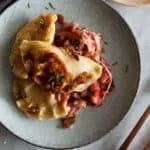
These homemade pierogies pair a tender dough with savoury cheddar and sauerkraut, then crisp up in bacon fat. A sweet-and-tart rhubarb relish with bacon makes them a hearty meal or a generous dish to share.
Ingredients
- 2 jars (907 g each; 32 oz each)sauerkraut
- ½ stick (about 57 g)butter
- 2 largeVidalia onions, diced
- as neededkosher salt and black pepper
- 420 g (3½ cups)plain flour
- 3eggs
- 30 ml (2 tbsp)sour cream
- 120 ml (½ cup), plus more if neededwater
- 1 loafTillamook extra sharp cheddar cheese, shredded
- from abovecooked sauerkraut
- to serveflaky sea salt
- 227 g (8 oz)raw bacon, diced
- 4 stalksrhubarb, diced
- 25 g (2 tbsp)brown sugar
- 2 tbsp (about 28 g)butter
- 1 tspfresh thyme, minced
- 2 tspchives, minced
Instructions
- 1
Cook the sauerkraut
Drain the sauerkraut in a colander and rinse it thoroughly under cold water. Bring a large pot of salted water to the boil, add the sauerkraut, then lower the heat to a simmer. Cover and cook for 45 minutes to 1 hour, until tender. Drain again and leave to cool slightly.
- 2
Fry with onions
Melt the ½ stick of butter in another pot over medium heat. Add the onions and sauté for about 8 minutes, until tender and lightly caramelised. Squeeze as much water as you can from the sauerkraut, add it to the onions and fry for about 10 minutes. Season generously with salt and black pepper, then leave to cool.
- 3
Mix the dough
Put the flour in a mixing bowl. In a separate bowl, whisk the eggs and sour cream until smooth, then whisk in the ½ cup of water. Add the wet mixture to the flour and stir; gradually add more water as needed until the dough comes together.
- 4
Knead and rest
Turn the dough onto a well-floured surface and knead for 4–5 minutes, until smooth. Shape it into a ball, wrap it in cling film and leave it to rest at room temperature for 20 minutes.
- 5
Fill the pierogies
Unwrap the dough and cut it into 4 pieces, keeping the pieces you are not using covered. Roll one piece at a time into a sheet about 4 mm (⅙ inch) thick and cut out circles with a 10 cm (4 inch) cutter. Put a small mound of sauerkraut in the centre of each circle, reserving 2 cups of sauerkraut for the relish, then add about 1 teaspoon of shredded cheddar. Brush the edges with water, fold each circle in half around the filling, and seal and crimp the edges. Transfer the pierogies to a lightly floured tray, cover with a tea towel and repeat with the remaining dough.
- 6
Boil in batches
Bring a large pot of salted water to the boil. Boil the pierogies in batches for a few minutes, until they float to the surface. Lift them out with a slotted spoon and place them on a plate lined with kitchen paper to dry.
- 7
Crisp the bacon
Put the bacon in a large cast-iron frying pan and cook over medium heat until the fat renders and the bacon is crisp. Remove the bacon with a slotted spoon and set it aside, leaving the fat in the pan.
- 8
Sear the pierogies
Working in batches, sear the dried pierogies in the hot bacon fat over medium heat until golden on one side. Turn and brown the other side, then move them to a platter and keep warm.
- 9
Make the relish
In the same pan, cook the diced rhubarb in the bacon fat over medium heat for 1–2 minutes, until slightly tender. Add the reserved 2 cups of sauerkraut and heat through. Stir in the brown sugar, 2 tablespoons of butter, thyme, chives and cooked bacon. Let the sugar and butter bubble for a few minutes, then transfer the relish to a bowl.
What are pierogies?
Pierogies are filled dumplings associated with Central and Eastern European cooking, commonly made with a soft dough and savoury fillings. This version brings together sauerkraut and sharp cheddar, then finishes the dumplings in a pan for a crisp exterior.
The accompanying relish balances the filling with tart rhubarb, sweet brown sugar and smoky bacon. Cooking the sauerkraut with onions first gives it a softer texture and mellower flavour for stuffing.
Nutrition and macros by portion
The nutrition label shows one serving as written: 1250 calories, 50g protein, 150g carbs, 62g fat.
| Portion | Adjustment | kcal | Protein | Carbs | Fat |
|---|---|---|---|---|---|
| Lighter | Serve fewer pierogies | 875 kcal | 35g | 105g | 43g |
| This serving | As written | 1250 kcal | 50g | 150g | 62g |
| Hungry | Add more pierogies | 1875 kcal | 75g | 225g | 93g |
The flour and dough contribute most of the carbohydrates, while the butter, cheddar and bacon provide much of the fat; the eggs, cheese and bacon also contribute protein. The listed yield is 5–6 dozen pierogies for 4 servings, so the estimated per-serving nutrition is especially sensitive to how many dumplings are actually eaten; balance a serving with green vegetables or salad.
Build flavour into the filling
Sauerkraut: rinsing and simmering it softens the cabbage and takes the edge off its brine. Squeezing it dry before frying helps keep the filling from making the dough wet.
Onions: give them the full 8 minutes to become tender and lightly caramelised. The sauerkraut then fries with them for about 10 minutes, concentrating the flavour before it goes into the dumplings.
Get the dough ready to shape
Water: add it gradually beyond the initial 120 ml, stopping once the dough comes together. The recipe does not specify a fixed extra amount, so use only what is needed.
Rest: leave the wrapped dough at room temperature for 20 minutes. This gives you a more manageable dough to roll, and keeping unused pieces covered helps prevent them drying out.
Seal the filling securely
Filling: use a small mound of sauerkraut and about a teaspoon of cheddar for each circle, leaving room around the edge. Keep the stated 2 cups of sauerkraut aside for the relish.
Edges: brush the dough with water, fold it around the filling and press the edges together before crimping. A clean, closed seam helps keep the filling inside while the dumplings boil.
Boil, dry and brown
Boiling: cook the pierogies in batches in salted water, removing them once they float to the surface. The recipe gives no exact boiling time, so watch for that cue rather than leaving them unattended.
Searing: let the boiled dumplings dry on kitchen paper before they meet the hot bacon fat. Brown them on both sides in batches so they have room to crisp instead of crowding the pan.
Finish the rhubarb relish
Rhubarb: sauté it for just 1–2 minutes, until slightly tender; it should not need a long cook. The reserved sauerkraut warms through in the same pan and keeps the relish connected to the filling.
Bacon and herbs: stir in the crisp bacon, butter, brown sugar, thyme and chives, then let the mixture bubble for a few minutes. Serve it alongside or over the warm pierogies.
What to serve alongside
The dumplings and relish make a substantial plate on their own. For a lighter-feeling meal, add a simple green salad or a serving of steamed green vegetables.
The recipe yields 5–6 dozen pierogies but lists 4 servings, so portion them according to appetite and the occasion. Flaky sea salt is listed for serving; taste before adding much, as the sauerkraut, cheese and bacon are already savoury.
Recipe notes & tips
- Squeeze the cooked sauerkraut thoroughly before frying it with the onions.
- Keep dough pieces and formed pierogies covered while you work.
- Reserve the 2 cups of sauerkraut for the relish before filling the dumplings.
- Use a slotted spoon to lift the boiled pierogies gently from the water.
- Dry the dumplings before searing so they brown in the bacon fat.
- Cook the pierogies in batches and keep finished ones warm while you make the relish.
Variations
- Add black pepper: season the filling to taste for a more pronounced peppery note.
- Change the herbs: use extra chives in place of some of the thyme.
- Serve with sour cream: offer a spoonful alongside the hot pierogies.
- Make the relish tangier: keep the rhubarb pieces slightly firm rather than cooking them further.
- Adjust the cheese: use another sharp cheddar if Tillamook extra sharp is unavailable.
Common mistakes to avoid
- Wet sauerkraut: squeeze it well after draining so excess moisture does not soften the dough.
- Overfilled circles: use a small mound of filling and leave clear edges to seal.
- Dry dough: keep unused pieces covered while rolling and shaping.
- Open seams: brush the edges with water and press them firmly together before crimping.
- Wet dumplings: let boiled pierogies drain and dry before frying.
- Crowded pan: sear in batches so the pierogies can brown on both sides.
How to store
Refrigerate leftover cooked pierogies and relish in separate airtight containers and use within 3 days. Reheat the pierogies in a frying pan until hot and crisp, and warm the relish separately; avoid leaving cooked food at room temperature for extended periods.
Frequently asked questions
Can I make the sauerkraut filling ahead?
Yes. Cook the sauerkraut and onions as directed, cool the mixture and refrigerate it until you are ready to shape the pierogies.
How do I know when the pierogies are boiled?
The method uses floating to the surface as the cue. Lift them out with a slotted spoon once they float.
Why do the pierogies need to dry before frying?
Drying removes surface water so the dumplings can sear in the bacon fat. It also helps reduce splattering when they go into the hot pan.
How much sauerkraut goes in the relish?
Reserve 2 cups of the cooked sauerkraut before filling the pierogies. Stir that reserved amount into the sautéed rhubarb.
Can I use frozen rhubarb?
The recipe calls for diced fresh rhubarb. Frozen rhubarb can release more liquid, so thaw and drain it before sautéing if you use it.
How many pierogies should I serve?
The recipe lists a yield of 5–6 dozen and 4 servings, so it does not give a precise number per person. Choose a portion to suit your appetite and whether you are serving sides.
Cook it from the original
This recipe comes from theoriginaldish.com. Their page has the author’s own photos, notes and tips — the best place to cook it from.
Open the recipe on theoriginaldish.com