
Vegan Kimchi Fried Rice
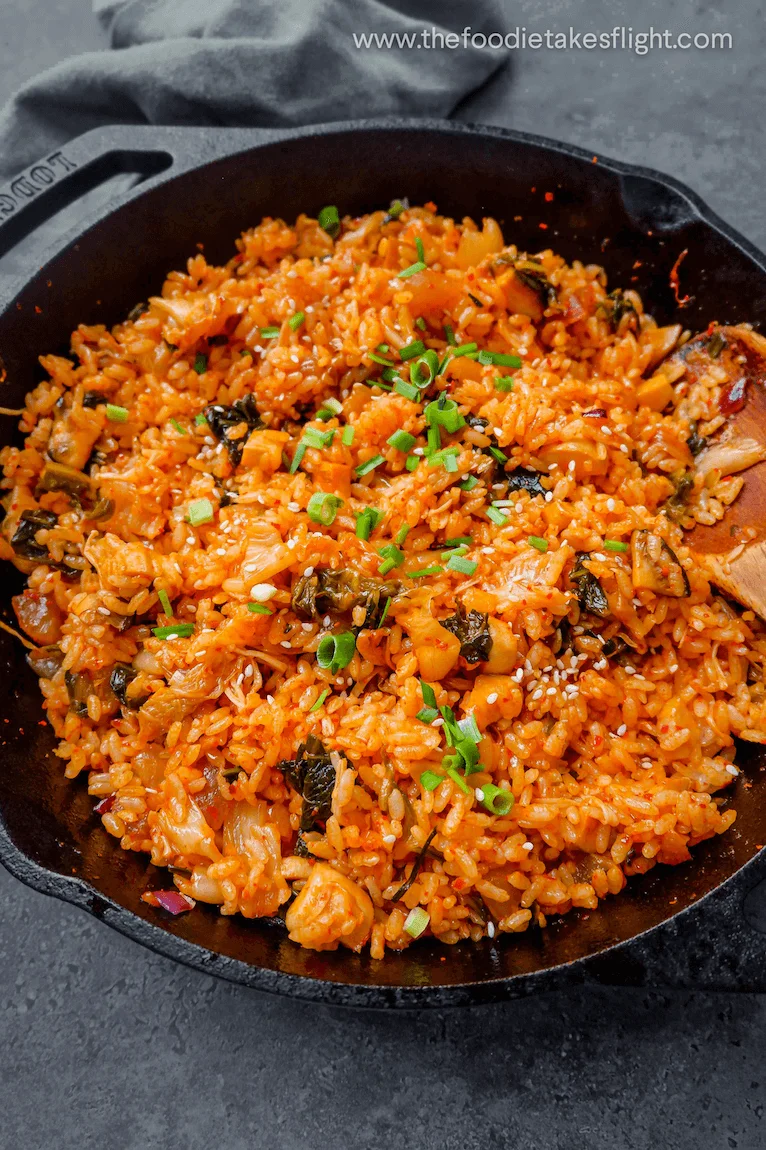
This vegan kimchi fried rice combines short-grain rice, tangy kimchi, mushrooms and a savoury, spicy sauce in a quick wok-cooked meal. Serve it as it is, or add crisp tofu and homemade ssamjang for a more substantial plate.
Ingredients
- 600 g (3 cups)cooked short-grain rice, cooled
- 30 ml (2 tbsp)sesame oil
- 2 clovesgarlic, minced
- 1spring onion, chopped, plus extra for topping
- 1/2 mediumonion, diced
- 150 g (1 cup)vegan kimchi, chopped
- 75 g (1/2 cup)vegan sausage, chorizo, ham or another protein, chopped
- 3fresh king oyster mushrooms, chopped into small pieces
- 140 g (5 oz)enoki or golden mushrooms, or other mushrooms (about 1 bunch)
- 60 ml (1/4 cup)kimchi juice or liquid
- 15 ml (1 tbsp)gochujang, or to taste
- 7.5 ml (1/2 tbsp)soy sauce, or to taste
- To tastesalt and pepper
- For toppingsesame seeds
- For toppingspring onion, chopped
- 60 g (1/4 cup)doenjang or Korean soybean paste
- 30 ml (2 tbsp)gochujang or Korean chilli paste
- 30 ml (2 tbsp)sesame oil
- 30 ml (2 tbsp)water, at room temperature
- 30 ml (2 tbsp)maple syrup or another liquid sweetener
- 10 ml (2 tsp)sesame seeds
- 1/4 smallonion, roughly chopped
- 400 g (14 oz)extra-firm tofu
- 5 ml (1 tsp)salt
- As neededneutral oil for cooking
Instructions
- 1
Separate the rice
Put the cooled rice in a bowl and gently separate the grains.
- 2
Cook the aromatics
Heat a large pan or wok over high heat and add the sesame oil. Once hot, sauté the garlic, diced onion and spring onion until aromatic, about 2 minutes. Add the chopped kimchi and sauté for 2–3 minutes.
- 3
Add the protein
Add the king oyster mushrooms and vegan sausage, ham or other chosen protein. Sauté for 3–4 minutes, until tender.
- 4
Add the mushrooms
Stir in the enoki mushrooms or other mushrooms, if using.
- 5
Add the rice
Add the separated rice to the pan.
- 6
Season the rice
Pour in the kimchi liquid, gochujang and soy sauce to taste.
- 7
Finish the rice
Mix well and cook for a few more minutes. Season with pepper and salt, or more soy sauce, to taste.
- 8
Garnish and serve
Add chopped spring onion and sesame seeds on top if desired. Serve hot; the rice can also be accompanied by pan-fried tofu and ssamjang sauce.
- 9
Blend the sauce
Briefly process or blend the doenjang, gochujang, sesame oil, water, maple syrup, sesame seeds and roughly chopped onion until smooth. Add more water if you want a thinner consistency. Keep in an airtight container until needed; it can be refrigerated for up to 2 weeks.
- 10
Press the tofu
Wrap the tofu in towels and place a heavy flat surface, such as a pan or plates, on top to press out excess liquid. Leave for 10–12 minutes, until the towels have absorbed the liquid.
- 11
Slice and season
Slice the tofu into thin squares about 1.3 cm (1/2 inch) thick. Sprinkle with salt; add more if serving the tofu without the ssamjang.
- 12
Fry the tofu
Heat a non-stick pan and add some neutral oil. Add the tofu and cook each side over medium heat until lightly golden and crisp.
What is vegan kimchi fried rice?
Kimchi fried rice is a Korean-inspired way to turn cooked rice into a savoury, tangy meal, with kimchi providing its characteristic fermented chilli flavour. This version pairs it with king oyster and enoki or golden mushrooms, and leaves the protein choice flexible.
Short-grain rice: its plump grains work well in a fried rice dish, especially when cooked and cooled ahead. Kimchi juice and gochujang bring seasoning and heat, while the optional tofu and ssamjang make the meal heartier.
Nutrition and macros by portion
The nutrition label shows one serving as written: 458 calories, 15g protein, 70g carbs, 13g fat.
| Portion | Adjustment | kcal | Protein | Carbs | Fat |
|---|---|---|---|---|---|
| Lighter | Use less sesame oil | 321 kcal | 11g | 49g | 9g |
| This serving | As written | 458 kcal | 15g | 70g | 13g |
| Hungry | Add the tofu and sauce | 687 kcal | 23g | 105g | 20g |
The cooked rice supplies most of the carbohydrates, while sesame oil and tofu contribute much of the fat; tofu and the optional vegan sausage, chorizo or ham provide protein. Pair a serving with extra vegetables if you want a more varied plate, or include the tofu for a more substantial meal.
Choose and prepare the rice
Leftover rice: cooled rice is easier to separate and stir through the pan than freshly cooked rice, which can be soft and clumpy. Break up the grains gently before cooking so they are ready to mix evenly with the vegetables.
Short grain: use the specified cooked rice rather than adding uncooked grains to the pan. If it is tightly packed from chilling, loosen it in the bowl before you start.
Build the flavour in stages
Aromatics: cook the garlic, onion and spring onion in hot sesame oil until fragrant before adding the kimchi. This gives them a brief head start in the pan.
Kimchi and mushrooms: sauté the kimchi first, then cook the king oyster mushrooms with the chosen protein until tender. Add the more delicate enoki or other mushrooms afterwards, followed by the rice and liquid seasonings.
Balance the seasoning
Kimchi liquid: it adds a concentrated tangy, savoury note, so stir it in with the gochujang and soy sauce rather than seasoning the rice blindly at the start.
Final taste: kimchi and soy sauce can vary in saltiness, and gochujang can vary in heat. Taste after mixing and adjust with salt, pepper or soy sauce as needed.
Get the tofu golden
Pressing: wrap the tofu in towels and weigh it down for 10–12 minutes so excess liquid can drain away. Cut it into thin squares and season with salt before frying.
Frying: use a non-stick pan over medium heat and let each side become lightly golden and crisp before turning. The recipe keeps the tofu seasoning simple because the ssamjang is already savoury and flavourful.
Make the ssamjang
Blend the doenjang, gochujang, sesame oil, water, maple syrup, sesame seeds and onion until smooth. Add water gradually if you prefer a looser sauce.
The sauce can be prepared ahead and kept in an airtight container in the fridge for up to 2 weeks. Serve it alongside the fried tofu and rice.
Serve it while hot
Finish the rice with chopped spring onion and sesame seeds if you like. The fresh topping adds contrast to the savoury, soft rice and mushrooms.
For a fuller meal, serve with the pan-fried tofu and ssamjang. The rice can also be enjoyed on its own or alongside other leftover vegetables.
Recipe notes & tips
- Use cooled leftover rice and loosen the grains before heating the pan.
- Have the vegetables and seasonings ready before you start cooking over high heat.
- Add gochujang and soy sauce to taste, since kimchi varies in saltiness and heat.
- Use the enoki or golden mushrooms listed, or another mushroom you have on hand.
- Press the tofu for the full 10–12 minutes to remove excess liquid before frying.
- Keep the ssamjang in an airtight container in the fridge if making it ahead.
Variations
- Change the protein: use vegan sausage, chorizo, ham or another protein of choice.
- Use other mushrooms: swap the enoki or golden mushrooms for another variety.
- Add leftover vegetables: stir in other vegetables you have available as the rice cooks.
- Adjust the heat: use more or less gochujang to suit your preference.
- Serve with tofu: add the pan-fried tofu and ssamjang for a more substantial meal.
Common mistakes to avoid
- Using clumpy rice: separate the cooled grains in a bowl before adding them to the pan.
- Adding all the mushrooms at once: add the enoki or other delicate mushrooms after the king oyster mushrooms and protein.
- Over-seasoning early: taste after adding kimchi liquid, gochujang and soy sauce, then adjust.
- Skipping the tofu press: wrap and weight the tofu for 10–12 minutes so it can become lightly crisp in the pan.
- Frying over high heat: cook the tofu over medium heat so each side can turn lightly golden without rushing.
How to store
Store leftover fried rice in an airtight container in the fridge and use within 3 days. Reheat until hot throughout in a pan or microwave, adding a splash of water if it seems dry. Keep the ssamjang separately in an airtight container in the fridge for up to 2 weeks.
Frequently asked questions
Can I use freshly cooked rice?
Cooled leftover rice is best because the grains are easier to separate and stir-fry. If using freshly cooked rice, let it cool and separate the grains before adding it.
Can I make this without vegan sausage?
Yes. The recipe allows another protein of choice, and the tofu can be served alongside. You can also leave out the sausage and use the mushrooms and other vegetables.
What can I use instead of enoki mushrooms?
Use golden mushrooms or another mushroom variety. Add them after the king oyster mushrooms and protein, as described in the method.
How do I make the ssamjang thinner?
Blend in a little more water until it reaches the consistency you want.
Can I prepare the ssamjang in advance?
Yes. Keep it in an airtight container in the fridge for up to 2 weeks.
How do I get the tofu crisp?
Press it between towels under a heavy flat surface for 10–12 minutes, then cook it in a non-stick pan over medium heat until each side is lightly golden.
Cook it from the original
This recipe comes from thefoodietakesflight.com. Their page has the author’s own photos, notes and tips — the best place to cook it from.
Open the recipe on thefoodietakesflight.com