
Peanut Butter Cookies
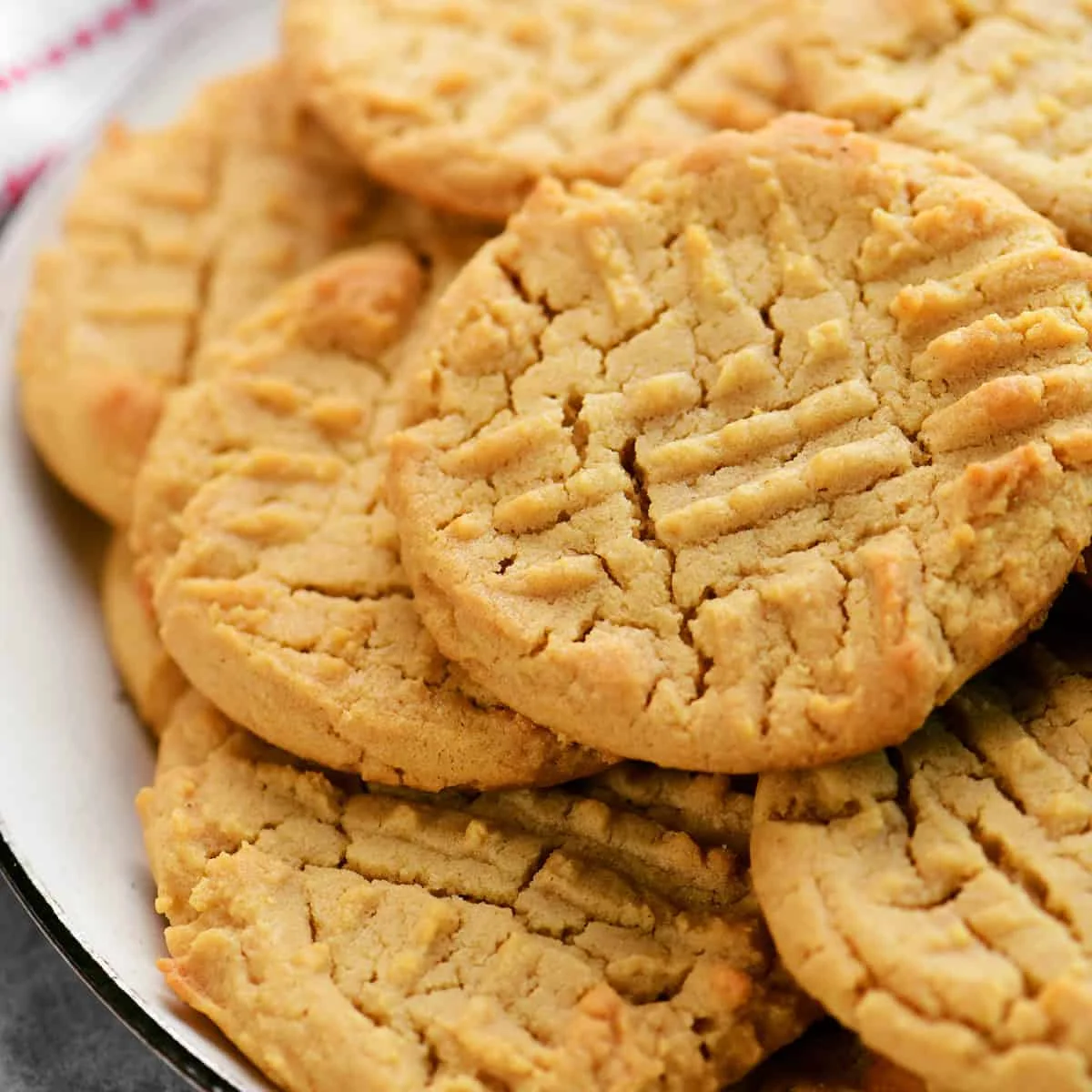
These American-style peanut butter cookies bake up chewy, with a criss-crossed top and a rich, nutty flavour. The dough is straightforward to mix and makes a generous batch for sharing or keeping in the biscuit tin.
Ingredients
- 113 gbutter, softened
- 92 gvegetable shortening
- 264 gcreamy peanut butter
- 220 gpacked light brown sugar
- 150 ggranulated sugar
- 2 largeeggs
- 5 ml (1 tsp)vanilla
- 300 gplain flour
- 7.5 ml (1½ tsp)bicarbonate of soda
- 5 ml (1 tsp)baking powder
- 2.5 ml (½ tsp)salt
Instructions
- 1
Heat the oven
Preheat the oven to 175°C (350°F).
- 2
Mix the fats
In a large bowl, mix the softened butter, shortening and peanut butter.
- 3
Beat in sugar
Add both sugars and beat for 2–3 minutes, until the mixture looks lighter in colour and fluffy.
- 4
Add eggs
Beat in the eggs and vanilla for 1–2 minutes.
- 5
Combine dry ingredients
In a separate bowl, mix the flour, bicarbonate of soda, baking powder and salt. Add this to the mixing bowl and stir until combined.
- 6
Shape the cookies
Line a baking sheet with baking parchment and scoop 9 balls of dough onto it, using about 30 ml (2 tablespoons) of dough for each. Flatten each ball with a fork to make a criss-cross pattern.
- 7
Bake and cool
Bake at 175°C (350°F) for 8–11 minutes. Leave the cookies on the baking sheet for a couple of minutes, then transfer them to a wire rack to cool completely.
- 8
Bake remaining dough
Continue scooping and baking the dough in batches, letting the baking sheets cool between batches.
What are peanut butter cookies?
Peanut butter cookies are an American-style bake with a pronounced roasted-peanut flavour and a tender, chewy crumb. The fork-pressed criss-cross is a familiar feature of this old-fashioned version.
Here, butter and vegetable shortening are creamed with peanut butter and two kinds of sugar. That combination makes a soft dough that bakes into a generous batch, suitable for celebrations or everyday treats.
Nutrition and macros by portion
The nutrition label shows one serving as written: 135 calories, 2g protein, 15g carbs, 8g fat.
| Portion | Adjustment | kcal | Protein | Carbs | Fat |
|---|---|---|---|---|---|
| Lighter | Smaller cookies | 95 kcal | 1g | 11g | 6g |
| This serving | As written | 135 kcal | 2g | 15g | 8g |
| Hungry | Two-cookie serving | 203 kcal | 3g | 23g | 12g |
The sugars and flour provide most of the carbohydrates, while the butter, shortening and peanut butter contribute much of the fat. Peanut butter and eggs also provide some protein. For a more balanced snack, pair a cookie with fresh fruit or yoghurt.
Why use two fats?
Butter: softened butter blends more readily with the other fats and adds richness. Let it soften until it gives slightly when pressed, without becoming oily.
Shortening: this works alongside the butter in the dough. Mix it thoroughly with the peanut butter and butter before adding the sugars.
Getting the dough texture right
Creaming: beat the sugars with the fats for the full 2–3 minutes, until the mixture looks lighter and fluffy. This visual cue matters more than simply stirring until the sugar disappears.
Flour: spoon it into the measuring cup and level it with the back of a knife, as specified in the recipe. Once it goes into the bowl, stir only until the dry ingredients are combined.
Making the criss-cross pattern
Portion: use about 30 ml (2 tablespoons) of dough per cookie and leave room between the 9 portions on the lined sheet. Flatten each ball gently with a fork to leave the characteristic pattern.
If the fork sticks to the dough, press it down steadily rather than twisting it. The aim is to flatten the balls and mark the tops, not to spread the dough thinly.
When are they done?
Timing: bake for 8–11 minutes at 175°C (350°F), checking towards the shorter end of the range. The recipe gives time rather than a specific colour cue, so avoid extending the bake unnecessarily.
Cooling: leave the cookies on the baking sheet for a couple of minutes before moving them to a wire rack. They are delicate while hot, and the brief rest makes them easier to transfer.
Baking in batches
Cool sheets: allow each baking sheet to cool between batches, as directed. This helps the next portion of dough begin baking on a cool surface rather than a hot one.
Work in rounds of 9 cookies, repeating the scooping, fork-pressing and baking steps until you have used the dough.
Serving ideas
These cookies work well on their own with tea, coffee or a glass of milk. For a simple dessert plate, serve them alongside fresh fruit or a scoop of ice cream.
Their peanut flavour is quite rich, so a modest serving alongside a less sweet drink or fruit can make a nicely balanced snack.
Recipe notes & tips
- Soften the butter before mixing so it combines smoothly with the shortening and peanut butter.
- Beat the sugars and fats for the full 2–3 minutes to reach the lighter, fluffy texture described.
- Measure the flour by spooning it into the cup and levelling it, rather than packing it down.
- Use about 30 ml (2 tablespoons) of dough for each cookie to keep the portions consistent.
- Let the baking sheets cool between batches, as the method specifies.
- Move the cookies carefully after their brief rest on the baking sheet, while they are still tender.
Variations
- More peanut flavour: use a crunchy peanut butter in place of the creamy style.
- Chocolate chips: fold chocolate chips into the dough after combining the dry ingredients.
- Chopped peanuts: stir chopped peanuts through the finished dough for extra crunch.
- Smaller cookies: scoop smaller portions and begin checking them earlier in the baking time.
- Sandwich cookies: spread a little peanut butter between two fully cooled cookies.
Common mistakes to avoid
- Packing the flour: spoon it into the measuring cup and level it so the dough does not get an unintended extra measure.
- Skipping the creaming time: beat the fats and sugars for 2–3 minutes, until light and fluffy.
- Overmixing after adding flour: stir only until the dry ingredients are combined.
- Skipping the fork pattern: flatten each dough ball with a fork to create the criss-crossed top.
- Using a hot baking sheet: cool it between batches before adding more dough.
- Moving them straight away: leave the cookies on the sheet for a couple of minutes before transferring them.
How to store
Once completely cool, store the cookies in an airtight container at room temperature. The recipe does not specify a storage life, so check their texture and freshness before serving. Reheat briefly in a low oven if you would like them warm.
Frequently asked questions
Can I use crunchy peanut butter?
The recipe calls for creamy peanut butter. Crunchy peanut butter can be used for a more textured cookie, though the finished dough will have more pieces of peanut in it.
Why do I need to press the cookies with a fork?
The fork flattens the dough balls and gives the cookies their familiar criss-cross pattern. Press each portion gently rather than flattening it too thinly.
How much dough should I use for each cookie?
Use about 30 ml (2 tablespoons) per cookie. The method places 9 portions on each baking sheet.
How long should I bake them?
Bake at 175°C (350°F) for 8–11 minutes. The exact time within that range can vary with the oven and the size of the portions.
Can I put dough on a warm baking sheet?
The method recommends letting the baking sheets cool between batches. Use a cool sheet for each round of dough.
How many cookies does this recipe make?
The recipe is listed as 50 servings. Bake the dough in batches of 9 cookies, continuing until it is used up.
Cook it from the original
This recipe comes from thegunnysack.com. Their page has the author’s own photos, notes and tips — the best place to cook it from.
Open the recipe on thegunnysack.com