
Cheese and herb Irish soda bread
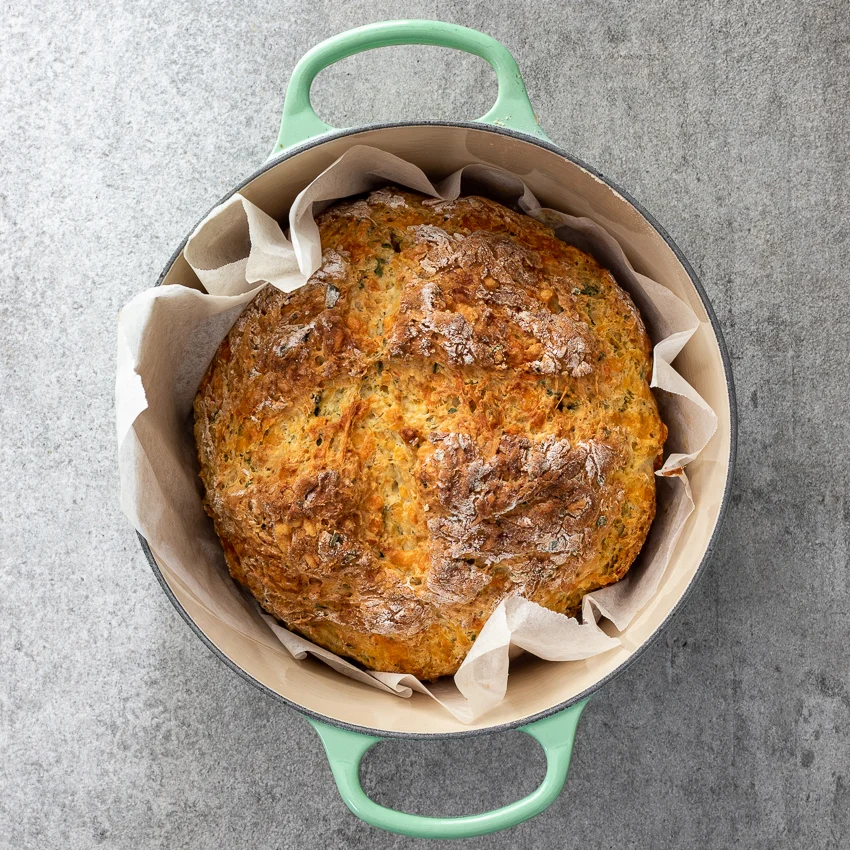
This no-knead Irish soda bread combines cheddar and fresh herbs in a quick, tender loaf with a savoury crust. It is a straightforward bake for St Patrick’s Day or any meal that calls for warm bread.
Ingredients
- 500 g (4 cups)plain flour
- 7 g (1½ tsp)bicarbonate of soda
- 5 g (1 tsp)salt
- 500 ml (2 cups)buttermilk
- 1egg
- 110 g (1 cup)grated cheddar cheese
- 15 g (½ cup)fresh herbs, chopped (such as parsley, sage and chives)
Instructions
- 1
Prepare the oven
Heat the oven to 180°C (360°F). Line a Dutch oven or cast-iron pot with baking parchment.
- 2
Mix dry ingredients
Whisk the flour, bicarbonate of soda and salt together in a large bowl.
- 3
Combine wet ingredients
Whisk the egg into the buttermilk, then pour the mixture into the bowl of dry ingredients.
- 4
Add cheese and herbs
Mix until the dough is beginning to come together, with some large lumps still visible. Add the cheddar and chopped herbs.
- 5
Finish the dough
Continue mixing just until the dough comes together. It should look sticky and shaggy rather than smooth.
- 6
Score the loaf
Transfer the dough to the lined pot and use a sharp knife to score a cross on top. Cover with the lid and place in the preheated oven.
- 7
Bake the bread
Bake for 30–45 minutes, until cooked through. The loaf should sound hollow when tapped on the bottom, and a skewer inserted into it should come out clean.
- 8
Cool and serve
Take the pot out of the oven and leave the bread to cool for 10–15 minutes before slicing. Serve with butter.
What is Irish soda bread?
Irish soda bread is a quick bread leavened with bicarbonate of soda rather than yeast, so it does not need proving or kneading. Its familiar cross-cut top helps divide the loaf and gives the dough room to expand as it bakes.
This version adds cheddar and a mixture of fresh herbs for a savoury twist on the traditional loaf. Buttermilk provides the acidity that activates the bicarbonate of soda.
Nutrition and macros by portion
The nutrition label shows one serving as written: 296 calories, 14g protein, 47g carbs, 4g fat.
| Portion | Adjustment | kcal | Protein | Carbs | Fat |
|---|---|---|---|---|---|
| Lighter | Smaller slice | 207 kcal | 10g | 33g | 3g |
| This serving | As written | 296 kcal | 14g | 47g | 4g |
| Hungry | Larger slice | 444 kcal | 21g | 71g | 6g |
The flour supplies most of the carbohydrates, while the cheddar, buttermilk and egg contribute protein and some fat. Serve a slice with soup or salad for a more balanced plate.
The key ingredients
Buttermilk: its acidity reacts with the bicarbonate of soda to help the loaf rise. Whisk the egg into it before adding it to the flour mixture.
Cheddar and herbs: grated cheddar brings a salty, savoury flavour, while parsley, sage and chives add freshness. Chop the herbs before mixing them through the dough.
Mix just enough
Lumpy dough: start by mixing the wet and dry ingredients only until they begin to come together, then add the cheese and herbs. A shaggy, sticky dough is what you want.
Gentle finish: stop mixing as soon as no dry patches remain and the dough holds together. Making it smooth by mixing for longer can leave the loaf dense.
Check the loaf is baked
Timing: bake for 30–45 minutes at 180°C, using the range as a guide since ovens and pots can vary. Keep the lid on while the loaf bakes as directed.
Doneness: tap the bottom of the loaf and listen for a hollow sound, then check that a skewer inserted into it comes out clean. Let it rest for 10–15 minutes before slicing.
Using a Dutch oven
Lined pot: baking parchment makes it easier to lift out the loaf and helps prevent it sticking to the cast iron. Make sure the pot is large enough to hold the dough with space for it to expand.
Covered baking: the recipe uses the pot lid during baking, so fit it securely before putting the pot in the oven. Take care when removing the hot lid and pot.
Serving ideas
Warm slices: serve the bread after its short cooling rest, with butter as suggested in the method. The cheese and herbs also make it a flavourful partner for soup.
For a fuller meal, pair a slice with a bowl of soup or a salad. Allowing the loaf to cool briefly helps it slice more neatly.
Recipe notes & tips
- Measure the flour without packing it into the cup, or use the metric weight for consistency.
- Grate the cheddar finely so it distributes through the dough more evenly.
- Chop the herbs finely before adding them to the dough.
- Mix by hand or on a low setting, stopping as soon as the dough holds together.
- Use a sharp knife to make a clear cross on top before baking.
- Let the loaf rest for 10–15 minutes before cutting to make slicing easier.
Variations
- Herb mix: use another combination of fresh herbs in place of parsley, sage and chives.
- Cheese choice: swap the cheddar for another firm, well-flavoured grated cheese.
- Extra herbs: increase the variety of herbs while keeping the chopped quantity at ½ cup.
- Smaller loaves: divide the dough between smaller lined pots and check each loaf for doneness.
- Soup pairing: serve the bread warm alongside a bowl of vegetable or potato soup.
Common mistakes to avoid
- Overmixing the dough: stop once it comes together, as a smooth dough can bake up dense.
- Adding the cheese too early: first bring the dough partway together, then mix in the cheddar and herbs.
- Skipping the cross: score the top before baking so the loaf can open as it rises.
- Cutting too soon: wait 10–15 minutes after baking so the loaf is easier to slice.
- Guessing at doneness: use both the hollow-sounding base and a clean skewer as checks.
How to store
Once completely cool, store the bread wrapped or in an airtight container at room temperature for up to 2 days. Reheat slices briefly in a warm oven or toaster; freeze extra bread, well wrapped, for longer storage.
Frequently asked questions
Can I make this without a Dutch oven?
The method calls for a lidded Dutch oven or cast-iron pot. If you use another oven-safe lidded pot, make sure it is suitable for 180°C and line it with baking parchment.
Can I use dried herbs instead of fresh?
The recipe specifies fresh herbs, which have a softer texture and flavour in the loaf. Dried herbs can be used, but the result will differ.
How do I know when the bread is done?
Tap the bottom and listen for a hollow sound, and insert a skewer into the loaf. It is ready when the sound is hollow and the skewer comes out clean.
Why is the dough sticky and shaggy?
That is the expected texture for this no-knead dough. Avoid adding extra flour just to make it smooth, and stop mixing once it comes together.
Can I prepare the dough ahead?
For best results, mix and bake it straight away, since the bicarbonate of soda starts reacting once it meets the acidic buttermilk.
Can I freeze the bread?
Yes. Cool it completely, wrap it well and freeze it. Thaw before serving, then warm slices in a toaster or a low oven.
Cook it from the original
This recipe comes from simply-delicious-food.com. Their page has the author’s own photos, notes and tips — the best place to cook it from.
Open the recipe on simply-delicious-food.com