
Vegan Corned “Beef” Hash, Filipino-Style
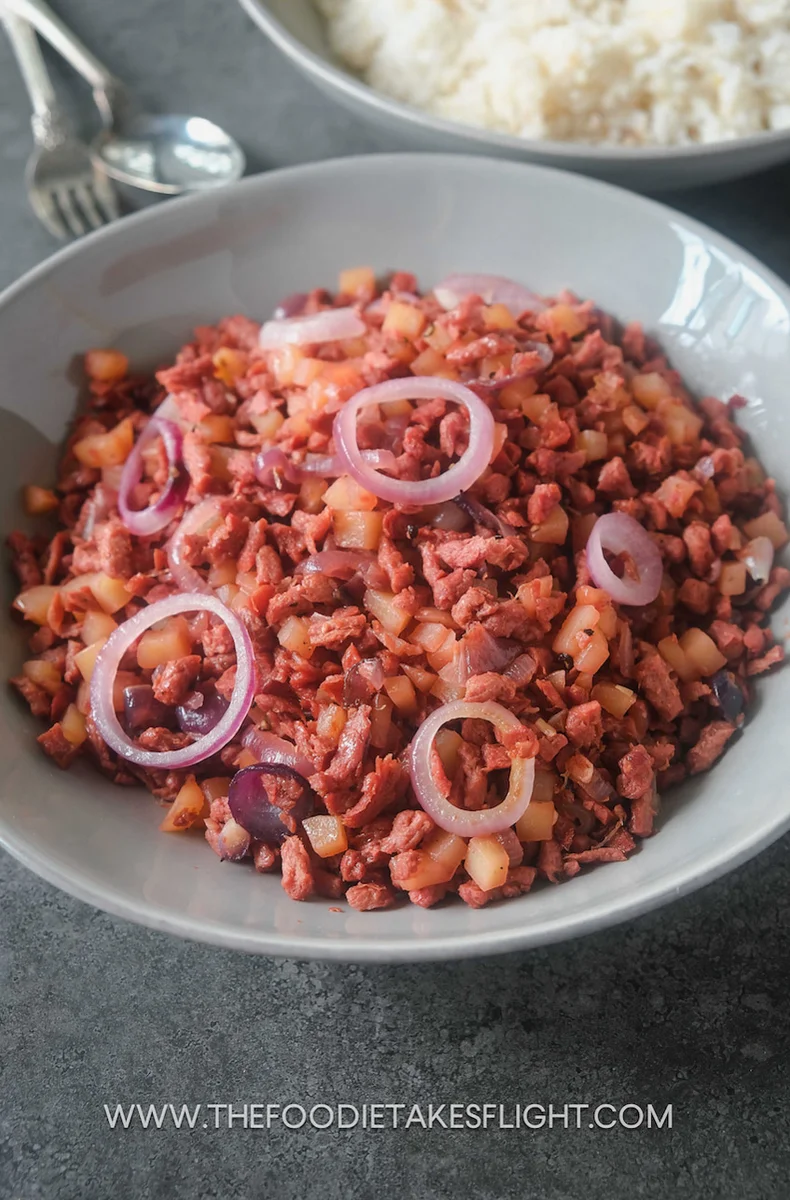
This Filipino-style vegan corned “beef” hash combines soy curls coloured with beet or radish powder and annatto with onions and potatoes. Serve it hot with sinangag, or Filipino garlic rice, for a hearty meal.
Ingredients
- 355 ml (1 1/2 cups)boiling-hot imitation beef broth or vegetable broth
- 1–1 1/2 tspsalt
- 1/2 tspred radish powder or beetroot powder
- 1/4 tspatsuete or annatto powder
- 100 g (2 1/2 cups)dry soy curls
- 60–75 ml (4–5 tbsp)neutral oil
- 2 smallonions, sliced into rings
- 4 clovesgarlic, minced
- 2 smallpotatoes, peeled and diced
- 1–2 tbspsugar, or to taste
Instructions
- 1
Mix the broth
Combine the boiling-hot broth with the salt, radish or beetroot powder, and atsuete powder.
- 2
Soak the soy
Pour the broth mixture into a heatproof bowl with the soy curls and mix well. Cover and soak for 15–20 minutes, until the curls have doubled in size. Alternatively, soak them overnight in room-temperature broth.
- 3
Prepare the curls
Drain off any excess liquid once the soy curls are rehydrated. Roughly chop them into smaller pieces, breaking some apart by hand to make shreds.
- 4
Heat the oil
Set a large skillet or pan over medium heat. When it is hot, add the oil.
- 5
Soften the aromatics
Add the onions and garlic and sauté for 1–2 minutes, until the onions are tender.
- 6
Cook the potatoes
Add the potatoes and a pinch of salt. Cook for 5–6 minutes, until nearly cooked through but still with some bite. Add 2–3 tablespoons of water if needed to help them cook.
- 7
Finish the hash
Add the soy curls and cook them with the potatoes. Season to taste with salt, pepper and sugar, if desired, and add more oil if you like.
- 8
Serve the hash
Turn off the heat and serve the hash with sinangag, or fried garlic rice.
- 9
Use leftovers
Mix leftover hash with potatoes to make a corned “beef” and potato pancake, like a hash brown. Alternatively, freeze the cooked hash and thaw it when ready to reheat in a pan or microwave.
What is Filipino-style corned “beef” hash?
Corned beef hash is a familiar American-style skillet dish, usually made with corned beef and potatoes. This meat-free take uses soy curls for a savoury, chewy substitute.
The Filipino-style cues are the coloured soy curls and the suggested pairing with sinangag, a Filipino garlic rice. Beet or radish powder and annatto tint the broth, while onions and potatoes make the hash substantial.
Nutrition and macros by portion
The nutrition label shows one serving as written: 332 calories, 29g protein, 21g carbs, 14g fat.
| Portion | Adjustment | kcal | Protein | Carbs | Fat |
|---|---|---|---|---|---|
| Lighter | Use less oil | 232 kcal | 20g | 15g | 10g |
| This serving | As written | 332 kcal | 29g | 21g | 14g |
| Hungry | Larger hash portion | 498 kcal | 44g | 32g | 21g |
The soy curls provide most of the protein, while the potatoes and soy curls contribute carbohydrates. Most of the fat comes from the neutral oil; serve a moderate portion alongside vegetables or rice to make a balanced plate.
Choosing the broth and colour
Broth: Imitation beef broth gives the soy curls a beef-like savoury flavour, while vegetable broth works as an alternative. Use either one hot for the quick soak.
Colour: Red radish or beetroot powder brings a reddish hue, and atsuete, also called annatto, adds colour as well. Mix the powders into the broth before adding the curls so they are distributed evenly.
Getting the soy curl texture right
Soaking: Give the curls 15–20 minutes in the hot broth, checking that they have expanded before draining. For an overnight soak, use room-temperature broth instead.
Shredding: Chop the rehydrated curls into smaller pieces, then pull some apart by hand. This gives the hash a mix of smaller pieces and shreds rather than leaving every curl whole.
Cooking the potatoes
Even pieces: Dice the peeled potatoes into similar-sized pieces so they cook at roughly the same pace. They go into the pan after the onions and garlic.
Doneness: Cook for 5–6 minutes, aiming for potatoes that are almost cooked through but still have a little bite. A few tablespoons of water can help them soften if they need it.
Balancing the pan
Oil: The recipe uses a generous amount of neutral oil, which helps coat the soy curls and potatoes. Add more during the final cooking stage if you prefer a richer hash.
Seasoning: Salt, pepper and sugar are adjusted to taste as the curls cook with the potatoes. Taste before serving, especially if the broth you used is already well seasoned.
Serving ideas
Rice: Serve the hash with sinangag or another portion of fried garlic rice, as suggested in the recipe. The rice makes a simple accompaniment to the savoury skillet.
Leftovers: The cooked mixture can also be combined with potatoes and made into a pancake-style dish. Reheat the hash in a pan or microwave after thawing if it has been frozen.
Recipe notes & tips
- Slice the onions into rings before heating the pan so they are ready to sauté.
- Drain the rehydrated soy curls well to avoid carrying excess soaking liquid into the pan.
- Break apart some of the curls by hand if you want a more shredded texture.
- Keep the potatoes slightly firm when you add the soy curls, as they will continue cooking together.
- Taste the hash before adding all the sugar, salt or pepper.
Variations
- Use vegetable broth: Choose it instead of imitation beef broth for the soaking liquid.
- Try beetroot powder: Use it in place of red radish powder for the colour.
- Soak overnight: Leave the soy curls in room-temperature broth rather than using the quick hot soak.
- Add more oil: Use a little extra during cooking for a richer hash.
- Make pancakes: Combine leftover hash with potatoes and shape it into a pancake-style dish.
Common mistakes to avoid
- Uneven potato pieces: Dice them to a similar size so they cook at a more even pace.
- Curls not fully rehydrated: Soak until they have doubled in size before draining and chopping.
- Too much soaking liquid: Drain the curls well before adding them to the skillet.
- Overcooked potatoes: Stop cooking them when they are nearly done but still have a little bite.
- Over-seasoning early: Adjust salt, pepper and sugar to taste as the hash finishes cooking.
How to store
Refrigerate leftover hash in a covered container and use within 3–4 days. The cooked hash can also be frozen; thaw it before reheating in a pan or microwave.
Frequently asked questions
Can I soak the soy curls overnight?
Yes. Leave them to soak overnight in room-temperature broth rather than hot broth.
What can I use instead of imitation beef broth?
Vegetable broth is listed as an alternative. The recipe also offers red radish or beetroot powder for colour, alongside the atsuete or annatto.
How do I know when the potatoes are ready?
After 5–6 minutes, they should be almost cooked through but still have some bite. Add 2–3 tablespoons of water if they need help cooking.
Can I make the hash ahead?
You can soak the soy curls overnight, then cook the hash when you are ready. Cooked leftovers can be frozen and thawed before reheating.
What should I serve with this hash?
Serve it with sinangag, or Filipino fried garlic rice, as suggested in the recipe.
Can I turn leftovers into something else?
Yes. Mix the leftover hash with potatoes to make a corned “beef” and potato pancake, similar to a hash brown.
Cook it from the original
This recipe comes from thefoodietakesflight.com. Their page has the author’s own photos, notes and tips — the best place to cook it from.
Open the recipe on thefoodietakesflight.com