
Vegan Wonton Noodle Soup
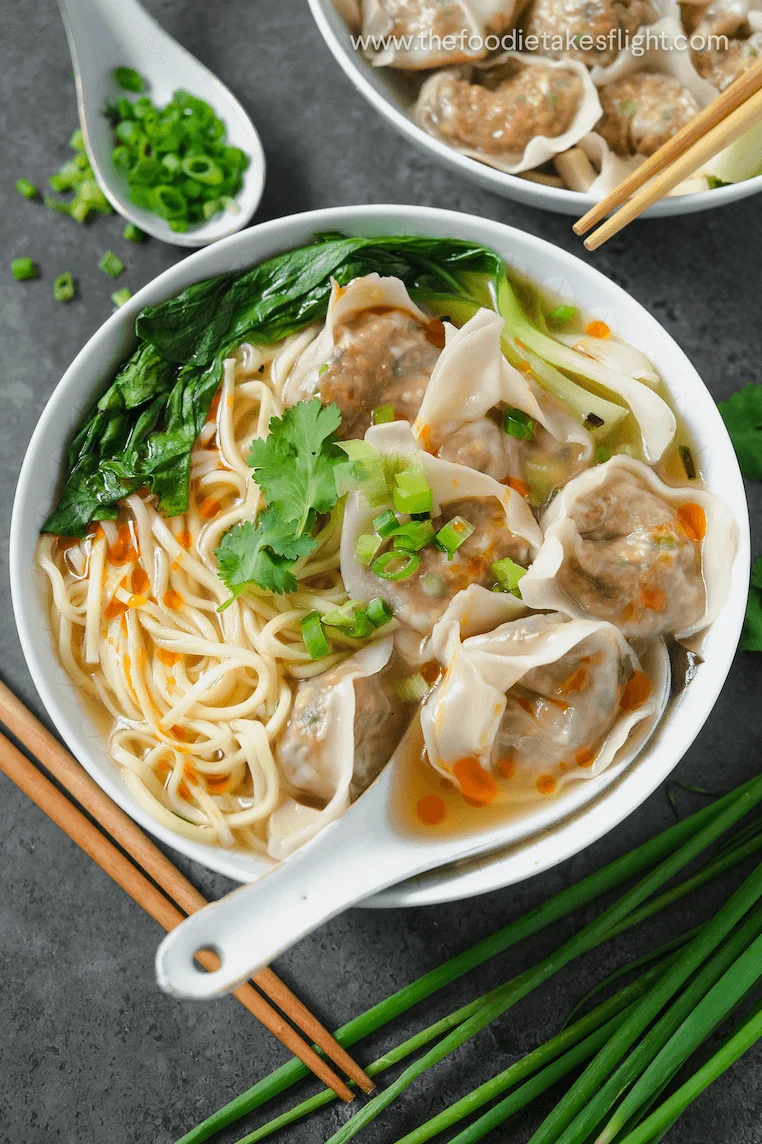
This vegan wonton noodle soup pairs chewy wheat noodles and tender wontons with a savoury mushroom and vegetable broth. It makes a warming, customisable meal, finished with greens, fresh herbs and a drizzle of chilli oil.
Ingredients
- 15 ml (1 tbsp)sesame oil, or neutral oil
- 1spring onion, chopped
- 2 clovesgarlic, minced
- 100 gfresh mushrooms of your choice, such as king oyster mushrooms
- 1.42 litres (6 cups), plus up to 240 ml (1 cup) extra water or vegetable stock if neededvegetable stock
- 15 ml (1 tbsp), or to tastesoy sauce
- 10 ml (2 tsp)sugar
- 1 pinchwhite pepper
- to tastesalt
- 130 gdried wheat noodles of your choice
- 12vegan wontons
- 1 head, optionalpak choi or other leafy greens
- to tastespring onions, chopped
- to tastewansoy or coriander, chopped
- to taste, optionalchilli oil or chilli sauce
Instructions
- 1
Heat the oil
Set a medium or large pot over a medium heat. Once hot, add the sesame oil.
- 2
Cook aromatics
Add the spring onion and garlic and sauté for about 30 seconds, until fragrant.
- 3
Brown mushrooms
Add the mushrooms and cook for 1–2 minutes. Leave them undisturbed if you want them to brown lightly.
- 4
Simmer the broth
Pour in 1.42 litres (6 cups) of vegetable stock and add the soy sauce, sugar and white pepper. Cover the pot and simmer over a medium-high heat until the broth boils.
- 5
Cook the noodles
Add the noodles to the boiling soup and cook until they are still very chewy. Avoid overcooking so they retain their bite when the hot soup is poured over them later.
- 6
Drain the noodles
Lift the noodles out of the soup. If you like, rinse them under cold water to stop them cooking further.
- 7
Divide between bowls
Split the noodles between two bowls and set them aside.
- 8
Cook the wontons
With the soup over a medium heat, add the wontons, working in two batches if your pot is small. Cook for 1–2 minutes, until they float and the wrappers turn slightly translucent so the filling is visible. Avoid overcooking, as they will continue to cook in the hot soup.
- 9
Add the wontons
Lift the wontons out of the soup and divide them between the two bowls with the noodles.
- 10
Cook the greens
If using greens, cook them in the soup, then portion them into the bowls.
- 11
Adjust the seasoning
Taste the broth. If the noodles have made it too salty, add up to 240 ml (1 cup) of water or vegetable stock to thin it. Otherwise, add more salt to taste if needed.
- 12
Pour the soup
Once the broth tastes right, turn off the heat and immediately ladle or pour it into the bowls over the noodles and wontons.
- 13
Garnish and serve
Top the bowls with spring onion and wansoy or coriander, then add chilli oil if desired. Serve hot.
What is wonton noodle soup?
Wonton noodle soup is a Cantonese-style meal of noodles and filled dumplings served in broth, with plenty of regional and family variations. This vegan version takes inspiration from restaurant wonton mein, using plant-based wontons in a simple mushroom and vegetable stock.
The combination works because the noodles bring a springy, chewy texture while the wontons make the bowls more substantial. Fresh herbs and chilli oil add a bright, spicy finish.
Nutrition and macros by portion
The nutrition label shows one serving as written: 411 calories, 15g protein, 60g carbs, 11g fat.
| Portion | Adjustment | kcal | Protein | Carbs | Fat |
|---|---|---|---|---|---|
| Lighter | Use less oil | 288 kcal | 11g | 42g | 8g |
| This serving | As written | 411 kcal | 15g | 60g | 11g |
| Hungry | Add more noodles | 617 kcal | 23g | 90g | 17g |
The wheat noodles provide most of the carbohydrates, while sesame oil and chilli oil contribute much of the fat. The wontons supply some protein, alongside smaller amounts from the noodles and mushrooms. For a more balanced bowl, include the optional greens and add another vegetable side if you like.
Build flavour with aromatics
Spring onion and garlic: A brief sauté in sesame oil releases their aroma before the stock goes in. Keep the heat moderate so the garlic becomes fragrant without scorching.
Mushrooms: King oyster mushrooms or another fresh variety add savoury depth. Let them sit briefly in the pot if you want a little light browning.
Keep the noodles chewy
Noodle texture: Cook the wheat noodles only until they still have a pronounced chew. They meet hot broth again in the serving bowls, so cooking them fully in the pot can leave them soft.
Separate cooking: Taking the noodles out before cooking the wontons helps you control each component and makes it easier to divide everything between the bowls.
Watch the wontons
Doneness cues: The wontons are ready after about 1–2 minutes, when they float and their wrappers become slightly translucent. Follow the visual cues as well as the timing, since wonton size and filling can vary.
Small batches: If the pot is crowded, cook the wontons in two batches. Remove them promptly so they do not overcook while you prepare the rest.
Balance the broth
Seasoning: Soy sauce, stock and noodles all contribute savoury flavour, so taste the broth before adding salt. If it seems too salty after cooking the noodles, loosen it with up to 240 ml (1 cup) of water or extra stock.
Finishing heat: Chilli oil or chilli sauce is optional and is easiest to adjust in each bowl. Add a little at a time so the broth's mushroom and stock flavours remain clear.
Add greens and serve
Greens: Pak choi or other leafy greens are optional; cook them in the broth and divide them between the bowls. Their freshness balances the rich, savoury soup.
Garnishes: Finish with chopped spring onion and wansoy or coriander. Serve as soon as the hot broth is added, while the noodles are chewy and the wontons are tender.
Recipe notes & tips
- Have the two serving bowls ready before cooking the noodles so you can assemble the soup promptly.
- Use a pot with enough room to cook the wontons without crowding, or cook them in two batches.
- Taste the broth after the noodles come out before adding extra salt.
- Keep the noodles slightly undercooked so they hold their chew in the hot broth.
- Adjust the chilli oil in each bowl to suit individual preferences.
Variations
- Change the mushrooms: Use another fresh mushroom variety in place of king oyster mushrooms.
- Swap the greens: Cook another leafy green in the broth instead of pak choi.
- Choose your noodles: Use a different type of wheat noodle, keeping an eye on its cooking time.
- Use neutral oil: Replace the sesame oil with a neutral oil for a less pronounced sesame flavour.
- Adjust the heat: Serve chilli oil or chilli sauce on the side so each person can add their preferred amount.
Common mistakes to avoid
- Overcooked noodles: Take them out while still chewy, since they will meet hot broth again in the bowls.
- Overcooked wontons: Remove them when they float and their wrappers turn slightly translucent.
- Crowded wontons: Cook them in two batches if they do not fit comfortably in the pot.
- Oversalted broth: Taste before adding salt, then thin with water or extra vegetable stock if needed.
- Burnt garlic: Sauté the aromatics over medium heat for about 30 seconds, just until fragrant.
How to store
For the best texture, store leftover broth, noodles and wontons separately in airtight containers in the fridge and use within 3 days. Reheat the broth until steaming, then warm the noodles and wontons in it briefly; avoid prolonged simmering, which can soften them.
Frequently asked questions
Can I use frozen vegan wontons?
Yes, but follow the packet instructions for cooking them from frozen, as the timing may differ from the 1–2 minutes given here.
Which mushrooms work best?
King oyster mushrooms are one option, but you can use another fresh mushroom variety. Cut them into pieces that are easy to eat with a spoon.
Can I prepare the soup ahead?
You can make the broth ahead and refrigerate it. Cook the noodles and wontons close to serving time, then assemble the bowls so the noodles stay chewy.
What can I use instead of pak choi?
The recipe also works with other leafy greens. Cook them in the soup until just tender.
How can I make the broth less salty?
Stir in up to 240 ml (1 cup) of water or vegetable stock and taste again. Add salt only after checking the broth.
Cook it from the original
This recipe comes from thefoodietakesflight.com. Their page has the author’s own photos, notes and tips — the best place to cook it from.
Open the recipe on thefoodietakesflight.com