
CREAMY Spanish Paprika Chicken | Pollo en Salsa de Pimentón
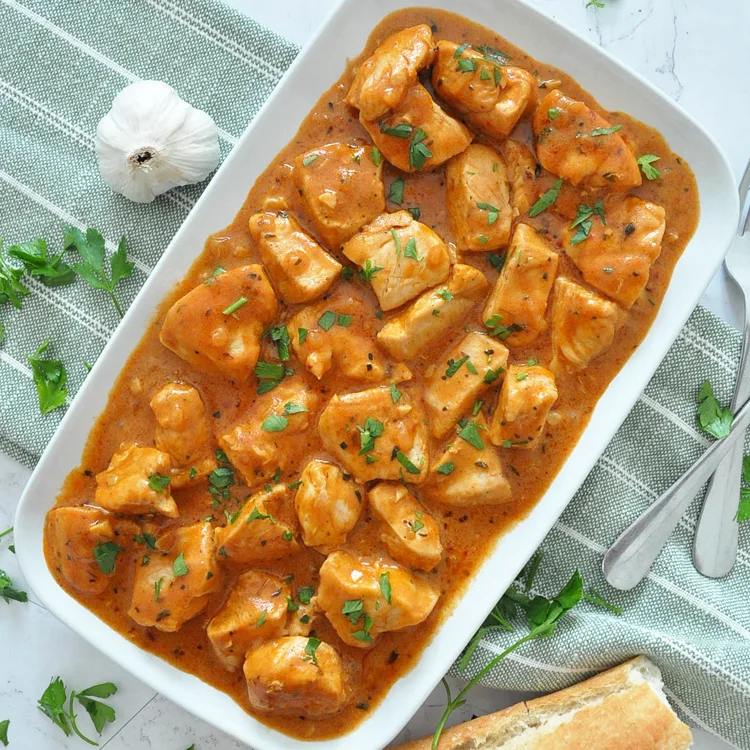
This Spanish-inspired chicken dish pairs browned chicken breast with a creamy sauce flavoured with smoked paprika, garlic and oregano. It comes together in one pan and is ready in about 35 minutes.
Ingredients
- 60 ml (¼ cup)extra-virgin olive oil
- 2 chicken breasts, 300 g each (10 oz each)boneless chicken breasts
- 1 small, finely choppedyellow onion
- 4 cloves, roughly choppedgarlic
- 12 g (1½ tbsp)plain flour
- 5 g (2 tsp)sweet smoked Spanish paprika
- 1 g (1 tsp)dried oregano
- 0.65 g (¼ tsp)crushed red pepper
- 180 ml (¾ cup)vegetable stock
- 180 ml (¾ cup), at room temperaturelow-fat milk
- 15 g (2 tbsp)grated Manchego cheese
- 10 ml (2 tsp)lemon juice
- To tastesea salt and black pepper
- To tastechopped parsley, for garnish
Instructions
- 1
Heat the oil
Set a large frying pan over medium heat and add the olive oil.
- 2
Prepare the chicken
Pat the chicken breasts dry with kitchen paper. Cut them into bite-sized pieces about 2.5 cm thick, then season with salt and black pepper.
- 3
Brown the chicken
When the oil is hot, arrange the chicken in a single layer in the pan. Fry for 3 to 4 minutes per side, until lightly golden, then lift it out; it does not need to be cooked through yet.
- 4
Cook the aromatics
Keep the same pan over the same heat. Add the onion and garlic and stir continuously for 2 to 3 minutes, until the onion is slightly translucent. Add the flour and keep stirring.
- 5
Make the sauce
Cook the flour for 2 minutes, then quickly stir in the paprika, oregano and crushed red pepper. Add the vegetable stock and room-temperature milk, stirring gently to combine.
- 6
Simmer the chicken
When the sauce is slightly creamy, after about 3 to 4 minutes, season it with salt and black pepper. Return the chicken to the pan, stir to coat, then arrange the pieces in a single layer. Cover, reduce the heat to low and simmer for 5 to 10 minutes, until the chicken is cooked through and reaches 74°C (165°F) on a meat thermometer. Turn off the heat.
- 7
Finish and serve
Sprinkle the grated cheese over the chicken, add the lemon juice and give everything a final stir. Serve from the pan or transfer to serving dishes, garnished with chopped parsley.
What is pollo en salsa de pimentón?
Pollo en salsa de pimentón means chicken in paprika sauce. It draws on Spanish cooking, where pimentón—Spanish paprika—brings a distinctive savoury, smoky flavour to dishes.
In this version, browned chicken finishes cooking in a sauce thickened with flour and made creamy with milk. Manchego and lemon add a savoury finish with a little brightness.
Nutrition and macros by portion
The nutrition label shows one serving as written: 361 calories, 34g protein, 9g carbs, 20g fat.
| Portion | Adjustment | kcal | Protein | Carbs | Fat |
|---|---|---|---|---|---|
| Lighter | Use less olive oil | 253 kcal | 24g | 6g | 14g |
| This serving | As written | 361 kcal | 34g | 9g | 20g |
| Hungry | Add potatoes or rice | 542 kcal | 51g | 14g | 30g |
The chicken provides most of the protein, while the flour and milk contribute carbohydrates. Olive oil is the main source of fat, with smaller amounts from the chicken and Manchego. Serve with vegetables alongside, or add a modest portion of potatoes or rice for a more rounded plate.
Choosing the paprika
Smoked paprika: sweet smoked Spanish paprika gives the sauce its defining flavour. Measure it before you start, as it is stirred in briefly before the liquid.
Heat: the recipe also uses a small amount of crushed red pepper. Keep it as written for gentle warmth, or adjust it to suit your preference.
Brown the chicken first
Dry pieces: patting the chicken dry helps it brown in the hot oil. Cut the pieces to a similar thickness so they cook at a similar rate.
Work in a layer: give the pieces space in the pan and brown them for 3 to 4 minutes per side. They will finish cooking in the covered sauce, so they need not be cooked through at this stage.
Build a smooth sauce
Flour first: stir the flour with the onion and garlic, then cook it for 2 minutes before adding the liquids. This gives it time to mix into the pan ingredients.
Add the liquid: pour in the stock and room-temperature milk and stir gently as the sauce turns creamy over about 3 to 4 minutes. Keep the heat moderate rather than letting it boil hard.
Check when the chicken is done
Covered simmer: once the chicken is back in the pan, lower the heat and cover it for 5 to 10 minutes. The exact time depends on the size of the pieces.
Doneness cue: check the thickest piece with a meat thermometer; the method specifies 74°C. Turn off the heat once the chicken is cooked through.
Serving ideas
To soak up the sauce: serve the chicken with boiled or mashed potatoes, rice, or crusty bread. A simple green salad or steamed vegetables can add a fresh contrast.
Finish at the end: stir in the lemon juice and Manchego after turning off the heat, then scatter over the parsley just before serving.
Recipe notes & tips
- Cut the chicken into evenly sized pieces so they brown and finish cooking at a similar pace.
- Have the stock and room-temperature milk measured out before adding the paprika to the pan.
- Stir the flour with the onion and garlic for the full 2 minutes before adding the liquids.
- Keep the chicken in a single layer while browning and again while it simmers.
- Taste the sauce for salt and pepper before returning the chicken to the pan.
Variations
- Milder sauce: leave out the crushed red pepper for a gentler flavour.
- More lemon: add a little extra lemon juice at the end if you prefer a brighter finish.
- Different herbs: swap the oregano for dried thyme for a slightly different savoury note.
- More vegetables: serve with steamed greens or add cooked vegetables alongside the chicken.
- No Manchego: use another finely grated hard cheese if Manchego is unavailable.
Common mistakes to avoid
- Wet chicken: pat the pieces dry before frying so they brown rather than release excess moisture.
- Crowded pan: brown the chicken in batches if it will not fit in a single layer.
- Burnt garlic: stir the onion and garlic continuously and keep the pan at medium heat.
- Lumpy sauce: add the stock and milk while stirring gently, rather than pouring them in and leaving the pan.
- Overcooked chicken: start checking after 5 minutes of simmering and use a thermometer to confirm it reaches 74°C.
How to store
Refrigerate leftovers in a covered container for up to 3 days. Reheat gently in a pan until piping hot, adding a splash of milk or stock if the sauce has thickened; avoid boiling it vigorously.
Frequently asked questions
Can I make this with chicken thighs?
Yes, boneless thighs can be used. Cut them into similar-sized pieces and check that they are cooked through before serving.
Can I use ordinary paprika instead of smoked paprika?
Yes, but the sauce will have less of the smoky flavour that characterises this version. Use the same amount.
How do I know when the chicken is cooked?
Check the thickest piece with a meat thermometer; it should reach 74°C. The simmering time is 5 to 10 minutes, depending on the size of the pieces.
Why does the recipe use room-temperature milk?
The method adds room-temperature milk to the pan with the stock and stirs it into the sauce. Measure it out before you begin so it is ready to add.
What can I serve with paprika chicken?
Try it with rice, potatoes or crusty bread to go with the sauce, plus a salad or vegetables.
Can I prepare the sauce ahead?
It is best made as part of the cooking process so the chicken can finish in the sauce. Leftovers can be stored and reheated gently.
Cook it from the original
This recipe comes from spainonafork.com. Their page has the author’s own photos, notes and tips — the best place to cook it from.
Open the recipe on spainonafork.com