
Restaurant Style Aloo Matar
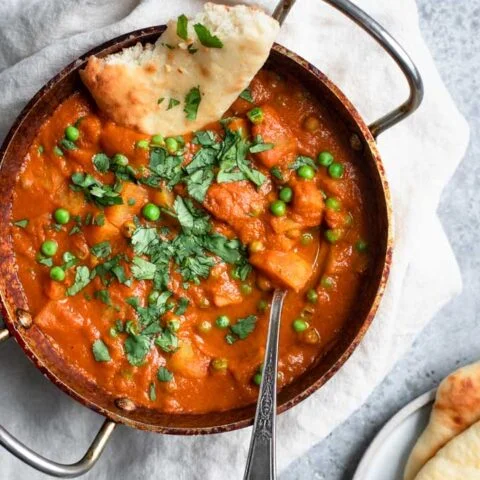
Aloo matar is an Indian curry of potatoes and peas in a warmly spiced tomato sauce. This version blends the sauce until smooth, then simmers the vegetables until tender for a comforting meal that is straightforward to make.
Ingredients
- 5 ml (1 tsp)oil
- 1 largeyellow onion, diced
- 4–6 clovesgarlic, minced
- 15 ml (1 tbsp)ginger, minced
- 5 ml (1 tsp)garam masala
- 2.5 ml (½ tsp)ground turmeric
- 1.25–5 ml (¼–1 tsp), to tastecayenne pepper
- 5 ml (1 tsp), or to tastesalt
- 425 g (15 oz)tinned tomatoes, whole or diced (or 3 chopped tomatoes)
- 454 g (1 lb; 4–5 small potatoes)Yukon Gold potatoes, peeled and cut into 1.25 cm (½ in) pieces
- 150 g (1 cup)green peas, fresh or frozen
- 240 ml (1 cup)low-sodium vegetable stock
- 30 ml (2 tbsp), optionalcoconut cream
- to tastefresh coriander, for garnish
Instructions
- 1
Soften the onion
Heat the oil in a large pot over medium heat. Add the onion and a pinch of salt, then sauté for about 5 minutes until soft. Stir in the garlic and ginger and fry for about 1 minute.
- 2
Blend the sauce
Add the garam masala, turmeric, cayenne and salt, stirring to coat the onion mixture. Add the tomatoes; if using whole tomatoes, break them into chunks with a spatula. Sauté for about 5 minutes, until softened, juicy and beginning to break down. Blend the sauce until smooth using a hand blender or upright blender, then return it to the pot.
- 3
Simmer the vegetables
Add the potatoes, peas and vegetable stock. Raise the heat to bring the mixture to a gentle boil, then turn the heat down, cover and simmer for 10–15 minutes, until the potatoes are tender.
- 4
Finish and serve
Stir in the coconut cream, if using. Taste and adjust the salt as needed, then garnish with coriander to serve.
What is aloo matar?
Aloo matar is a North Indian curry whose name refers to its two main vegetables: potatoes and peas. It is commonly served with rice or flatbreads, and recipes vary in how thick, smooth or richly spiced the sauce is.
Here, the tomato sauce is blended before the vegetables go in, giving the curry a smooth base while leaving the potatoes and peas whole. Garam masala, turmeric and cayenne bring warmth, colour and adjustable heat.
Nutrition and macros by portion
The nutrition label shows one serving as written: 151 calories, 5g protein, 30g carbs, 2g fat.
| Portion | Adjustment | kcal | Protein | Carbs | Fat |
|---|---|---|---|---|---|
| Lighter | Skip the coconut cream | 106 kcal | 4g | 21g | 1g |
| This serving | As written | 151 kcal | 5g | 30g | 2g |
| Hungry | Serve with extra rice | 227 kcal | 8g | 45g | 3g |
The potatoes and peas provide most of the carbohydrates, while the peas also contribute some protein. Oil and optional coconut cream account for most of the fat; serve with a generous portion of vegetables to round out the plate.
Build the tomato sauce
Onion first: cooking it until soft helps form a savoury base. Give the garlic and ginger just a minute in the pot so they become fragrant without burning.
Tomatoes next: let them cook until juicy and starting to break down before blending. This makes it easier to get a smooth sauce and helps the spices disperse through it.
Choose and cut the potatoes
Yukon Gold potatoes: these hold their shape reasonably well while becoming tender, making them a good fit for a simmered curry. Peel them as directed and cut them into evenly sized 1.25 cm pieces.
Even pieces: similar-sized chunks are more likely to finish cooking together. Keep them small enough to become tender in the recipe’s 10–15-minute simmer.
Get the texture right
Tender potatoes: test a piece with a fork near the end of the simmer; it should give easily without disintegrating. If it is still firm, continue cooking and check again.
Smooth sauce: blend the tomato mixture before adding the potatoes and peas. Take care when blending hot liquid, following your blender’s instructions, and return the sauce to the pot before continuing.
Adjust the spice and finish
Cayenne: the recipe allows from ¼ to 1 teaspoon, so choose an amount to suit your preference. Start at the lower end if you are unsure; the salt can also be adjusted at the end.
Coconut cream: this optional addition makes the sauce richer and rounds out its flavour. Stir it in after the potatoes are tender, then finish with fresh coriander.
Serve it as a meal
Rice or naan: serve the curry with basmati rice or naan to make a filling main course. The sauce is especially good spooned over rice or scooped up with bread.
A larger spread: it can also sit alongside other Indian dishes as part of a shared meal. Add a fresh, crisp side if you want a contrast to the soft potatoes and rich tomato sauce.
Recipe notes & tips
- Dice the onion evenly so it softens at a consistent rate.
- Use the lower amount of cayenne if you prefer a milder curry.
- Let the tomatoes turn juicy before blending so the sauce is easier to smooth.
- Cut the potatoes into similarly sized pieces to help them cook evenly.
- Taste for salt after adding the coconut cream, if using.
- If using frozen peas, add them directly as directed; no need to thaw them first.
Variations
- Make it hotter: use the upper end of the cayenne range for a spicier sauce.
- Keep it dairy-free: the recipe uses coconut cream rather than dairy, and the cream is optional.
- Use fresh tomatoes: replace the tin with 3 chopped tomatoes, as listed in the recipe.
- Change the peas: use fresh or frozen green peas according to what you have.
- Serve it as a side: offer smaller portions alongside other Indian dishes.
Common mistakes to avoid
- Burning the aromatics: keep the heat at medium and add the garlic and ginger only after the onion has softened.
- Blending too soon: cook the tomatoes until juicy and beginning to break down before blending.
- Uneven potato chunks: cut them to a similar size so they have a better chance of becoming tender together.
- Overcooking the potatoes: start checking at 10 minutes and stop simmering once they are tender.
- Adding too much heat at the start: begin with less cayenne and adjust to your taste.
How to store
Cool leftovers promptly and store them covered in the fridge for up to 3 days. Reheat gently in a saucepan until hot throughout, adding a splash of water if the sauce has thickened; stir occasionally.
Frequently asked questions
Can I use frozen peas?
Yes. The recipe allows fresh or frozen peas, and frozen peas can go straight into the pot.
Do I have to blend the sauce?
Blending is what gives this version its smooth tomato base. If you prefer a chunkier curry, you can leave the sauce unblended, though the texture will differ.
How do I know when the potatoes are done?
They should be tender when pierced with a fork. Check after 10 minutes of simmering and continue within the recipe’s 10–15-minute range if needed.
Is the coconut cream essential?
No, it is optional. Leaving it out makes the curry less rich, while adding it gives the sauce a creamier finish.
What should I serve with aloo matar?
Basmati rice or naan are suggested accompaniments. You can also serve it as a side dish with other Indian recipes.
Can I adjust the heat?
Yes. The cayenne amount ranges from ¼ to 1 teaspoon, so choose according to your preference and taste before serving.
Cook it from the original
This recipe comes from thecuriouschickpea.com. Their page has the author’s own photos, notes and tips — the best place to cook it from.
Open the recipe on thecuriouschickpea.com