
Teriyaki Salmon
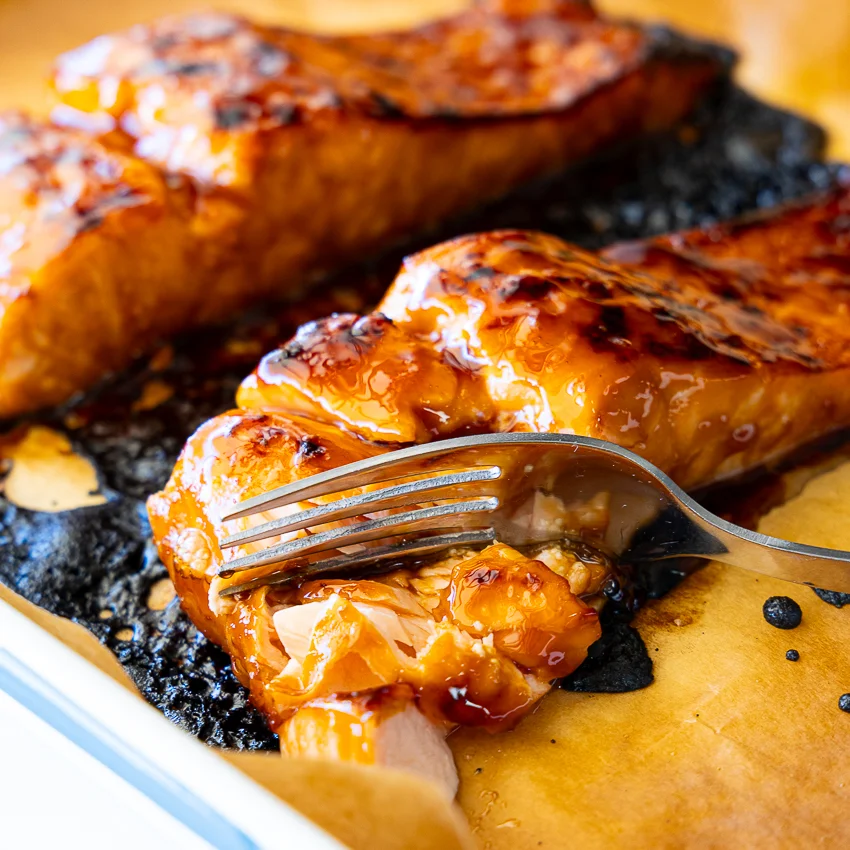
Teriyaki salmon pairs tender, flaky fish with a sweet-savoury glaze that caramelises in the oven. It is a straightforward 20-minute meal, especially if your homemade teriyaki sauce is ready to use.
Ingredients
- 500 g (1 lb)salmon fillets
- 240 ml (1 cup)homemade teriyaki sauce
Instructions
- 1
Preheat the oven
Heat the oven to 220°C (430°F).
- 2
Heat the sauce
Put the sauce ingredients in a small saucepan and whisk until the cornstarch is incorporated. Set the pan over medium-high heat.
- 3
Thicken the sauce
Bring the sauce to a boil and cook for 5 minutes, until it has thickened.
- 4
Prepare the tray
Line a sheet pan or baking dish with parchment paper to make cleaning easier; the sauce can caramelise and burn during cooking.
- 5
Arrange the salmon
Pat the salmon dry with paper towels and place it skin-side down in the prepared tray.
- 6
Brush with sauce
Brush a generous coating of teriyaki sauce over the salmon.
- 7
Bake the salmon
Bake in the preheated oven for 7–10 minutes, until the salmon is cooked through and the sauce has caramelised.
- 8
Garnish and serve
Remove the salmon from the oven. Add sesame seeds and sliced green onions if you like, then serve.
What is teriyaki salmon?
Teriyaki salmon is fish coated in a glossy, savoury-sweet sauce and cooked until tender. Teriyaki comes from Japanese cooking, while this oven-baked version is a convenient home-style take on the flavour.
Here, homemade sauce is brushed over the salmon before baking, so it clings to the surface and caramelises as the fish cooks.
Nutrition and macros by portion
The nutrition label shows one serving as written: 225 calories, 27g protein, 11g carbs, 7g fat.
| Portion | Adjustment | kcal | Protein | Carbs | Fat |
|---|---|---|---|---|---|
| Lighter | Serve with extra vegetables | 158 kcal | 19g | 8g | 5g |
| This serving | As written | 225 kcal | 27g | 11g | 7g |
| Hungry | Add rice and vegetables | 338 kcal | 41g | 17g | 11g |
The salmon supplies most of the protein and fat, while the teriyaki sauce contributes most of the carbohydrates. Serve a fillet with rice and vegetables, adjusting the rice portion to suit the rest of your meal.
The sauce and salmon
Homemade sauce: The recipe calls for 240 ml of prepared homemade teriyaki sauce. Its ingredient list is not provided here, so have the sauce ready before starting.
Salmon: Pat the fillets dry before glazing. Removing surface moisture helps the sauce coat the fish rather than slide off.
Thickening the glaze
Cornstarch: Whisk it into the sauce ingredients before heating so it is incorporated smoothly. Bring the sauce to a boil, then cook it for 5 minutes as directed, until thickened.
Watch the pan: A thick glaze coats the salmon well, but it can catch if left unattended. Keep an eye on it as it heats.
Baking and doneness
Oven heat: Bake at 220°C for 7–10 minutes. The precise time depends on the thickness of the fillets, so begin checking at the shorter end of the range.
Texture: The fish should be opaque and flake readily when tested gently with a fork. The sauce should look glossy and caramelised, not scorched.
Why use parchment?
Parchment: Line the sheet pan or baking dish before adding the salmon. Teriyaki glaze can caramelise onto the tray and become difficult to clean.
Keep the fish skin-side down while it bakes. This gives the fillets a stable base and makes them easier to lift from the tray.
What to serve with it
Rice: Plain rice or brown rice makes a simple base for the savoury glaze. Add a green vegetable, such as steamed broccoli or pak choi, for a more rounded plate.
Finishing touch: Sesame seeds and sliced green onions are optional garnishes. Add them just before serving for a little crunch and freshness.
Recipe notes & tips
- Have the homemade teriyaki sauce ready before you start, as its ingredient list is not included here.
- Whisk the cornstarch thoroughly into the sauce ingredients before heating.
- Use parchment paper to make cleanup easier after the glaze caramelises.
- Pat the salmon dry so the sauce can coat its surface.
- Start checking the fillets after 7 minutes, especially if they are thin.
- Add optional sesame seeds and green onions just before serving.
Variations
- Serve with rice: Spoon the salmon and any tray glaze over plain or brown rice.
- Add greens: Pair it with steamed broccoli or pak choi for a vegetable side.
- Finish with sesame: Sprinkle sesame seeds over the cooked salmon for an optional crunchy garnish.
- Add green onions: Scatter sliced green onions over the fish just before serving.
- Use individual fillets: Divide the salmon into portions before baking and check each one for doneness.
Common mistakes to avoid
- Skipping the parchment: The glaze can stick and burn on the tray; line it before adding the fish.
- Adding wet salmon: Surface moisture can make the glaze slip; pat the fillets dry first.
- Lumping the cornstarch: Whisk it into the sauce ingredients before heating so it incorporates.
- Leaving the sauce unattended: It may catch as it thickens; watch it while it comes to a boil and cooks.
- Overbaking the fish: Salmon can dry out; start checking at 7 minutes and stop when it flakes readily.
How to store
Refrigerate leftover salmon in an airtight container and use within 2 days. Reheat gently in the oven or microwave until hot, taking care not to overcook it.
Frequently asked questions
Can I use shop-bought teriyaki sauce?
The recipe specifies homemade sauce, but prepared shop-bought teriyaki sauce can be used as a practical substitute. Choose one that can be heated and thickened as needed.
How do I know when the salmon is cooked?
It should look opaque and flake easily when gently tested with a fork. Begin checking at 7 minutes, as fillet thickness affects cooking time.
Can I prepare the sauce ahead?
Yes. Make the homemade sauce in advance and have 240 ml ready for the recipe; warm and thicken it as directed before glazing the fish.
Do I need to turn the salmon during baking?
No. The method places it skin-side down and bakes it without turning.
Are sesame seeds and green onions essential?
No, both are optional garnishes. The salmon can be served without them.
Why line the baking tray?
The teriyaki glaze can caramelise and burn onto the tray. Parchment makes the tray easier to clean.
Cook it from the original
This recipe comes from simply-delicious-food.com. Their page has the author’s own photos, notes and tips — the best place to cook it from.
Open the recipe on simply-delicious-food.com