
Vegan Filipino Tofu and Mushroom Adobo (Adobong Tokwa at Kabute)
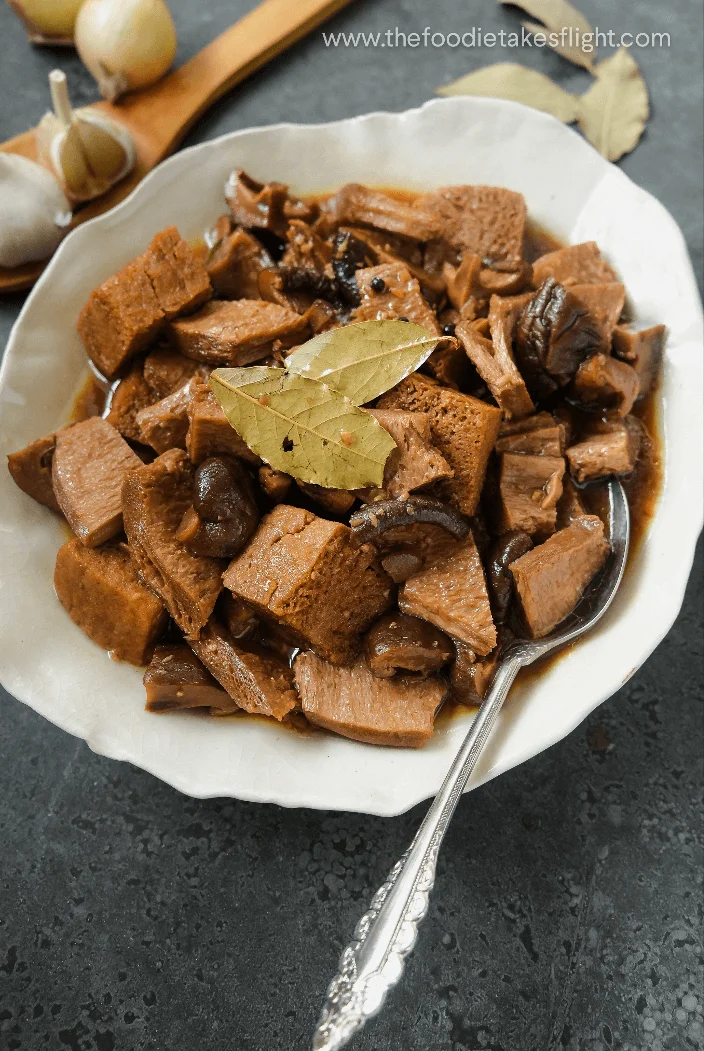
This vegan Filipino adobo simmers tofu or soy chunks with mushrooms in a savoury, tangy sauce of soy, vinegar, garlic and peppercorns. Make it for a hearty meal with plain rice or Filipino garlic fried rice.
Ingredients
- 150 gdry soy chunks (OR)
- 450 gextra-firm tofu or tokwa, plus tofu skin and mushrooms (see notes)
- 2 mediumpotatoes, peeled and cubed (optional)
- 4 tbspneutral oil
- 1 mediumonion, diced
- 8 clovesgarlic, crushed and roughly chopped
- 1 tspwhole black peppercorns
- 3dried bay leaves
- 1–3 cupsvegetable broth or water, plus more if needed
- 3–5 tbspsoy sauce or tamari, adjusted to taste
- 4–6 tbspcane vinegar or distilled white vinegar, adjusted to taste
- ½–1 tbspsugar (optional)
- 1–2 tspdark soy sauce (optional)
- To serveSinangag (Filipino fried garlic rice)
Instructions
- 1
Soak the protein
Put the soy chunks, mushrooms or tofu skin in a heatproof bowl. Cover completely with boiling water, then cover the bowl and leave for 10–15 minutes, or until the pieces have doubled in size. Squeeze out the excess liquid and rinse under running water. Slice the tofu skin and mushrooms into smaller pieces if you like.
- 2
Prepare potatoes
If using potatoes, peel them and cut into 1-inch cubes. You can keep them in water while preparing the other ingredients to help prevent browning.
- 3
Sauté aromatics
Heat a large pan over medium-high heat and add the oil. Once hot, sauté the onion and garlic, then add the whole black peppercorns.
- 4
Simmer the protein
Add your chosen protein, then pour in ½ cup vegetable broth or water, 1–2 tablespoons soy sauce and 1–2 tablespoons vinegar. Bring to a simmer over medium-high heat and let the protein absorb the sauce.
- 5
Add potatoes
Once the sauce boils, add the potatoes if using. Taste and add another 1–2 tablespoons each of soy sauce and vinegar if needed. If the potatoes have absorbed the liquid, add another ½ cup water. Mix well, keeping in mind that the potatoes will take up liquid and seasoning as they cook.
- 6
Cook until tender
Cover the pan and cook until the protein has taken up the sauce and the potatoes are as tender as you like, around 10 minutes or longer. Add 1–2 cups water as needed to cook the potatoes down.
- 7
Adjust seasoning
Taste and add more soy sauce or vinegar if needed. Stir in sugar if you want to temper the acidity, and add dark soy sauce for colour if using.
- 8
Serve the adobo
Serve with Sinangag (Filipino fried garlic rice) or plain rice.
What is Filipino adobo?
Adobo is a Filipino cooking style in which ingredients are simmered in a savoury, tangy mixture commonly built around vinegar, soy sauce, garlic and pepper. This plant-based version uses tofu or soy chunks, with mushrooms and potatoes as options.
The balance of salty soy and sharp vinegar makes the sauce distinctive, while the protein and potatoes absorb its flavour as they cook. It is a satisfying dish to serve with rice.
Nutrition and macros by portion
The nutrition label shows one serving as written: 283 calories, 20g protein, 26g carbs, 11g fat.
| Portion | Adjustment | kcal | Protein | Carbs | Fat |
|---|---|---|---|---|---|
| Lighter | Use less oil and rice | 198 kcal | 14g | 18g | 8g |
| This serving | As written | 283 kcal | 20g | 26g | 11g |
| Hungry | Add extra rice | 425 kcal | 30g | 39g | 17g |
The rice and optional potatoes provide most of the carbohydrates, while tofu or soy chunks contribute much of the protein. Oil contributes fat, with smaller amounts also coming from the other ingredients. Pair a serving with vegetables and choose a rice portion that suits your meal.
Choosing the protein
Soy chunks: Soak them in boiling water until they expand, then squeeze and rinse them so they are ready to take up the adobo sauce.
Tofu and mushrooms: The recipe also offers extra-firm tofu, tofu skin and mushrooms as alternatives. Cut tofu skin and mushrooms into smaller pieces if you prefer them easier to serve.
Building the sauce
Vinegar and soy: Start with the smaller amounts, then taste and add more as the dish simmers. This lets you steer the sauce towards a milder or more pronounced tang and saltiness.
Pepper and garlic: Whole peppercorns and sautéed garlic give the sauce its aromatic backbone. Sugar is optional if you want to soften the acidity, while dark soy sauce adds a deeper colour.
Cooking the potatoes
Cut the potatoes into evenly sized 1-inch cubes so they cook at a similar pace. Keeping them submerged in water while you prepare the rest helps prevent them from browning.
Potatoes absorb both liquid and seasoning, so check the pan as they cook. Add water when the sauce gets low, then taste and adjust the seasoning once the potatoes are tender.
Checking the texture
The potatoes are ready when they are tender to your liking; the recipe suggests around 10 minutes or longer, depending on how they cook. Covering the pan helps them soften in the simmering sauce.
The protein should be well coated and have absorbed some of the sauce. If the pan looks dry before the potatoes are done, add water as needed.
Serving with rice
Serve the adobo with plain rice or Sinangag, Filipino fried garlic rice. The rice is a straightforward accompaniment for the strongly flavoured sauce.
For a balanced plate, serve a generous portion of the adobo alongside rice and add a vegetable side if you have one.
Why leftovers are welcome
The recipe notes that the flavour develops as the protein and potatoes sit in the sauce, so leftovers can taste even more settled the next day. If you plan to freeze a portion, leave out the potatoes because their texture can change after freezing and thawing.
Recipe notes & tips
- Begin with the lower amounts of soy sauce and vinegar, then adjust the seasoning as the dish cooks.
- Squeeze excess soaking water from the soy chunks, mushrooms or tofu skin before adding them to the pan.
- Add water gradually if the potatoes absorb the sauce before they are tender.
- Taste again after the potatoes have cooked, since they take up seasoning as well as liquid.
- If using potatoes, keep the cut pieces in water until you are ready to cook them.
Variations
- Use tofu: Swap in extra-firm tofu or tokwa as the protein option.
- Add mushrooms: Include mushrooms with the protein for another plant-based texture.
- Use tamari: Choose tamari instead of soy sauce if you need a gluten-free option.
- Adjust the tang: Use more or less vinegar to suit your preferred acidity.
- Add potatoes: Include the optional cubes and simmer until tender.
- Serve with Sinangag: Pair the adobo with Filipino fried garlic rice instead of plain rice.
Common mistakes to avoid
- Skipping the soak: Rehydrate soy chunks, mushrooms or tofu skin in boiling water before cooking.
- Adding all the seasoning at once: Start with the smaller amounts and taste as you go.
- Letting the pan dry out: Add water if the potatoes are absorbing liquid before they become tender.
- Seasoning only at the start: Taste again after the potatoes cook and adjust soy sauce or vinegar if needed.
- Freezing with potatoes: Leave them out of portions intended for the freezer, as their texture can change after thawing.
How to store
Refrigerate leftovers in a covered container; the recipe says they can keep for up to a week or longer. Reheat gently in a pan, adding a splash of water if the sauce has thickened. For freezing, omit the potatoes, then thaw and reheat the adobo thoroughly.
Frequently asked questions
Can I use tofu instead of soy chunks?
Yes. The recipe lists 450 g extra-firm tofu or tokwa as an alternative to the soy chunks.
Are the potatoes essential?
No, they are optional. If you include them, simmer until tender and add water if they absorb too much of the sauce.
How can I make the sauce more or less tangy?
Adjust the vinegar to taste, adding it gradually as the dish simmers. The recipe gives a range of 4–6 tablespoons.
Can I make this gluten-free?
The recipe suggests tamari in place of soy sauce. Check the labels on your other ingredients as well.
What should I serve with adobo?
Serve it with plain rice or Sinangag, Filipino fried garlic rice.
Can I freeze the leftovers?
Yes, but the recipe recommends freezing the adobo without potatoes because their texture can change after thawing.
Cook it from the original
This recipe comes from thefoodietakesflight.com. Their page has the author’s own photos, notes and tips — the best place to cook it from.
Open the recipe on thefoodietakesflight.com