
Saganaki Fried Feta with Sesame Crust, Honey & Aged Balsamic Vinegar | Greek Appetizer
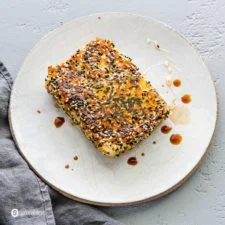
This Greek-style saganaki pairs a warm, soft-centred block of feta with a crisp coating of panko and sesame seeds. It cooks quickly in a pan and is finished with honey and aged balsamic for a sweet, tangy contrast.
Ingredients
- 30 mlextra virgin olive oil
- 227 gfeta cheese
- 1egg
- 3 tablespoons (45 ml)plain flour or rice flour
- 3 tablespoons (45 ml)white sesame seeds
- 3 tablespoons (45 ml)black sesame seeds
- 3 tablespoons (45 ml)panko breadcrumbs
- 3 tablespoons (45 ml)balsamic vinegar
- 3 tablespoons (45 ml)Greek wildflower honey
Instructions
- 1
Set up coating
Arrange three bowls: put the flour in one, beat the egg in another, and mix the panko with both kinds of sesame seeds in the third.
- 2
Heat the oil
Warm the olive oil in a small frying pan over medium-high heat.
- 3
Coat and fry
Coat the feta evenly in flour, then egg, then the breadcrumb and seed mixture. Carefully set it in the hot oil and fry each side for about 1–2 minutes, until golden brown.
- 4
Drain the feta
Transfer the feta to paper towels to absorb excess oil.
- 5
Finish and serve
Set the feta on a plate, or leave it in the frying pan, then drizzle with balsamic vinegar and honey. Serve straight away with bread, crackers or pita chips.
What is saganaki?
Saganaki is a Greek term associated with dishes cooked in a small, two-handled pan; fried cheese is a familiar mezze-style version. Here, a block of briny feta gets a crisp sesame-and-panko coating rather than being served plain.
The combination works because the crunchy, nutty crust contrasts with the soft cheese, while honey and balsamic bring sweetness and acidity to each bite.
Nutrition and macros by portion
The nutrition label shows one serving as written: 270 calories, 9g protein, 19g carbs, 18g fat.
| Portion | Adjustment | kcal | Protein | Carbs | Fat |
|---|---|---|---|---|---|
| Lighter | Use less finishing honey | 189 kcal | 6g | 13g | 13g |
| This serving | As written | 270 kcal | 9g | 19g | 18g |
| Hungry | Serve with extra pita | 405 kcal | 13g | 29g | 27g |
The feta and frying oil supply most of the fat, while the flour, panko, honey and coating contribute carbohydrates; the feta and egg provide protein. Pair a serving with fresh vegetables and share bread or crackers alongside it to make a more balanced plate.
Choosing the feta
Block feta: Use a single block so it is easier to coat and turn than crumbled cheese. Pat its surface dry if it is especially wet, which helps the flour adhere.
Building the crust
Flour first: A thin flour layer gives the beaten egg something to cling to. Coat the sides as well as the broad faces for an even crust.
Seeds and panko: Mix these together before coating so every side gets both sesame colours and crisp crumbs. Press the mixture gently onto the feta without breaking the block.
Frying without breaking
Hot oil: Heat the oil over medium-high as directed, and lower in the coated feta carefully. The pan should be ready before the cheese goes in so the coating starts browning promptly.
Gentle turning: Fry each side for about 1–2 minutes, turning carefully once the first side is golden. The centre should be soft and warm; avoid leaving the feta in the pan longer than needed.
Balancing the finish
Honey: A drizzle rounds out feta’s salty, tangy flavour. Add it just before serving so the crust stays crisp.
Balsamic: Its sharp, sweet-sour note cuts through the richness. Use the specified amount as a finishing drizzle, rather than cooking it in the pan.
Serving at the table
Serve the feta immediately, while the outside is crisp and the middle is soft. Bread, crackers or pita chips make it easy to scoop up the cheese and its honey-balsamic dressing.
For a fuller mezze spread, offer fresh vegetables or olives alongside it; their fresh or briny flavours complement the rich cheese.
Recipe notes & tips
- Set out all three coating bowls before heating the oil so the feta can be fried as soon as it is coated.
- Keep the feta block intact when moving it between the bowls.
- Use a small pan that fits the block without crowding it.
- Turn the feta carefully with a wide spatula to help keep the crust attached.
- Drizzle the honey and balsamic over the cheese just before serving.
Variations
- Rice flour: Use rice flour instead of plain flour for the coating.
- Extra sesame: Add a little more sesame mixture to any bare patches before frying.
- Balsamic balance: Drizzle on less balsamic if you prefer a milder tang.
- Honey finish: Add the honey at the table so each person can choose how much to use.
- Mezze platter: Serve with olives and fresh vegetables alongside the bread or crackers.
Common mistakes to avoid
- Wet feta: Excess moisture can make the coating slip; pat the surface dry before dredging.
- Uneven coating: Bare spots will not crisp; cover the sides and faces at each coating stage.
- Oil not hot enough: The crust can absorb oil instead of browning; heat the pan before adding the feta.
- Rough turning: The coating may come away; turn the block gently once the first side is golden.
- Waiting to serve: The crust softens as it stands; add the drizzles and serve immediately.
How to store
This is best eaten straight after frying, when the crust is crisp. If needed, refrigerate leftovers in a sealed container for up to 2 days and reheat briefly in a frying pan or oven; the coating may not become as crisp as it was fresh.
Frequently asked questions
Can I use rice flour?
Yes. The recipe allows either plain flour or rice flour for the first coating.
Can I prepare the coated feta ahead?
It is best coated just before frying so the panko and sesame crust stays dry. You can set up the three coating bowls in advance.
How do I know when the feta is done?
Fry each side for about 1–2 minutes, until the coating is golden brown. The centre should be warm and soft.
Can I make this without panko?
Panko is part of the specified coating and gives it its crumb texture. You can try other breadcrumbs, though the finished crust may differ.
What should I serve with fried feta?
Serve it with bread, crackers or pita chips, as suggested in the recipe. Fresh vegetables or olives also make suitable additions to a mezze table.
Cook it from the original
This recipe comes from spoonabilities.com. Their page has the author’s own photos, notes and tips — the best place to cook it from.
Open the recipe on spoonabilities.com