
Spanish Poor Man's Beans and Rice | Alubias con Arroz a lo Pobre
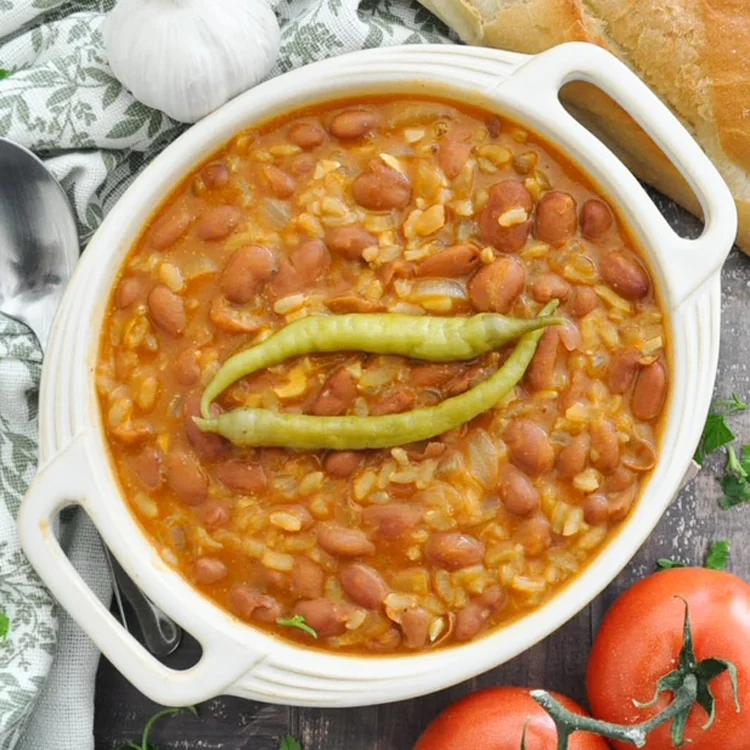
This Spanish-style beans and rice is a one-pan meal of pinto beans, short-grain rice and grated tomatoes, brought together with smoked paprika and vegetable broth. It is a practical, comforting dish made with simple store-cupboard ingredients.
Ingredients
- 1 litrevegetable broth
- 1bay leaf
- 3 tbsp (45 ml)extra virgin olive oil
- 1 mediumyellow onion, finely chopped
- 6 clovesgarlic, roughly chopped
- 2tomatoes, finely grated
- 2 tsp (5 g)sweet smoked Spanish paprika
- 95 g (½ cup)short-grain rice
- 2 cans (440 g each)pinto beans, drained and rinsed
- to tastesea salt and black pepper
- to taste (optional)Spanish guindilla peppers, for garnish
Instructions
- 1
Warm the broth
Put the vegetable broth and bay leaf in a saucepan and heat over a medium heat.
- 2
Heat the oil
At the same time, warm the olive oil in a large frying pan over a medium heat.
- 3
Build the tomato base
After a couple of minutes, add the onion and garlic to the hot pan. Stir continuously for 3–4 minutes, then add the rice and stir for 2 minutes. Mix in the paprika quickly, followed by the grated tomatoes, and season with salt and pepper. Stir everything together and leave to simmer.
- 4
Add beans and broth
When the grated tomatoes have thickened, after about 5 minutes, add the drained, rinsed pinto beans and the simmering vegetable broth. Stir together, then stir every 2–3 minutes.
- 5
Cook the rice
When the rice is just cooked through, remove the pan from the heat. Check the cooking time on your rice packet; the rice used for the original recipe took 18 minutes.
- 6
Serve and garnish
Spoon the mixture into a shallow bowl and, if you like, garnish with Spanish guindilla peppers.
What are Spanish poor man's beans and rice?
The name refers to a humble, filling combination of beans and rice, with a lo pobre meaning “the poor person's way” in Spanish. Dishes with that name vary, and this version brings the ingredients together in a tomato-and-broth base.
Short-grain rice thickens the cooking liquid as it cooks, while pinto beans make the dish hearty. Smoked paprika, garlic and olive oil give the simple ingredients a savoury Spanish-inspired character.
Nutrition and macros by portion
The nutrition label shows one serving as written: 407 calories, 13g protein, 63g carbs, 12g fat.
| Portion | Adjustment | kcal | Protein | Carbs | Fat |
|---|---|---|---|---|---|
| Lighter | Use less olive oil | 285 kcal | 9g | 44g | 8g |
| This serving | As written | 407 kcal | 13g | 63g | 12g |
| Hungry | Serve a larger bowl | 611 kcal | 20g | 95g | 18g |
Most of the carbohydrates come from the rice and beans, while the olive oil supplies most of the fat; the beans contribute much of the protein. Pair a serving with a green salad or extra vegetables for a more varied plate.
The ingredients that shape the flavour
Smoked paprika: add it just before the grated tomatoes and stir it in quickly. This helps distribute its flavour through the oil and vegetables without leaving it to cook for long on its own.
Tomatoes: finely grating them creates a soft base that thickens as it simmers. The recipe uses fresh tomatoes rather than a prepared sauce.
Pinto beans: draining and rinsing the canned beans keeps their canning liquid out of the pan. They only need to heat through alongside the rice and broth.
Why the broth is warmed separately
Heating the broth in a saucepan while you prepare the tomato mixture means it is simmering when it goes into the frying pan. The method keeps the cooking sequence moving without adding cold broth to the rice.
Keep the bay leaf in the broth as it warms, then add the broth to the pan with the beans. Remember to remove the bay leaf before serving.
Getting the rice texture right
The rice cooks in the tomato mixture and broth, absorbing liquid as it softens. Stir every 2–3 minutes after adding the broth to help prevent sticking and keep the ingredients evenly mixed.
Check the rice near the end of its packet’s suggested cooking time. Take the pan off the heat as soon as the grains are just cooked through; the exact timing can vary by rice.
Timing the tomato base
After the onion and garlic have cooked for 3–4 minutes, the rice gets 2 minutes in the pan before the paprika and tomatoes go in. This order gives the onion a head start and coats the rice in the seasoned oil.
Let the grated tomatoes simmer for about 5 minutes, until they have thickened, before adding the beans and broth. Use that change in texture as your cue rather than relying only on the clock.
What to serve with it
Serve the beans and rice in shallow bowls, as directed, with guindilla peppers on top if you enjoy their sharp, spicy flavour. The dish can stand on its own as a filling meal.
For a fresh contrast, serve it with a simple green salad or cooked vegetables. Crusty bread is another option if you would like something to mop up the broth.
Recipe notes & tips
- Warm the broth while you chop and cook the other ingredients so it is ready when needed.
- Stir the paprika in quickly before adding the grated tomatoes.
- Drain and rinse the pinto beans before adding them to the pan.
- Check the rice packet for its cooking time and begin checking for doneness near the end.
- Remove the bay leaf before serving.
- Add guindilla peppers at the table so each person can choose whether to use them.
Variations
- Use another bean: substitute a similar canned bean, drained and rinsed.
- Adjust the heat: add sliced guindilla peppers to the pan for a spicier result.
- Add fresh herbs: scatter chopped parsley over the bowls just before serving.
- Use brown rice: allow for its different cooking time and adjust the liquid as needed.
- Make it milder: leave out the guindilla garnish.
Common mistakes to avoid
- Adding cold broth: warm it in the saucepan first, as directed.
- Burning the paprika: stir it in quickly and follow it with the grated tomatoes.
- Skipping the bean rinse: drain and rinse the canned beans before adding them.
- Leaving the pan unstirred: stir every 2–3 minutes once the broth is in.
- Overcooking the rice: check it against the packet timing and remove the pan when it is just cooked through.
- Serving with the bay leaf: take it out before ladling the mixture into bowls.
How to store
Refrigerate leftovers in a covered container and use within 3 days. Reheat in a saucepan over a low heat, stirring until hot; add a splash of water or broth if the rice has absorbed the liquid.
Frequently asked questions
Can I use a different type of rice?
Yes, but cooking time and liquid absorption vary by rice. Check the packet instructions and begin checking for doneness near the end of the stated time.
Do I need to soak the pinto beans?
No. This recipe uses canned pinto beans, which should be drained and rinsed before adding.
How do I know when the rice is done?
Taste a grain: it should be tender but not falling apart. The original recipe's rice took 18 minutes, but follow the instructions for the rice you use.
Can I make it without guindilla peppers?
Yes. The peppers are an optional garnish, so you can leave them out or serve them separately.
Can I prepare this ahead?
You can chop the onion and garlic and grate the tomatoes in advance. The rice is best cooked shortly before serving, as it continues to absorb liquid as it sits.
Cook it from the original
This recipe comes from spainonafork.com. Their page has the author’s own photos, notes and tips — the best place to cook it from.
Open the recipe on spainonafork.com