
Vegan Brioche
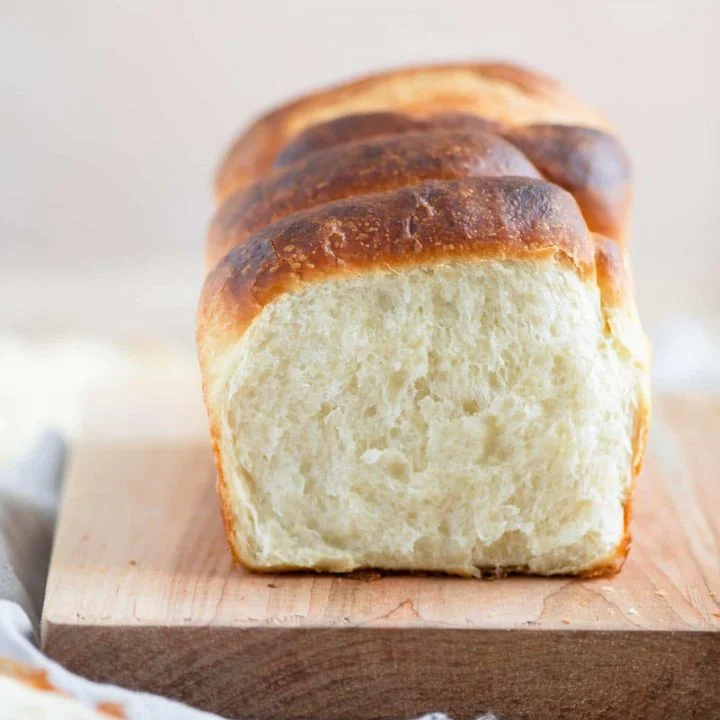
This vegan brioche is a soft, rich loaf made without eggs or dairy, with silken tofu and vegan butter helping give it a tender crumb. Make it for toast, sandwiches or a batch of French toast, and allow time for its long rise and chill.
Ingredients
- 416 g (3 cups)plain flour
- 416 g (3 cups)strong white bread flour
- 48 g (¼ cup)sugar
- 6 g (1 tsp)salt
- 9 g (2 tsp)instant yeast
- 411 g (1¾ cups)plant milk, at room temperature or cold
- 180 g (¾ cup)silken tofu
- 10 g (2 tsp)apple cider vinegar or white vinegar
- 168 g (12 tbsp); up to 226 g (16 tbsp) for a richer loafvegan butter, softened
- 2 tbspplant milk
- 2 tspmaple syrup or agave nectar
- 1 tspcornflour
Instructions
- 1
Combine dry ingredients
Put the plain flour, bread flour, sugar, salt and instant yeast in the bowl of a stand mixer or bread machine.
- 2
Blend wet ingredients
Blend the silken tofu, plant milk and vinegar with a stick blender or upright blender until smooth. Add this to the dry ingredients and mix with a wooden spoon until a shaggy dough forms.
- 3
Start kneading
Using the dough hook, knead on low speed for 5 minutes to start developing the dough. If using a bread machine, select the dough cycle and begin adding the vegan butter after 5 minutes of kneading.
- 4
Add vegan butter
With the mixer running, add the softened vegan butter a couple of tablespoons at a time. Pause as needed to scrape down the bowl or push the soft butter into the dough; incorporating it all can take up to 10 minutes.
- 5
Develop the dough
Once the butter is incorporated, knead for another 15–20 minutes. The tofu means the dough will not stretch into a thin windowpane, but it should become smoother as it kneads.
- 6
Let dough rise
Transfer the dough to a lightly oiled bowl and turn it to coat. Cover and leave at room temperature for 1 hour, until puffy and about 50% larger.
- 7
Chill the dough
Refrigerate the covered dough for at least 4 hours, ideally overnight, or for up to 1 day.
- 8
Grease the tins
Grease two standard loaf tins measuring 21.5 × 11.5 cm with vegan butter. Alternatively, use two 23 × 13 cm tins.
- 9
Divide and shape
Divide the chilled dough into 2 equal pieces to make 2 loaves, then shape each piece as desired.
- 10
Braid or segment
For a braid, divide one piece of dough into three equal pieces and roll each into a rope about 36 cm long. Set the ropes parallel, start braiding about one-third of the way down from the top and pinch the ends together. Braid the top section in the opposite direction to match, pinch those ends, tuck both ends under and transfer the braid gently to a greased tin. For segmented bread, divide one piece into six equal pieces. Flatten each into a rectangle, fold the short ends in like a letter and flatten again to about the width of the tin. Roll each from a short end into a log, place seam-side down in the tin and flatten the segments slightly to fit.
- 11
Proof the loaves
Cover the loaves with cling film and leave them to rise until about 1.5 times their size or almost at the tops of the tins. This takes 1–3 hours, depending on the room temperature.
- 12
Heat the oven
Preheat the oven to 190°C.
- 13
Brush the tops
Once the loaves have risen, you can brush them with an optional vegan wash, particularly for a sweet or neutral use. Mix the 2 tablespoons of plant milk with the syrup and cornflour, then brush it over the proved loaves; skip this for a savoury loaf.
- 14
Bake until golden
Bake for 30–35 minutes, until the tops are golden and the centres reach 82–88°C.
- 15
Cool before slicing
Remove the loaves from their tins straight away and cool on a wire rack for at least 20 minutes before slicing.
What is vegan brioche?
Brioche is a French enriched bread, traditionally made with eggs and plenty of butter. This version replaces the eggs with silken tofu and uses vegan butter, while combining plain and bread flour for a soft but structured loaf.
The recipe makes two loaves and uses a long chilled rest to fit around its rich dough. Its mild flavour works for both sweet toppings and savoury fillings.
Nutrition and macros by portion
The nutrition label shows one serving as written: 193 calories, 0g protein, 0g carbs, 0g fat.
| Portion | Adjustment | kcal | Protein | Carbs | Fat |
|---|---|---|---|---|---|
| Lighter | Use less vegan butter | 135 kcal | 0g | 0g | 0g |
| This serving | As written | 193 kcal | 0g | 0g | 0g |
| Hungry | Larger slice with toppings | 290 kcal | 0g | 0g | 0g |
The flour supplies most of the carbohydrate, while the vegan butter contributes most of the fat; the tofu and flour also contribute some protein. Pair a slice with a protein-rich savoury topping and fruit or vegetables for a more rounded plate.
Why use two flours?
Plain flour: This makes up half of the flour blend and helps keep the crumb tender.
Bread flour: Its stronger structure supports the enriched dough. Measure both flours carefully so the dough proportions stay balanced.
Building an enriched dough
Tofu mixture: Blending the tofu, plant milk and vinegar until smooth helps distribute them evenly through the dough.
Butter: Add the softened vegan butter gradually, allowing each addition to work in before adding more. The dough may take up to 10 minutes to absorb it all.
Kneading and chilling
Kneading: The dough gets 5 minutes of kneading before the butter goes in, followed by another 15–20 minutes after it is incorporated. It may not pass a windowpane test because of the tofu, so look for a smoother texture instead.
Cold rest: After a 1-hour room-temperature rise, refrigerate the dough for at least 4 hours. An overnight chill is ideal, and the dough can stay chilled for up to a day.
Shaping the loaves
Braid: Divide each loaf portion into three ropes, braid from the middle towards one end, then braid the other half in the opposite direction. Pinch and tuck the ends underneath before placing it in the tin.
Segments: Shape six small rolled pieces for each loaf and arrange them seam-side down. Both shapes should fit into greased tins measuring either 21.5 × 11.5 cm or 23 × 13 cm.
Proofing and baking cues
Second rise: Allow 1–3 hours for the shaped loaves to become about 1.5 times larger or rise almost to the top of the tin. The time depends on the room temperature, so use the dough’s appearance as your guide.
Doneness: Bake at 190°C for 30–35 minutes. The tops should be golden and the centres should reach 82–88°C.
How to serve it
The loaf is ready for toast or sandwiches once cooled. Its soft crumb also makes it a good base for French toast, especially when you have slices left over.
The optional plant-milk wash with syrup and cornflour suits a sweet or neutral loaf. Leave it off when you want to use the bread for savoury dishes.
Recipe notes & tips
- Blend the tofu, plant milk and vinegar until no lumps remain.
- Add the softened butter in small additions so it has time to incorporate.
- Scrape down the mixer bowl if butter collects around the sides.
- Judge the second rise by the dough’s size as well as the clock.
- Use a thermometer to check that the centre reaches 82–88°C.
- Take the loaves out of their tins immediately after baking.
Variations
- Richer dough: Use up to 226 g of vegan butter for a richer loaf.
- Braided top: Shape each loaf portion into three ropes and braid them before proofing.
- Segmented top: Divide each loaf portion into six rolled pieces and arrange them in the tin.
- Sweet finish: Brush the proved loaves with the plant milk, syrup and cornflour mixture.
- Savoury finish: Skip the optional wash for a savoury use.
Common mistakes to avoid
- Adding butter all at once: Add it a couple of tablespoons at a time so it can work into the dough.
- Expecting a windowpane: The tofu limits thin stretching, so look for a smoother dough after kneading.
- Rushing the chill: Refrigerate for at least 4 hours to give the dough the resting time specified.
- Proofing by the clock alone: Check that the loaves are about 1.5 times larger or nearly at the tin tops.
- Slicing too soon: Cool the loaves on a rack for at least 20 minutes before cutting.
How to store
Once completely cool, store the loaves in an airtight container at room temperature and use within 2–3 days. Reheat slices in a toaster, or warm the loaf briefly in the oven.
Frequently asked questions
Can I make the dough without a stand mixer?
The method specifies a stand mixer with a dough hook or a bread machine. If working by hand, expect the butter to take time to incorporate and use the dough’s smoother texture as a guide.
How long should I chill the dough?
Chill it for at least 4 hours, ideally overnight, and no longer than 1 day.
How do I know the loaves are ready to bake?
After shaping, let them rise until about 1.5 times larger or until the dough almost reaches the tops of the tins. This usually takes 1–3 hours, depending on the room temperature.
Do I have to brush the loaves with the wash?
No. It is optional and is most suitable for sweet or neutral loaves; omit it for a savoury use.
Can I make this as a braid or as separate segments?
Yes. Shape each loaf portion into a three-strand braid or divide it into six rolled segments, then place it in a greased tin.
Can I use the dough for French toast?
Yes. The recipe description suggests using the bread, particularly leftover slices, for French toast.
Cook it from the original
This recipe comes from thecuriouschickpea.com. Their page has the author’s own photos, notes and tips — the best place to cook it from.
Open the recipe on thecuriouschickpea.com