
Spanish Rice from Castellón Spain | Arroz Rossejat de Castellón
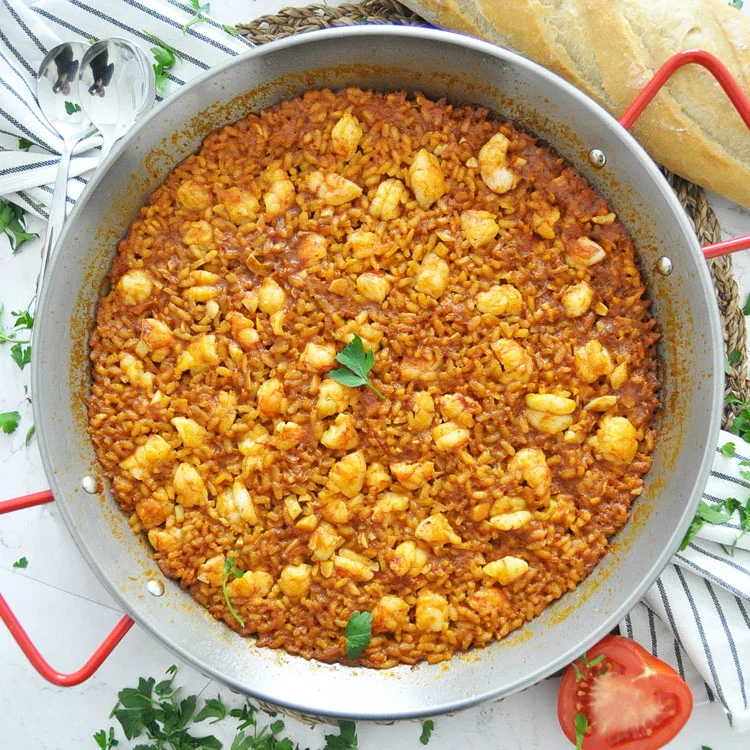
Arroz rossejat is a Spanish rice dish cooked in a savoury fish broth, here with saffron, grated tomato and shrimp. It makes a satisfying one-pan meal, with a brief final blast of heat for a crisp layer of rice underneath.
Ingredients
- 720 mlfish broth
- 0.17 gsaffron threads
- 60 mlextra virgin olive oil
- 6 clovesgarlic, roughly chopped
- 190 gshort-grain rice, similar to arborio
- 3 gsweet smoked Spanish paprika
- 2tomatoes, finely grated
- 225 graw jumbo shrimp
- to tastesea salt and black pepper
- to tastefresh parsley, for garnish
Instructions
- 1
Heat the broth
Put the fish broth and saffron in a saucepan and warm over a medium heat.
- 2
Warm the oil
At the same time, heat the olive oil in a paella pan or a large frying pan over a medium heat.
- 3
Fry the rice
After a couple of minutes, add the chopped garlic and stir continuously for 30 seconds. Add the rice and stir-fry it for 5 minutes, then mix in the paprika quickly. Add the grated tomatoes, season with salt and pepper, stir, and bring to a simmer.
- 4
Add the broth
Simmer the tomatoes for 5 minutes, then carefully pour in the hot fish broth. Give everything one final mix to distribute it evenly; do not stir the rice again, so it keeps its texture.
- 5
Prepare the shrimp
Meanwhile, pat the shrimp dry with paper towels and season with salt and pepper. Cut each one into small, bite-sized pieces.
- 6
Cook the shrimp
After the rice has simmered for 13 minutes, add the shrimp pieces, spacing them evenly over the rice. Gently press them down so they are incorporated, then simmer for another 5 minutes or until both the rice and shrimp are cooked through.
- 7
Make the socarrat
When the rice and shrimp are just cooked and almost no broth remains, raise the heat to medium-high for 1 to 2 minutes to form a slightly burnt layer underneath. Remove the pan from the heat.
- 8
Rest and serve
Cover the pan with a dishcloth and leave it to rest for a couple of minutes. Uncover, garnish with fresh parsley and serve from the pan.
What is arroz rossejat?
Arroz rossejat is associated with Spain’s eastern Mediterranean coast, including the area around Castellón. Its name refers to rice that is toasted or browned, and the dish is built around rice cooked in a flavourful broth.
This version combines fish broth and saffron with tomato, smoked paprika and shrimp. Short-grain rice helps make a cohesive dish, while leaving it undisturbed after adding the broth supports an even cook and a crisp base.
Nutrition and macros by portion
The nutrition label shows one serving as written: 387 calories, 16g protein, 45g carbs, 16g fat.
| Portion | Adjustment | kcal | Protein | Carbs | Fat |
|---|---|---|---|---|---|
| Lighter | Use less olive oil | 271 kcal | 11g | 31g | 11g |
| This serving | As written | 387 kcal | 16g | 45g | 16g |
| Hungry | Serve a larger portion | 581 kcal | 24g | 68g | 24g |
The rice supplies most of the carbohydrates, while olive oil contributes much of the fat; shrimp provides protein, with smaller amounts from the rice. Pair a serving with salad or vegetables to add freshness and round out the plate.
Build flavour in the pan
Garlic and oil: stir the chopped garlic constantly for its brief 30-second cooking time, so it flavours the oil without getting too dark.
Tomato and paprika: add the paprika and mix it in quickly before adding the grated tomatoes. The tomato then simmers for 5 minutes before the broth goes in.
Choose the right rice
Short-grain rice: the recipe calls for 190 g, with arborio suggested as a similar option. Keep the grains evenly spread in the pan so they cook at a similar rate.
Hands off: once the hot broth has had its final mix, leave the rice alone. Stirring during the rest of the cooking can release starch and change the texture.
Watch the cooking cues
Rice timing: the recipe adds the shrimp after 13 minutes of simmering, then cooks everything for another 5 minutes. Use the stated times as a guide and check that the rice is cooked through.
Shrimp: pat the pieces dry before seasoning and adding them. They should be cooked through by the end of the final 5-minute simmer.
Finish with socarrat
The socarrat is the slightly burnt, crisp layer of rice underneath. Once the rice and shrimp are just cooked and virtually no broth remains, turn the heat up to medium-high for 1 to 2 minutes.
Keep close to the pan during this final stage: the aim is a browned base, not a scorched one. Take it off the heat once the crust has formed.
Serve straight from the pan
Rest the covered pan for a couple of minutes before serving, then finish with fresh parsley. The recipe is designed to be served directly from the pan while the base is still crisp.
For a more substantial meal, serve it with a simple salad or vegetables on the side. Choose accompaniments that do not need to compete with the seasoned rice.
Recipe notes & tips
- Warm the broth with the saffron while preparing the rice so it is hot when added.
- Keep the garlic moving in the pan during its 30-second cooking time.
- Grate the tomatoes finely so they mix readily into the rice base.
- Spread the shrimp pieces evenly across the pan for consistent cooking.
- Stay beside the pan during the final 1 to 2 minutes to avoid burning the base.
- Rest the pan for a couple of minutes before serving.
Variations
- Add mussels: arrange cleaned mussels over the rice when you add the shrimp.
- Use monkfish: cut it into bite-sized pieces and add it in place of the shrimp.
- Add peas: scatter a handful over the rice with the shrimp.
- Adjust the heat: add a pinch of chilli with the paprika for a spicier version.
Common mistakes to avoid
- Burnt garlic: stir it continuously and add the rice after 30 seconds.
- Stirring too late: give the rice one final mix when the broth goes in, then leave it undisturbed.
- Wet shrimp: pat the pieces dry before seasoning so excess moisture does not go into the pan.
- Uneven shrimp: spread the pieces evenly over the rice before pressing them gently down.
- Scorched socarrat: limit the final medium-high heat to 1 to 2 minutes and watch the pan closely.
How to store
Refrigerate leftovers promptly in a covered container and eat within 1 to 2 days. Reheat until piping hot, adding a small splash of water or broth if the rice seems dry; the crisp base may soften.
Frequently asked questions
Can I use a regular frying pan?
Yes. The method allows for either a paella pan or a large frying pan; choose one wide enough to spread the rice and shrimp evenly.
Can I use a different type of rice?
The recipe specifies short-grain rice and gives arborio as a similar option. Other rice types may need a different amount of liquid or cooking time.
Why should I stop stirring after adding the broth?
The method avoids further stirring so the rice does not release too much starch and lose its texture. Give it one final mix as soon as the broth goes in.
How do I know when the rice is ready?
The recipe gives 13 minutes before adding the shrimp, followed by another 5 minutes. Check that the rice is cooked through and that virtually no broth remains before making the socarrat.
What does socarrat mean?
It is the slightly burnt, crisp layer of rice at the bottom of the pan. This recipe makes it by raising the heat to medium-high for 1 to 2 minutes at the end.
Can I prepare the shrimp ahead?
You can pat it dry, season it and cut it into pieces ahead of time, then keep it covered in the refrigerator until you are ready to cook.
Cook it from the original
This recipe comes from spainonafork.com. Their page has the author’s own photos, notes and tips — the best place to cook it from.
Open the recipe on spainonafork.com