
Chocolate Basque Burnt Cheesecake
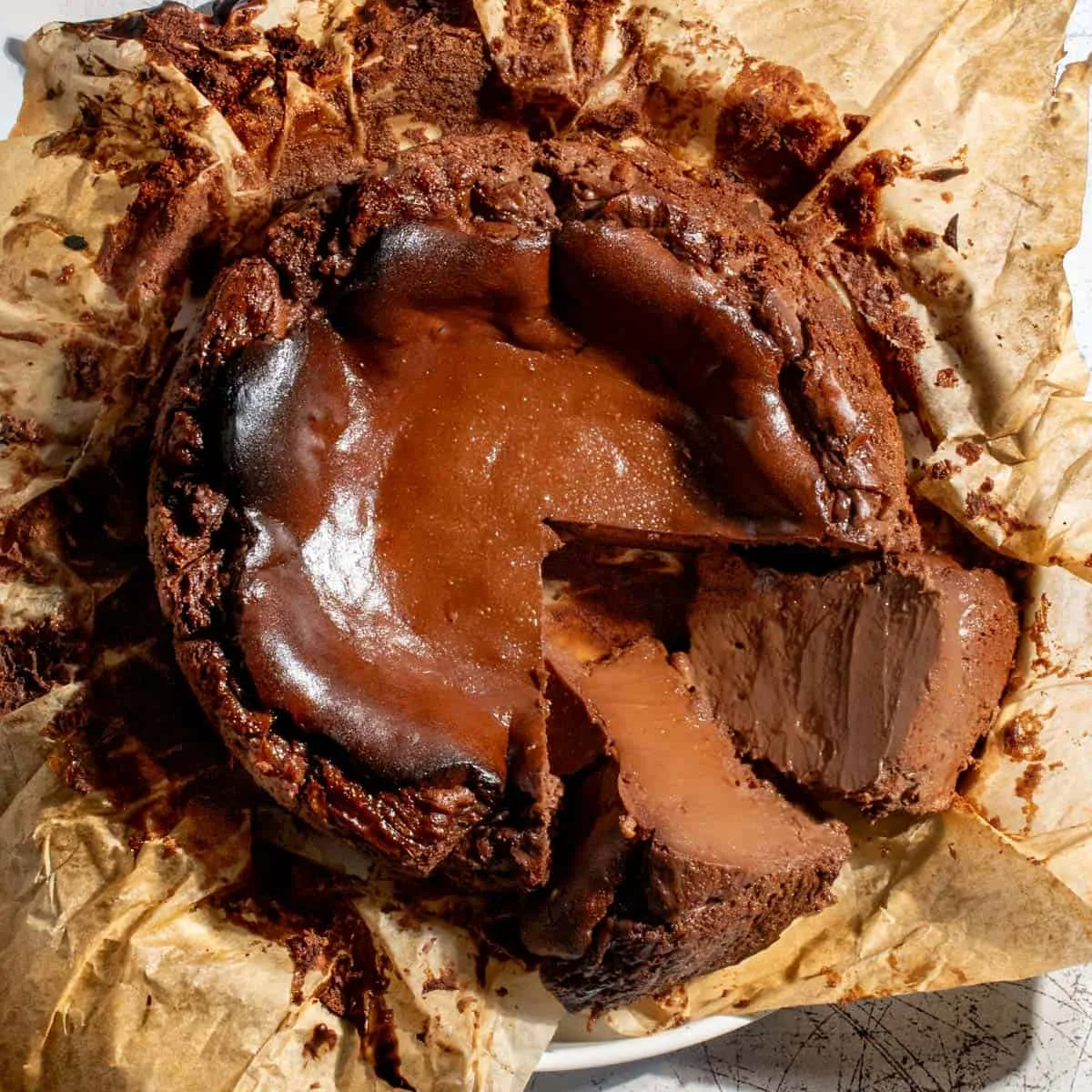
This crustless Spanish-style Basque cheesecake pairs dark chocolate with a rich, creamy centre and a deeply browned top. It is baked without a water bath, making it an elegant dessert that needs little fuss once it is in the oven.
Ingredients
- 300 g (10.5 oz)dark chocolate, broken into small chunks
- 750 g (26.5 oz)full-fat cream cheese, at room temperature
- 160 g (5.6 oz)white sugar
- 30 ml (2 tablespoons)cocoa powder
- 10 ml (2 teaspoons)vanilla extract
- 2.5 ml (½ teaspoon)salt
- 5 largeeggs, at room temperature
- 400 ml (13.5 fl oz)double cream
Instructions
- 1
Heat the oven
Preheat the oven to 200°C (390°F).
- 2
Cut the paper
Cut a piece of baking paper large enough to rise about 7 cm (3 inches) above the sides of the tin once it is lined.
- 3
Line the tin
Scrunch the paper into the tin, pressing it into the corners, then fold the excess over the rim.
- 4
Hold paper down
If the paper will not stay in place, weigh it down with something heavy while you prepare the mixture.
- 5
Melt chocolate
Break the chocolate into small pieces and melt it in the microwave or over a double boiler until smooth and liquid. Set it aside.
- 6
Beat cheese mixture
Put the room-temperature cream cheese and sugar in a stand-mixer bowl. Using the paddle attachment rather than the whisk, beat for at least 3 minutes until very smooth and creamy.
- 7
Add dry flavourings
Sift the cocoa powder into the bowl to prevent lumps, then add the vanilla extract and salt.
- 8
Mix until smooth
Beat for about 1–2 minutes, until the mixture is smooth and evenly combined.
- 9
Add the eggs
Add the room-temperature eggs one at a time, beating well after each addition until incorporated.
- 10
Mix in chocolate
Pour in the melted chocolate and beat until it is fully combined with the mixture.
- 11
Scrape the bowl
Take the bowl off the mixer and gently fold the mixture, making sure nothing is stuck to the bottom. Return the bowl to the mixer.
- 12
Warm the cream
Microwave the cream until just warm, about 50°C, not hot. This takes around 1 minute, depending on your microwave.
- 13
Pour in cream
With the mixer running on low, slowly pour in the warmed cream. Beat for another 30 seconds to combine.
- 14
Fill the tin
Pour the cheesecake mixture into the lined tin.
- 15
Smooth the surface
Smooth the top, then tap the tin gently on the counter a few times to release air bubbles.
- 16
Bake the cheesecake
Bake at 200°C (390°F) for 45–50 minutes. Check at about 45 minutes: the edges should be firm and burnished, while the centre should still wobble quite freely.
- 17
Cool and chill
Remove the cheesecake from the oven and leave it to cool for 10 minutes. Transfer it straight to the fridge and chill for at least 4 hours before slicing; chilling soon after baking is important for its structure and texture.
What is Basque burnt cheesecake?
Basque burnt cheesecake comes from Spain’s Basque Country and is known for its deeply browned top and soft, custardy centre. Unlike a conventional cheesecake, it has no crust and is baked without a water bath.
Chocolate version: Dark chocolate and cocoa bring a pronounced chocolate flavour to the creamy cheese base. The high, crinkled paper lining suits the dessert’s rustic appearance and helps contain the batter as it rises.
Nutrition and macros by portion
The nutrition label shows one serving as written: 681 calories, 11g protein, 36g carbs, 56g fat.
| Portion | Adjustment | kcal | Protein | Carbs | Fat |
|---|---|---|---|---|---|
| Lighter | Serve a smaller slice | 477 kcal | 8g | 25g | 39g |
| This serving | As written | 681 kcal | 11g | 36g | 56g |
| Hungry | Take a larger slice | 1022 kcal | 17g | 54g | 84g |
The cream cheese and double cream provide most of the fat, while the chocolate adds both fat and some carbohydrate. Sugar and chocolate contribute carbohydrates, and the eggs and cream cheese supply much of the protein. Since this is a rich dessert, serve a slice after a meal with fruit alongside it for a practical balance.
Why room-temperature ingredients matter
Cream cheese: Let it soften before mixing so it can beat smoothly with the sugar, without small lumps. The paddle attachment works the mixture evenly without whipping in as much air as a whisk.
Eggs: Room-temperature eggs are easier to incorporate into the thick cheese mixture. Add them separately so each one blends in before the next is added.
Getting the chocolate mixture smooth
Cocoa powder: Sift it into the bowl to break up clumps before mixing. This helps keep the batter evenly flavoured and smooth.
Melted chocolate: Let the chocolate melt until fluid and smooth, then beat it into the cheese mixture. Warm the cream only until just warm, and pour it in gradually with the mixer on low.
How to judge the bake
At the edges: Look for a firm, burnished surface, especially when checking around the 45-minute mark. The top should be deeply coloured, as expected for this style of cheesecake.
In the centre: It should still wobble quite a lot when the tin is moved gently. The centre firms as the cheesecake cools and chills, so avoid baking until it is completely set in the oven.
Cooling and chilling
After baking: Leave the cheesecake out of the oven for 10 minutes, then transfer it to the fridge. The recipe specifically calls for chilling soon after baking to help the cheesecake set with its intended texture.
Before slicing: Allow at least 4 hours in the fridge. A long chill makes it easier to cut neat portions while keeping the centre creamy.
Serving this rich dessert
Keep accompaniments simple: Serve the cheesecake on its own or with fresh berries for a bright contrast to the chocolate. A small spoonful of lightly whipped cream is another option if you want an especially indulgent dessert.
For clean slices: Use a sharp knife and wipe it between cuts. Take the cheesecake from the fridge shortly before serving so it is not ice-cold.
Recipe notes & tips
- Bring the cream cheese and eggs to room temperature before you start mixing.
- Use the paddle attachment rather than the whisk for the cream cheese and sugar.
- Sift the cocoa powder so lumps do not remain in the batter.
- Warm the cream only until just warm, not hot, before adding it.
- Check the cheesecake at about 45 minutes and use the edges and centre wobble as your cues.
- Chill for at least 4 hours before slicing, even if the cheesecake looks set around the edges.
Variations
- Use bittersweet chocolate: Choose a dark chocolate with a higher cocoa content for a more intense flavour.
- Add orange zest: Fold finely grated zest into the batter for a citrus note.
- Serve with berries: Add fresh raspberries or strawberries alongside each slice.
- Add coffee: Stir a little espresso powder into the melted chocolate for a mocha accent.
- Finish with cocoa: Dust the chilled cheesecake lightly with cocoa powder just before serving.
Common mistakes to avoid
- Lumpy cream cheese: Start with room-temperature cheese and beat it with the sugar until completely smooth.
- Cocoa clumps: Sift the cocoa powder into the bowl before mixing.
- Hot cream: Warm it only until just warm, then add it slowly with the mixer on low.
- Overbaking: Check around 45 minutes and take the cheesecake out while the centre is still very wobbly.
- Skipping the chill: Refrigerate it for at least 4 hours so it can firm up before slicing.
- Paper slipping: Press the baking paper into the corners and weigh it down if it will not stay put.
How to store
Cover and keep the cheesecake in the fridge, where it will keep for up to 4 days. Serve chilled; if you prefer it less cold, let a slice stand briefly at room temperature rather than reheating it.
Frequently asked questions
Does Basque cheesecake need a water bath?
No. This recipe is baked without a water bath, and its browned top is part of the style.
How do I know when the cheesecake is baked?
The edges should be firm and burnished, while the centre remains quite jiggly. It firms during chilling.
Why does the baking paper extend above the tin?
The paper should rise about 7 cm above the tin’s sides to contain the batter as it bakes. Scrunch it into the corners so it follows the shape of the tin.
Can I make this cheesecake ahead?
Yes. It needs at least 4 hours to chill before slicing, so it can be made earlier and kept refrigerated until serving.
Can I use cold eggs or cream cheese?
The recipe calls for both the eggs and cream cheese to be at room temperature. This makes them easier to combine smoothly.
Can I freeze the cheesecake?
The recipe does not specify freezing. For the intended creamy texture, keep it refrigerated and serve within 4 days.
Cook it from the original
This recipe comes from thecinnamonjar.com. Their page has the author’s own photos, notes and tips — the best place to cook it from.
Open the recipe on thecinnamonjar.com