
Sausage Plait with Bacon, Apple and Caramelised Onions
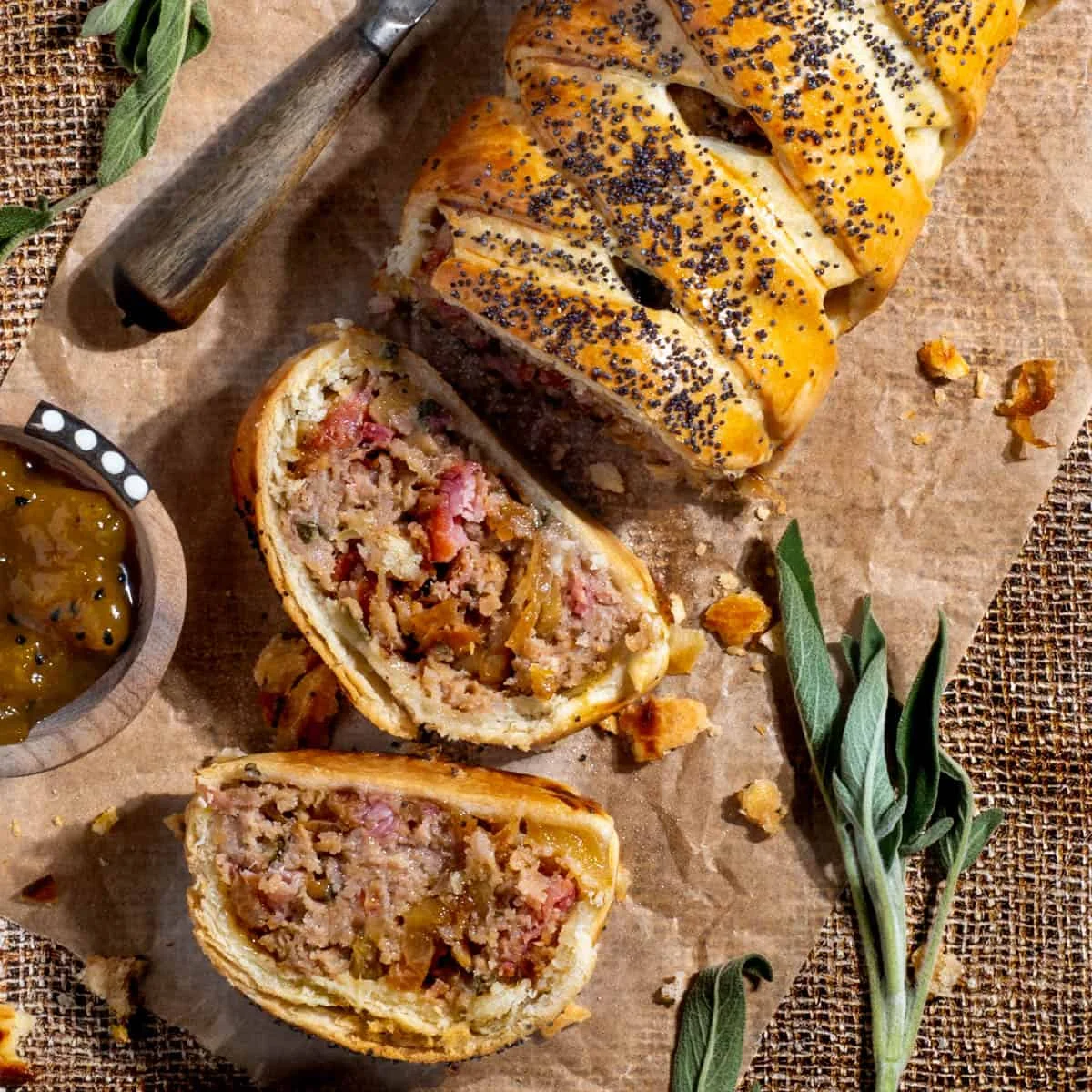
This British sausage plait wraps pork sausage meat, bacon, apple and gently caramelised onions in crisp puff pastry. It makes a generous centrepiece for lunch, a picnic or a family supper, and can be served hot or cold.
Ingredients
- 1 largeonion
- 1 largeeating apple (such as Bramley or Pink Lady)
- 150 g (5 oz)smoked bacon, diced
- 400 g (14 oz)pork sausage meat, or equivalent meat from skinned sausages
- 40 g (1½ oz; or 4 tablespoons)breadcrumbs
- 2 tablespoonssage, finely chopped (about 10–15 leaves)
- ¼ teaspoonsalt
- ½ teaspoonblack pepper
- 1 tablespoonoil, for frying
- 2 teaspoonssugar
- 2 teaspoonssherry vinegar (or red wine vinegar or balsamic vinegar)
- 320 g (11 oz)ready-rolled puff pastry
- 1egg yolk
- 1 tablespoonmilk
- to tastesesame or poppy seeds, for sprinkling
Instructions
- 1
Prepare ingredients
Slice the onion. Dice the apple and bacon into small cubes.
- 2
Mix sausage filling
Put the sausage meat, breadcrumbs, chopped sage, salt and black pepper in a large bowl. Loosen the sausage meat with a fork and mix it gently with the other ingredients.
- 3
Fry the bacon
Heat the oil in a large frying pan over medium-high heat. Fry the bacon until golden and beginning to crisp, then lift it out, leaving the oil in the pan, and set it aside.
- 4
Cook the onions
Turn the heat down to medium-low and add the sliced onions. Cover the pan and cook without disturbing them for 5 minutes.
- 5
Caramelise onions
Remove the lid and cook the onions for a further 5 minutes over low heat, stirring often. Keep them gently caramelising and take care not to let them burn.
- 6
Add apple mixture
Stir the diced apple, sugar and sherry vinegar into the onions.
- 7
Soften the apple
Cook over low heat for 8–10 minutes, stirring frequently, until the apple has softened slightly and is lightly golden. Take the pan off the heat and leave the mixture to cool for 2–3 minutes.
- 8
Combine filling
Transfer the onion and apple mixture to the bowl with the sausage meat. Add the reserved bacon, then mix thoroughly with your hands until evenly combined.
- 9
Heat the oven
Preheat the oven to 180°C (350°F/Gas Mark 4) and line a baking tray with baking parchment.
- 10
Roll the pastry
Unwrap and unroll the pastry onto a sheet of baking parchment. Use a rolling pin to enlarge it slightly to about 36 × 30 cm (12 × 14 in).
- 11
Shape the filling
Arrange the sausage mixture lengthways down the centre of the pastry, shaping it into a long, rounded sausage. Leave about 2.5 cm (1 in) clear at both ends so the pastry can be folded over and sealed.
- 12
Cut pastry strips
On each side of the filling, cut the pastry at a slight diagonal into strips about 2 cm (0.8 in) wide. Keep the cuts aligned and make the same number of strips on each side.
- 13
Make egg wash
Whisk the egg yolk and milk together in a small bowl. Brush the pastry around the filling with the egg wash.
- 14
Trim pastry ends
Trim excess pastry from both ends, leaving a small flap beside the filling to fold over and seal the plait.
- 15
Fold pastry ends
Fold the top and bottom pastry flaps over the filling.
- 16
Plait the pastry
Starting at the top, fold strips across the filling from alternate sides to make a crossed plait. If the first two short strips get in the way, remove them.
- 17
Seal the plait
At the end, tuck any loose strips underneath the roll or stick them down securely with egg wash.
- 18
Brush the top
Brush the remaining egg wash over the whole top surface.
- 19
Add the seeds
Sprinkle sesame or poppy seeds generously over the pastry, then transfer the plait on its parchment to the prepared baking tray.
- 20
Bake until golden
Bake in the preheated oven for 35 minutes, or until the pastry is puffed and flaky with a deep golden colour. To check the filling, insert a metal skewer into its centre for 5 seconds, then touch it against the inside of your wrist; if it feels too cool, bake for a few more minutes and keep a close eye on it.
- 21
Serve the plait
Serve hot or cold, cut into generous slices. Pair it with a green salad, potatoes or baked beans.
What is a sausage plait?
A sausage plait is seasoned sausage filling enclosed in pastry strips crossed over the top. It belongs to the British tradition of combining a savoury meat filling with pastry, and is sometimes nicknamed a “Poor Man’s Wellington”.
This version mixes pork with smoked bacon, sage, apple and onions cooked until sweet and tender. The filling gives the pastry a hearty centre, while the crossed strips make it easy to slice and share.
Nutrition and macros by portion
The nutrition label shows one serving as written: 1032 calories, 28g protein, 58g carbs, 76g fat.
| Portion | Adjustment | kcal | Protein | Carbs | Fat |
|---|---|---|---|---|---|
| Lighter | Serve with extra salad | 722 kcal | 20g | 41g | 53g |
| This serving | As written | 1032 kcal | 28g | 58g | 76g |
| Hungry | Add potatoes or beans | 1548 kcal | 42g | 87g | 114g |
The pastry, breadcrumbs and apple provide most of the carbohydrates, while the pastry, pork and bacon contribute much of the fat. Pork and bacon also supply the protein. Balance a slice with a generous green salad or vegetables, and add potatoes or beans if you want a more filling plate.
Build a balanced filling
Sausage meat: mix it loosely with the breadcrumbs, sage and seasoning first so it is easier to distribute the later additions evenly. Breadcrumbs help bind the mixture without making it as dense as a tightly packed filling.
Apple and onion: cook them gently before adding them to the meat. This softens the fruit and sweetens the onions, while cooling the mixture briefly helps keep the pastry easier to handle.
Bacon: fry it until golden and beginning to crisp, then add it to the filling. Leaving the cooking oil in the pan gives the onions a savoury base.
Take your time with the onions
The onion stage is deliberately gentle: cover the pan for the first 5 minutes, then uncover and stir for another 5 minutes over low heat. Keep an eye on the pan, since the aim is to soften and lightly caramelise the onions rather than brown or burn them.
The apple cooks with the onions for a further 8–10 minutes. Stop when it is slightly softened and lightly golden; it should hold some shape rather than turn to purée.
Make the plait neatly
Centre the filling lengthways and leave about 2.5 cm clear at both ends for the pastry flaps. Cutting matching diagonal strips on either side makes it easier to cross them evenly over the filling.
Egg wash helps the pastry strips stick and adds colour as the plait bakes. Fold the end flaps over first, then tuck the final loose strips underneath or secure them with a little more egg wash.
Look for doneness cues
The pastry should be puffed and flaky, with a deep golden surface after about 35 minutes at 180°C. If it needs longer, return it to the oven for a few minutes and watch the colour closely.
The recipe's skewer check is a way to assess the centre: insert a metal skewer for 5 seconds and touch it against the inside of your wrist. If it feels cool, continue baking for a few minutes; take care when handling the hot skewer.
Serve it your way
Serve slices hot from the oven or let the plait cool for a picnic or packed lunch. A green salad offers a fresh contrast, while potatoes or baked beans make the meal more substantial.
The recipe makes four generous portions. For a buffet, cut the cooked plait into smaller slices so it is easier to share.
Recipe notes & tips
- Use a fork to loosen the sausage meat before combining the filling.
- Stir the onions frequently once the lid is removed and keep the heat low.
- Let the apple and onion mixture cool for 2–3 minutes before mixing it into the sausage meat.
- Use baking parchment beneath the pastry to make transferring the plait easier.
- Keep the pastry strips similar in width so they cross over the filling evenly.
- Check the plait towards the end of baking so the pastry does not become too dark.
Variations
- Change the vinegar: use red wine vinegar or balsamic vinegar instead of sherry vinegar.
- Choose a topping: sprinkle sesame seeds or poppy seeds over the egg-washed pastry.
- Use skinned sausages: remove their casings and use the meat in place of loose sausage meat.
- Adjust the herbs: use the specified chopped sage for its savoury, aromatic flavour.
- Serve it cold: let the baked plait cool before slicing it for a picnic or lunch.
Common mistakes to avoid
- Burning the onions: lower the heat and stir frequently after the first covered 5 minutes.
- Adding hot apple and onion: let the mixture cool for 2–3 minutes before mixing it with the meat.
- Uneven pastry strips: cut matching diagonal strips of about 2 cm on both sides.
- Filling to the edges: leave about 2.5 cm at each end so the pastry can fold over and seal.
- Loose plait ends: tuck them under the roll or secure them with egg wash.
- Relying only on the clock: check for puffed, deep golden pastry and assess the centre before serving.
How to store
Cool leftovers, cover or place them in an airtight container, and refrigerate for up to 3 days. Reheat slices in an oven until hot throughout; the pastry is best reheated in the oven rather than the microwave. It can also be served cold.
Frequently asked questions
Can I make the filling ahead?
You can cook the bacon, onions and apple ahead, then let them cool before mixing them with the sausage meat. Keep the prepared filling covered in the fridge and assemble the plait when you are ready to bake.
Can I use meat from sausages?
Yes. Remove the skins and use the equivalent amount of pork sausage meat, 400 g in total.
How do I know when the plait is ready?
The pastry should be puffed, flaky and deep golden after about 35 minutes at 180°C. The recipe also describes checking the centre with a metal skewer; if it feels cool when tested against your wrist, bake for a few more minutes.
Can I serve a sausage plait cold?
Yes. The recipe can be served hot or cold, so it works for a picnic or lunch as well as a hot meal.
What should I serve with it?
Try a green salad for a fresh contrast, or serve it with potatoes or baked beans for a more substantial meal.
Can I use a different vinegar?
Yes. Red wine vinegar or balsamic vinegar can replace the sherry vinegar.
Cook it from the original
This recipe comes from thecinnamonjar.com. Their page has the author’s own photos, notes and tips — the best place to cook it from.
Open the recipe on thecinnamonjar.com