
Juicy Tender Chicken Breasts (on the stovetop)
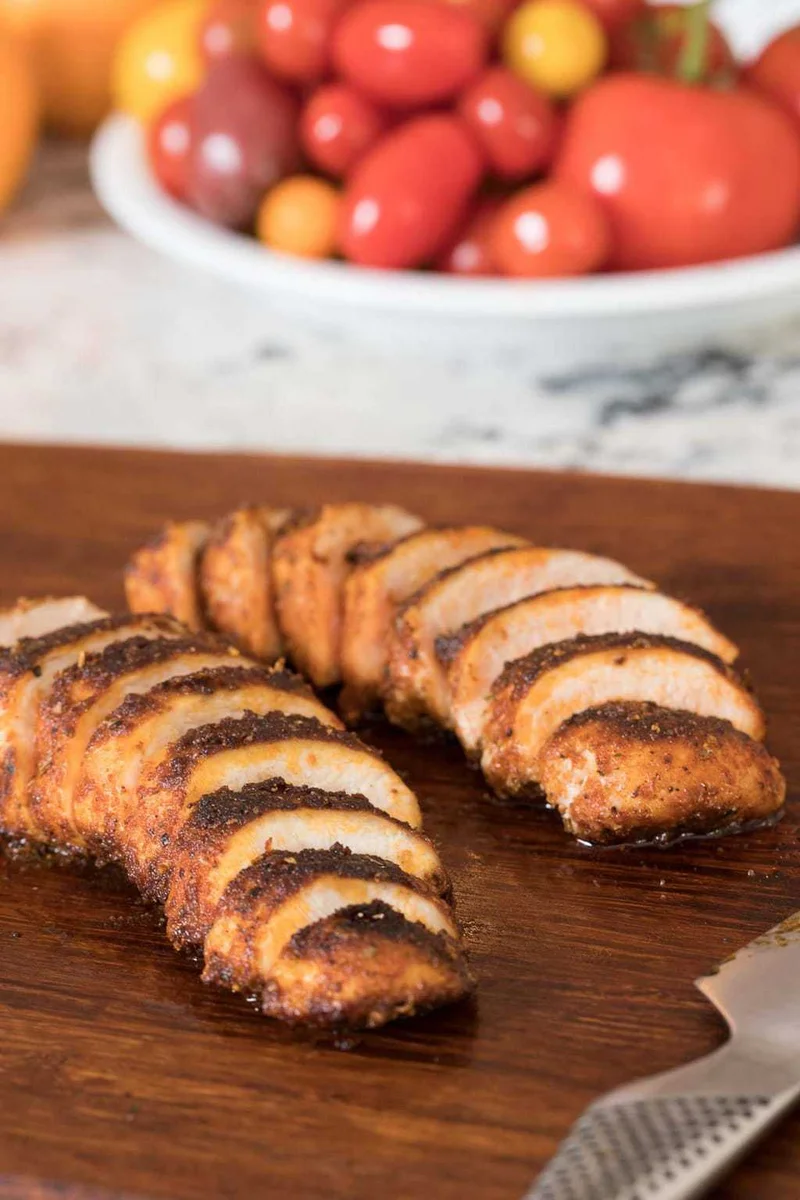
These stovetop chicken breasts are seasoned with a savoury paprika and Italian-herb rub, then seared and gently covered to finish cooking. Make them for an easy main course, or slice the chicken to use in salads, sandwiches and other meals.
Ingredients
- 2 teaspoonsgarlic salt
- 1 teaspoonsugar
- 2 teaspoonsmild paprika
- 2 teaspoonsdried Italian seasoning
- 1 teaspoonground black pepper
- 1–1½ pounds (454–680 g)boneless, skinless chicken breasts
- 1 tablespoonbutter
- 1 tablespoonextra-virgin olive oil
Instructions
- 1
Mix the rub
Stir all the rub ingredients together in a small bowl, then set it aside.
- 2
Season the chicken
Put the chicken breasts on a plate or shallow pan and pat them dry with paper towels. Sprinkle them generously with the rub and work it over the surface with your hand. Leave the chicken at room temperature for 15–20 minutes.
- 3
Heat the pan
Warm the butter and olive oil in a cast-iron or heavy stainless-steel pan over medium heat. Let the butter sizzle and become hot, keeping an eye on it so it does not burn. Choose a pan large enough to hold all the breasts without crowding.
- 4
Sear the first side
Add the chicken and leave it undisturbed for 3 minutes. Check the underside of one breast; if it is browning too fast, reduce the heat slightly. Cook for 5 minutes total, or until the underside is well browned.
- 5
Cover and cook
Turn the breasts over and immediately reduce the heat to medium-low. Cover the pan and cook for another 5–10 minutes, or until an instant-read thermometer inserted into the centre of the thickest part reads 71°C (160°F). Cooking time depends on the size of each breast.
- 6
Rest and serve
Transfer the chicken to a clean plate and loosely cover it with foil. Leave it to rest for 5 minutes, then slice and serve. For a main course, pour the pan juices over the chicken.
What are stovetop chicken breasts?
Chicken breasts cooked on the hob are a familiar American-style main course: browned in a pan, then covered to finish cooking more gently. This version uses a paprika, herb and pepper rub for a savoury coating.
The mix of butter and olive oil helps brown the chicken, while covering the pan after turning it lets the thicker pieces cook through without continuing to sear over high heat.
Nutrition and macros by portion
The nutrition label shows one serving as written: 193 calories, 24g protein, 2g carbs, 9g fat.
| Portion | Adjustment | kcal | Protein | Carbs | Fat |
|---|---|---|---|---|---|
| Lighter | Use less pan fat | 135 kcal | 17g | 1g | 6g |
| This serving | As written | 193 kcal | 24g | 2g | 9g |
| Hungry | Serve with extra sides | 290 kcal | 36g | 3g | 14g |
The chicken provides most of the protein, while the butter and olive oil contribute most of the fat. The small amount of sugar and the chicken’s natural carbohydrates account for the reported carbs; pair a serving with vegetables and a suitable grain or potato for a more complete plate.
Why this seasoning works
The rub: garlic salt, paprika, dried Italian seasoning, black pepper and a little sugar give the chicken a savoury, herby flavour with a hint of sweetness. Patting the breasts dry first helps the seasoning cling and encourages browning.
The salt: garlic salt seasons the chicken, so the recipe does not call for additional salt. Coat the breasts generously, as directed, and spread the rub over the surface with your hand.
Getting an even sear
The pan: a heavy cast-iron or stainless-steel pan holds heat well for browning. Leave room around the breasts so they sear rather than crowd together.
The first side: let the chicken sit untouched for the first 3 minutes, then check its colour. If it is browning too quickly, lower the heat; aim for a nicely browned underside by 5 minutes total.
How to judge doneness
The thermometer: check the centre of the thickest part of each breast, since pieces can differ in size. The recipe’s cue is 71°C (160°F), with the final 5-minute rest following the cooking step.
The timing: the covered cooking stage takes another 5–10 minutes, but the thermometer reading is the stated doneness check. Avoid relying on the clock alone when the breasts vary in thickness.
Resting and pan juices
The rest: move the chicken to a clean plate and cover it loosely with foil for 5 minutes before slicing. This gives you time to prepare sides and lets the chicken rest before serving.
The juices: spoon the liquid left in the pan over the sliced chicken if serving it as a main course. It also adds flavour if you are serving the breasts whole.
What to serve alongside
For a simple plate, serve the chicken with potatoes or rice and a green vegetable. A salad or warm bread also works well if you want a lighter accompaniment.
For another meal, slice the cooked breasts for sandwiches or salads. Keep any pan juices to drizzle over the chicken when serving.
Recipe notes & tips
- Pat the chicken dry before applying the rub so the surface is ready to brown.
- Let the seasoned breasts sit for 15–20 minutes at room temperature as directed.
- Use a pan large enough to give each breast room.
- Check the underside after the first 3 minutes and adjust the heat if it is browning too quickly.
- Use an instant-read thermometer in the thickest part of each breast.
- Rest the chicken loosely covered for 5 minutes before slicing.
Variations
- Adjust the paprika: use a different paprika style if you prefer a change in flavour.
- Add a citrus finish: serve the sliced chicken with lemon wedges.
- Make it sandwich-ready: slice the rested breasts and serve them in bread.
- Use it in salads: slice the cooked chicken and add it to a salad just before serving.
Common mistakes to avoid
- Crowding the pan: the breasts need space to brown, so use a pan large enough for them all.
- Skipping the drying step: pat the chicken with paper towels before seasoning.
- Moving the chicken too soon: leave it untouched for the first 3 minutes of searing.
- Letting the butter burn: watch the pan as it heats and lower the heat if needed.
- Guessing doneness by time: check the thickest part with an instant-read thermometer.
- Slicing immediately: let the chicken rest loosely covered for 5 minutes first.
How to store
Refrigerate leftover chicken in a covered container and use within 3–4 days. Reheat gently in a covered pan or in the microwave until hot, adding a little of the reserved pan juice if available.
Frequently asked questions
Can I use chicken breasts of different sizes?
Yes, but they may finish at different times. Check each breast at its thickest point with an instant-read thermometer.
Can I use a non-stick pan?
The method specifies cast iron or heavy stainless steel. If using a non-stick pan, keep an eye on the browning and follow the same doneness check.
Why leave the seasoned chicken at room temperature?
The recipe calls for a 15–20-minute rest after seasoning, before the chicken goes into the pan. Keep to that timing.
Can I prepare the rub in advance?
Yes. Mix the rub ingredients and keep the mixture covered until you are ready to season the chicken.
What can I do with leftovers?
Slice the chicken for sandwiches or salads, or serve it with the pan juices as another main course.
Cook it from the original
This recipe comes from thecafesucrefarine.com. Their page has the author’s own photos, notes and tips — the best place to cook it from.
Open the recipe on thecafesucrefarine.com