
Festive Sherry Trifle (English Trifle)
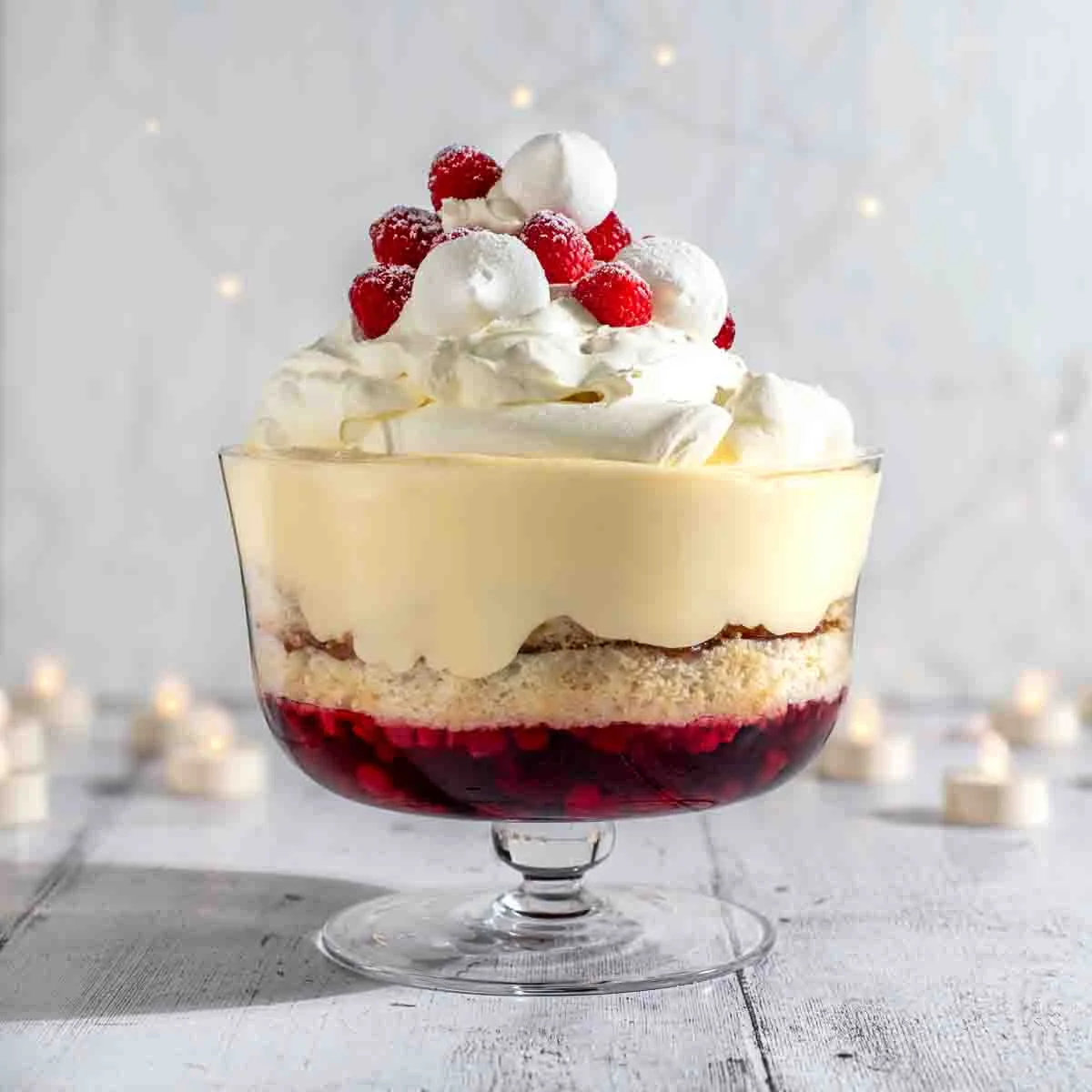
This British festive trifle layers fruit jelly, sponge, jam, sherry, custard and softly whipped cream in a celebratory pudding. It is made ahead so the jelly can set, leaving you free to finish the layers and decorate before serving.
Ingredients
- 1 boxvanilla cake mix (or 1–2 shop-bought plain Madeira cake loaves, or sponge fingers)
- 500 ml (you may need more or less, depending on the size of your trifle bowl)prepared strawberry or raspberry jelly
- 375 mlfresh or frozen mixed berries
- 4 tablespoons (60 ml)strawberry or raspberry jam
- 8 tablespoons (120 ml)sweet sherry
- 1,000 mlcrème pâtissière or custard (shop-bought or homemade)
- 500 mldouble cream (fridge-cold, whipped to soft peaks)
- 50 g (optional)fresh raspberries, for decoration (or other fruit)
- Optionalmini meringues, for decoration
Instructions
- 1
Bake the cake
Prepare the cake mix according to the packet instructions and leave the cake to cool completely. Choose a tin that matches the width of your trifle bowl; for a 20 cm bowl, use a 20 cm tin. If necessary, bake in a larger tin and trim the cake to fit.
- 2
Prepare the jelly
Make the jelly following the packet instructions.
- 3
Add the berries
Measure the berries and put them in the bottom of the trifle bowl. Frozen berries can go in without defrosting; drain tinned fruit thoroughly if using it.
- 4
Pour over jelly
Pour the prepared jelly over the fruit, filling the bowl to the level you want for the fruit layer.
- 5
Chill until set
Refrigerate the bowl for at least 6 hours, until the jelly is completely set. It can be left overnight.
- 6
Slice the cake
If you like, trim away the browned top of the cake, then carefully cut it in half horizontally. Trim more from the top if you want a thinner cake layer.
- 7
Add first layer
Gently place one half of the cake on top of the set jelly and fruit.
- 8
Spread the jam
Spread the jam evenly over the cake, leaving a small border around the edges to help limit seepage when you add the next layer.
- 9
Add second layer
Set the remaining cake half on top of the jam-covered layer.
- 10
Spoon on sherry
Spoon the sherry evenly over the cake.
- 11
Add the custard
Slowly pour or spoon the crème pâtissière or custard into the bowl, leaving enough room above it for the cream.
- 12
Top with cream
Spoon the cream over the custard. For a billowy finish, use a large spoon to add it a spoonful at a time, gently building up the layer.
- 13
Decorate the trifle
Finish with the raspberries and mini meringues, or use toppings of your choice.
What is an English trifle?
Trifle is a British layered dessert, traditionally assembled in a glass bowl so its colourful layers can be seen. Versions vary, but sponge, fruit, custard and cream are familiar components.
This festive version combines berry jelly with sponge soaked in sweet sherry, jam, custard and whipped double cream. Making the jelly layer first gives it time to set before the softer layers go on top.
Nutrition and macros by portion
The nutrition label shows one serving as written: 478 calories, 7g protein, 65g carbs, 21g fat.
| Portion | Adjustment | kcal | Protein | Carbs | Fat |
|---|---|---|---|---|---|
| Lighter | Smaller cream topping | 335 kcal | 5g | 46g | 15g |
| This serving | As written | 478 kcal | 7g | 65g | 21g |
| Hungry | Larger trifle portion | 717 kcal | 11g | 98g | 32g |
The sponge and jelly contribute most of the carbohydrates, while the double cream and jam add much of the fat and sugar. The cake, custard and cream provide some protein. Serve a portion alongside fresh fruit, or after a lighter main course, to balance the richness of the pudding.
Choose the cake that suits your bowl
Cake shape: A cake baked to roughly the width of the bowl makes it easier to create an even layer. Trim a larger cake to fit, or use Madeira cake or sponge fingers instead of cake mix.
Cake thickness: Slicing the cooled cake horizontally gives you two layers. You can trim away more from the top if you want the sponge layer thinner.
Give the jelly time to set
Fruit first: Spread the berries over the bottom of the bowl before adding the prepared jelly. Frozen berries can be used straight from the freezer, while tinned fruit needs thorough draining.
Chilling: Refrigerate the bowl for at least 6 hours, or overnight, until the jelly is fully set. This gives the later layers a firm base.
Layer the sponge carefully
Jam border: Spread the jam across the first cake layer but leave a small margin at the edge. This helps stop it pushing out when you place the second half on top.
Sherry: Spoon it over the upper cake layer so it can soak in before you add the custard. Pour the custard slowly and leave space for the cream.
Finish with soft peaks
Cream texture: Whip the fridge-cold double cream to soft peaks before assembling the topping. It should hold a gentle shape rather than becoming stiff.
Billowy top: Add the cream gently, one spoonful at a time, instead of pressing it flat. Raspberries and mini meringues can go on at the end.
Plan the timing
Make ahead: The long wait is for the jelly to set, so start the trifle at least 6 hours before finishing it. Overnight chilling works well when you want to assemble the remaining layers later.
Final layers: Add the cake, jam, sherry, custard and cream after the jelly has set. Decorate just before serving for a fresh-looking finish.
Serving ideas
A chilled trifle makes a centrepiece for a festive meal and can be served straight from the bowl. Use a large spoon to reach down through the layers when portioning.
The rich layers pair well with a lighter end to the meal, such as fresh fruit. Keep the bowl refrigerated until it is time to serve.
Recipe notes & tips
- Use a bowl close to 20 cm wide, or trim the cake to fit the bowl you have.
- Let the cake cool fully before slicing it horizontally.
- Drain tinned fruit well before adding it to the bowl.
- Leave the jam border around the cake to reduce seepage between layers.
- Keep enough room above the custard for the whipped cream and decorations.
- Use a large spoon to serve portions that reach through the layers.
Variations
- Change the berries: Use either fresh or frozen mixed berries in the jelly layer.
- Swap the cake: Use plain Madeira cake or sponge fingers instead of cake mix.
- Choose the jam: Use strawberry or raspberry jam to match the jelly.
- Skip the sherry: Leave it out for a version without alcohol.
- Change the topping: Decorate with other fruit instead of raspberries.
- Add meringues: Scatter mini meringues over the cream just before serving.
Common mistakes to avoid
- Adding layers before the jelly sets: Chill it for at least 6 hours so the fruit layer is firm.
- Using wet tinned fruit: Drain it thoroughly before putting it in the bowl.
- Slicing warm cake: Let the cake cool completely first so it is easier to handle.
- Spreading jam to the edge: Leave a small margin to help keep it from squeezing out.
- Filling the bowl to the top with custard: Leave room for the cream and decorations.
- Overwhipping the cream: Stop at soft peaks so the topping stays softly shaped.
How to store
Cover and refrigerate leftover trifle, and use it within 2 days for the best texture. Serve chilled; this layered dessert is not suited to reheating.
Frequently asked questions
Can I make this trifle the day before?
Yes. The jelly can set overnight, and the rest of the trifle can be layered after that. Keep it covered and refrigerated.
Can I use frozen berries?
Yes. Add them to the bowl without defrosting first, then pour over the prepared jelly.
What can I use instead of cake mix?
Use one or two shop-bought plain Madeira cake loaves, or sponge fingers, as suggested in the ingredients.
How do I make the trifle without sherry?
Simply leave out the sherry. The recipe does not specify a replacement.
How do I know the jelly is ready for the next layer?
It should be completely set rather than liquid or wobbly enough to shift when you move the bowl. Allow at least 6 hours in the fridge.
Can I use shop-bought custard?
Yes. The recipe allows either shop-bought or homemade custard, or crème pâtissière.
Cook it from the original
This recipe comes from thecinnamonjar.com. Their page has the author’s own photos, notes and tips — the best place to cook it from.
Open the recipe on thecinnamonjar.com