
Vietnamese Baguette (Banh Mi)
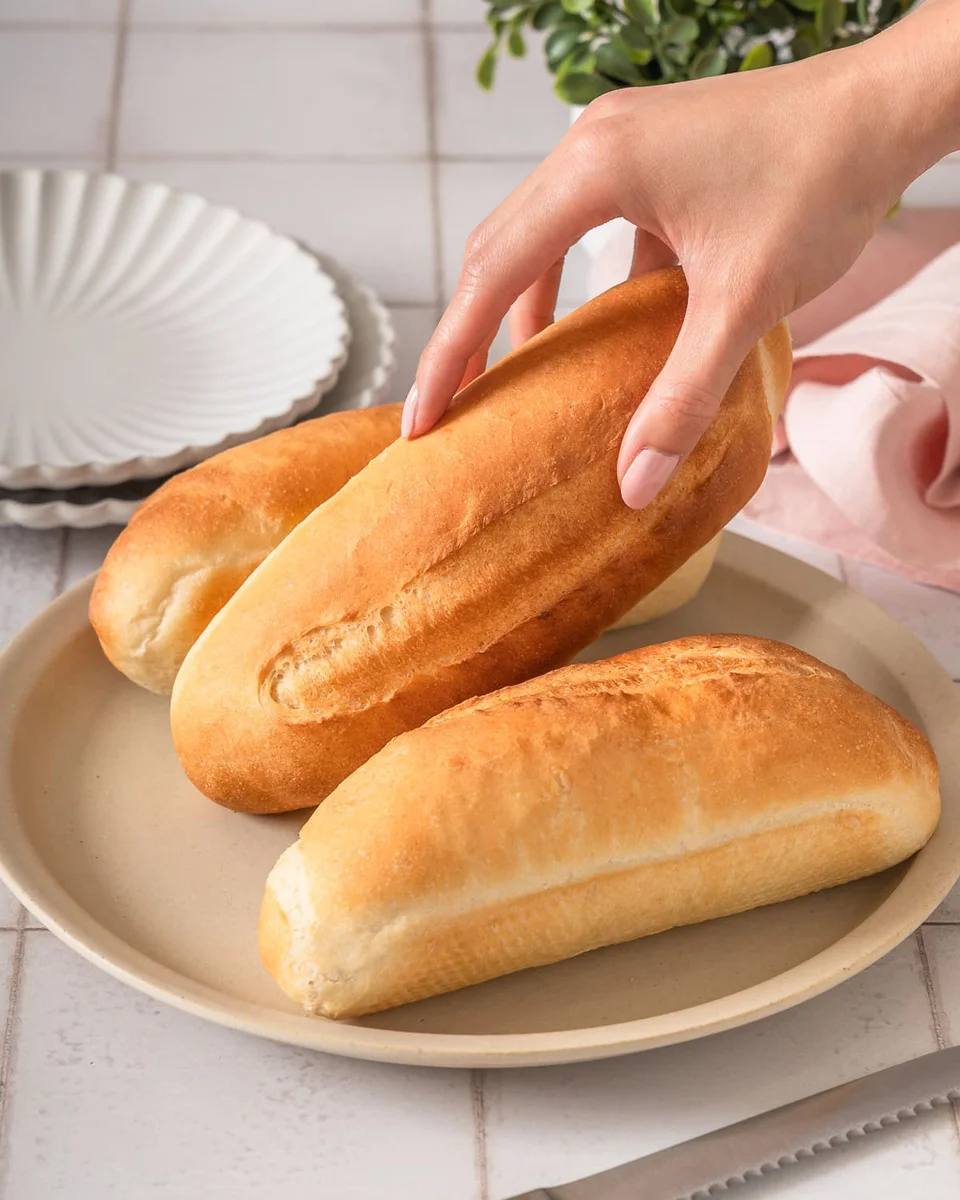
Vietnamese baguette, or bánh mì, is a light, crisp-crusted bread with a soft, airy centre. This homemade version uses a simple yeast dough and is shaped into six individual loaves, ready to serve on their own or fill.
Ingredients
- 300 g (105–110°F / 40–43°C)warm water
- 6 ginstant yeast
- 8 ggranulated sugar
- 500 gbread flour
- 10 gsalt
- 7 gunsalted butter, melted
Instructions
- 1
Activate the yeast
Stir the sugar into the 40–43°C water until dissolved. Add the instant yeast, mix, and leave for 5 minutes. If using active dry yeast instead, leave it for 10 minutes.
- 2
Mix the dough
Combine the bread flour and salt in a stand mixer. Add the yeast mixture and melted butter, then mix on low for 1–2 minutes. Increase to medium and mix for about 8–10 minutes, until the dough is smooth, elastic and tacky, and pulls away from the bowl's sides.
- 3
Proof the dough
Lightly grease a large bowl with oil and transfer the dough to it. Cover with plastic wrap and leave in a warm place for 45 minutes to 1 hour, until it has grown to about 1.5 to 2 times its original size.
- 4
Shape the loaves
Divide the dough into 6 equal pieces and roll each into a ball, keeping the pieces covered with plastic wrap or a damp towel as you work. If sticky, dust the work surface and rolling pin with bread flour. Gently flatten each ball into a rectangle without pressing out all the air. Starting at the top, roll it down tightly, pinching the edges as you go. Pinch the seam closed and roll the loaf a few times to smooth it.
- 5
Proof the loaves
Place the shaped dough seam-side down in a baguette pan, leaving a few inches between loaves. Cover lightly with plastic wrap and proof in a warm place for about 30 minutes, until puffy and about 1.5 times its original size, while still holding its shape.
- 6
Prepare the oven
Heat the oven to 232°C and position a rack in the centre. Pour boiling water into a large baking pan and place it on the bottom rack.
- 7
Score and bake
Spray the proofed loaves with water. Score each lengthways at a 45-degree angle, about 3 mm deep. Bake for 16–18 minutes, until golden brown, removing the pan of water after 7 minutes.
- 8
Cool and serve
Transfer the baguettes to a wire rack and leave to cool for 15 minutes. Slice and serve.
What is bánh mì baguette?
Bánh mì refers both to Vietnamese bread and to the filled sandwiches made with it. The baguette has roots in French bread-making, adapted in Vietnam into a loaf prized for its crisp crust and light interior.
This version makes six smaller baguettes. Bread flour gives the dough structure, while shaping it tightly helps create an even, sandwich-friendly loaf.
Nutrition and macros by portion
The nutrition label shows one serving as written: 318 calories, 10g protein, 62g carbs, 2g fat.
| Portion | Adjustment | kcal | Protein | Carbs | Fat |
|---|---|---|---|---|---|
| Lighter | Use a smaller baguette | 223 kcal | 7g | 43g | 1g |
| This serving | As written | 318 kcal | 10g | 62g | 2g |
| Hungry | Serve a larger portion | 477 kcal | 15g | 93g | 3g |
The bread flour supplies most of the carbohydrates and some of the protein, while the small amount of butter contributes most of the fat. For a more balanced plate, fill a baguette with a protein-rich ingredient and plenty of vegetables.
Choosing and mixing the ingredients
Bread flour: its higher protein content helps the dough become elastic and hold its shape as it rises.
Warm water: keep it within 40–43°C so it is warm enough for the yeast without being excessively hot.
Butter and sugar: both are used in modest amounts here; the sugar goes into the yeast mixture, and the melted butter is mixed into the dough.
Building an elastic dough
Mixing time: first combine the ingredients on low speed, then mix on medium for about 8–10 minutes. The dough should look smooth and feel elastic and tacky.
Dough cue: it should pull away from the sides of the bowl after mixing, but still feel slightly sticky rather than dry.
Shaping without losing the air
Flatten gently: press each dough ball into a rectangle without completely deflating it, so some of the air from the first rise remains.
Roll tightly: work from the top down and pinch the edges and seam as you go. A sealed seam helps the loaf keep its shape during its second proof.
Proofing and judging readiness
First rise: allow 45 minutes to 1 hour in a warm place, looking for dough that has grown to about 1.5 to 2 times its starting size.
Second rise: the shaped loaves need about 30 minutes. They should look puffy and measure about 1.5 times their original size, while still holding their form.
Steam, scoring and baking
Steam: the pan of boiling water on the bottom rack adds moisture during the early part of baking. Remove it after 7 minutes, as directed.
Scoring: use a sharp blade or knife to make a shallow lengthways cut at a 45-degree angle, about 3 mm deep. Bake at 232°C for 16–18 minutes, until the crust is golden brown.
Serving the baguettes
Let the loaves cool on a wire rack for 15 minutes before slicing; this gives the crumb time to settle. Serve as bread or use the smaller loaves for filled sandwiches.
For a fuller meal, pair a filled baguette with crunchy pickled vegetables or a simple salad. The bread also works alongside a bowl of soup.
Recipe notes & tips
- Measure the water temperature before mixing it with the yeast.
- Keep the unused dough pieces covered while shaping the loaves.
- Use only a light dusting of flour if the dough sticks, so it does not become dry.
- Pinch the seam firmly closed before placing each loaf seam-side down.
- Check for a golden-brown crust near the end of the stated baking time.
Variations
- Active dry yeast: use the same stated quantity and leave the yeast mixture for 10 minutes before proceeding.
- Sandwich filling: split a cooled loaf and add your preferred savoury filling.
- Herb dough: mix finely chopped herbs into the flour and salt before adding the liquid.
- Seeded topping: scatter seeds over the sprayed loaves before scoring and baking.
- Smaller rolls: divide the dough into more pieces and keep an eye on them, as smaller portions may bake sooner.
Common mistakes to avoid
- Water too hot: check it is 40–43°C before adding the yeast.
- Over-flouring: dust lightly if the dough sticks, since too much extra flour can make it dry.
- Deflating the dough: flatten gently so the dough retains some of its air.
- Loose seams: pinch the seam closed and place the loaf seam-side down in the pan.
- Over-proofing: use the size and shape cues as well as the timing; the second rise should leave the loaves puffy but able to hold their form.
- Deep scoring: keep each lengthways cut shallow, about 3 mm deep.
How to store
Once completely cool, store the baguettes in an airtight bag at room temperature and use within 1–2 days for the best texture. Refresh briefly in a hot oven before serving; freezing is also an option for longer storage.
Frequently asked questions
Can I use active dry yeast?
Yes. The method specifies leaving the yeast mixture for 10 minutes with active dry yeast instead of 5 minutes with instant yeast.
How warm should the water be?
Use water at 40–43°C. Measure it if possible rather than relying only on touch.
How do I know when the dough has proofed?
For the first rise, look for dough that has grown to about 1.5 to 2 times its original size. After shaping, the loaves should be puffy and about 1.5 times their original size while still holding their shape.
Do I need a baguette pan?
The method uses one to hold the shaped loaves apart as they proof. If you do not have one, use a baking tray and leave space between the loaves.
Why is there a pan of water in the oven?
It adds steam during the start of baking. The method calls for removing it after 7 minutes.
Can I freeze these baguettes?
Yes. Cool them fully, wrap well and freeze. Thaw before serving and briefly refresh in a hot oven if you want to revive the crust.
Cook it from the original
This recipe comes from takestwoeggs.com. Their page has the author’s own photos, notes and tips — the best place to cook it from.
Open the recipe on takestwoeggs.com