
Easy Char Siu Pork Noodles
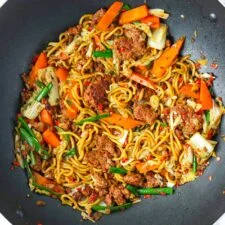
These char siu pork noodles toss seared pork mince, ramen, crunchy vegetables and aromatics in a savoury-sweet sauce with a little heat. They make a quick, colourful stir-fry for a busy evening.
Ingredients
- 240 glean pork mince
- 32 gLee Kum Kee char siu sauce
- 1½ tablespoonsoyster sauce
- ½ tablespoonlow-sodium light soy sauce
- ½ teaspoonThai sweet dark soy sauce (or kecap manis)
- 1 teaspoondistilled white vinegar
- ½ teaspoontoasted sesame oil
- ½ teaspoonpure chilli oil, without sediment
- 80 g (⅓ medium)yellow onion, finely chopped
- 20 g (2 medium stalks)spring onions, white and light green parts finely chopped; dark green parts cut into 4 cm pieces
- 20 g (4–5 cloves)garlic, roughly chopped
- 2–7 pieces (6–20 g), to taste; optionalfresh red chillies, chopped
- 80–100 g (1 small)carrot, cut into batons about 4 cm long and 1 cm thick
- 180–200 g (2 cups)Chinese cabbage (Napa cabbage), cut into large chunks, rinsed and dried
- 320 g (2 packs)fresh ramen noodles, or udon noodles
- 1 tablespoonpeanut oil, or another high-smoke-point cooking oil
- ⅛ teaspoonground white pepper
Instructions
- 1
Marinate the pork
Put the pork mince and char siu sauce in a medium bowl and mix thoroughly to combine.
- 2
Mix the sauce
In a small bowl or measuring jug, whisk together the oyster sauce, light soy sauce, sweet dark soy sauce, vinegar, sesame oil and chilli oil until combined.
- 3
Prepare the vegetables
Chop and cut the onion, spring onions, garlic, chillies if using, carrot and Chinese cabbage as described in the ingredients.
- 4
Cook the noodles
Bring a small pan of water to the boil, then reduce the heat to medium-low. Add the ramen cakes one at a time and use tongs to gently loosen the strands until tender, about 1–2 minutes. Drain, rinse under cold water to stop the cooking and help prevent sticking. If using frozen or dried ramen or udon, cook according to the packet instructions.
- 5
Sear the pork
Heat 1 tablespoon of peanut oil in a large non-stick wok or deep-sided frying pan over high heat. Add the marinated pork, spread it out and flatten it. Leave it to sear for 1½–2 minutes, until the juices evaporate and the pork begins to char and caramelise. Turn it over and sear the other side for 1 minute, then break it into chunks and toss.
- 6
Fry the aromatics
Add the yellow onion and the white and light green parts of the spring onions; stir-fry for 30 seconds. Add the garlic and chillies, if using, and stir-fry for another 30 seconds until fragrant.
- 7
Cook the vegetables
Add the carrot and stir-fry for 30 seconds. Add the cabbage and stir-fry for 40 seconds, until the vegetables are just beginning to soften but still have some crunch.
- 8
Toss with noodles
Add the cooked noodles and pour over the sauce. Toss with tongs and a spatula for 1–2 minutes, until everything is evenly coated.
- 9
Season and serve
Season with the white pepper and toss through most of the dark green spring onion for 20 seconds. Turn off the heat, divide between plates or bowls, garnish with the reserved spring onion and serve immediately.
What are char siu pork noodles?
Char siu is Cantonese-style barbecued pork, known for its sweet, savoury glaze. This quick noodle stir-fry takes inspiration from those flavours, coating pork mince in char siu sauce rather than using the traditional roasted cut.
The version here balances that sweet, rich pork with salty oyster and soy sauces, vinegar, chilli and crisp vegetables. Ramen makes it a satisfying one-pan meal once the noodles are cooked.
Nutrition and macros by portion
The nutrition label shows one serving as written: 672 calories, 38g protein, 82g carbs, 23g fat.
| Portion | Adjustment | kcal | Protein | Carbs | Fat |
|---|---|---|---|---|---|
| Lighter | More cabbage, fewer noodles | 470 kcal | 27g | 57g | 16g |
| This serving | As written | 672 kcal | 38g | 82g | 23g |
| Hungry | Larger noodle portion | 1008 kcal | 57g | 122g | 35g |
The noodles provide most of the carbohydrates, while the pork contributes much of the protein. The cooking oil, sesame oil and sauces add fat, so you can balance the bowl with extra greens or a fresh vegetable side.
Why use pork mince?
Pork mince cooks quickly and takes on the char siu sauce across its surface. Spreading it out in the hot pan gives it time to brown before you break it into chunks.
Lean mince keeps the mixture from becoming too oily, while the sauce supplies the glossy, sweet-savoury coating.
Get everything ready first
Vegetables: Cut the onion, spring onions, garlic, chillies and carrot before heating the wok. The cooking stages are brief, so prepped ingredients make it easier to add each one at the right moment.
Sauce: Whisk the liquids together in advance so they can be poured straight over the noodles. Keep the dark green spring onion pieces separate for finishing.
How to keep the vegetables crisp
Carrot first: Give it 30 seconds in the hot pan before adding the cabbage, which needs less time. Cut the carrot into even batons so they cook at a similar pace.
Cabbage last: Stir-fry it for about 40 seconds, just until it begins to soften. It should still have some bite when the noodles go in.
Noodle texture and timing
Fresh ramen: Loosen the strands gently in medium-low water for 1–2 minutes, then drain and rinse under cold water. This stops the cooking and helps keep them from sticking together.
Final toss: Add the noodles only after the pork and vegetables are cooked. Toss for 1–2 minutes, just long enough for the sauce to coat them evenly.
Serving the stir-fry
Serve the noodles as soon as they leave the wok, while the pork is hot and the vegetables still have crunch. Scatter the reserved spring onion greens over the top for a fresh finish.
The dish is filling on its own, but a simple side of steamed greens or a light cucumber salad can add freshness without competing with the sauce.
Recipe notes & tips
- Use a large wok or pan so the ingredients can sear rather than crowd and steam.
- Dry the cabbage well after rinsing to limit excess water in the pan.
- Keep the heat high when searing the pork, and let it brown before breaking it up.
- Add the chilli to taste, or leave it out for a milder stir-fry.
- Have the sauce and chopped ingredients within reach before you start cooking.
Variations
- Use udon: Swap in udon noodles and prepare them according to the packet instructions.
- Adjust the heat: Omit the fresh chillies for a milder bowl, or add them to taste.
- Change the greens: Replace some of the cabbage with another quick-cooking leafy vegetable.
- Use another oil: Choose a neutral cooking oil with a high smoke point instead of peanut oil.
- Add extra vegetables: Increase the carrot or cabbage for more crunch in each serving.
Common mistakes to avoid
- Crowding the pan: The pork and vegetables can steam instead of searing; use a roomy wok or deep frying pan.
- Breaking up the pork too soon: Give it 1½–2 minutes to brown before turning and breaking it into chunks.
- Overcooking the cabbage: Stir-fry it for about 40 seconds so it keeps some crunch.
- Skipping the noodle rinse: Drain and rinse the cooked fresh ramen with cold water to halt cooking and help prevent sticking.
- Adding the sauce too early: Pour it over the noodles at the final tossing stage so it coats them rather than cooking away during the earlier stir-fry.
How to store
Refrigerate leftovers in an airtight container and eat within 2 days. Reheat in a pan over medium heat until piping hot, tossing with a small splash of water if the noodles have stuck together.
Frequently asked questions
Can I use dried or frozen noodles?
Yes. Cook dried or frozen ramen or udon according to the packet instructions, then drain before adding them to the wok.
Can I make the dish less spicy?
Yes. Leave out the fresh red chillies, and reduce or omit the chilli oil to suit your taste.
What can I use instead of sweet dark soy sauce?
Kecap manis is suggested as an alternative. It is sweet and thick, so add the stated amount and mix it into the sauce.
How do I stop the noodles sticking?
After cooking fresh ramen, drain it and rinse it under cold water. This stops the cooking and helps separate the strands before they go into the wok.
How do I know the vegetables are ready?
The cabbage should be just starting to soften while still retaining some crunch. The recipe gives it about 40 seconds in the wok after the carrot.
Can I prepare anything ahead?
You can chop the vegetables and whisk the sauce before cooking. For the best texture, cook and toss the noodles just before serving.
Cook it from the original
This recipe comes from thatspicychick.com. Their page has the author’s own photos, notes and tips — the best place to cook it from.
Open the recipe on thatspicychick.com