
Banh Chung (Vietnamese Sticky Rice Cake)
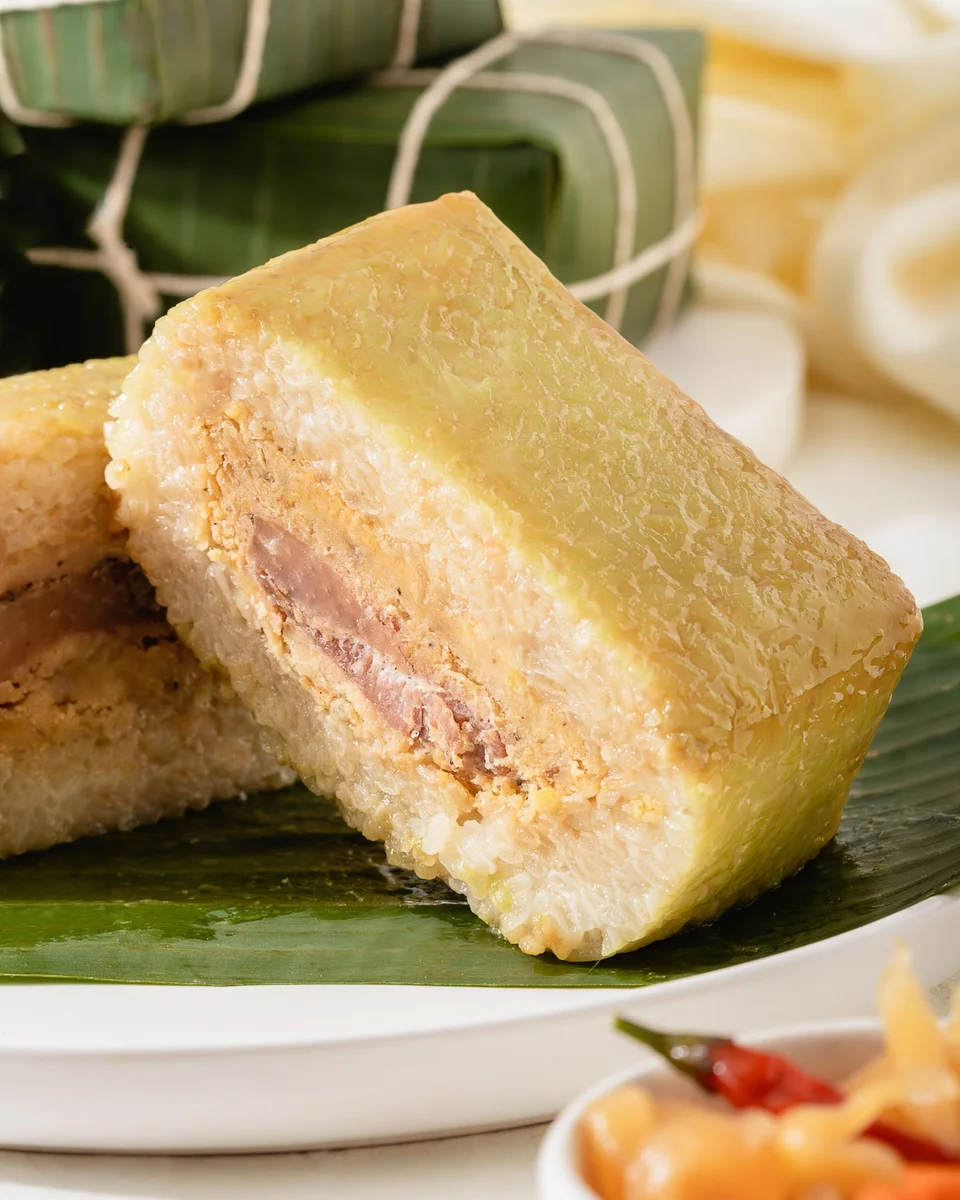
Bánh chưng is a Vietnamese sticky rice cake filled with mung beans and pork belly, wrapped in banana leaves and simmered until firm. It is traditionally made for Tết, and this layered version brings savoury, rich flavours together in a substantial celebratory parcel.
Ingredients
- 687 g (3 cups)dry sticky rice
- 2 teaspoonssalt
- 227 g (1/2 lb), sliced 1 cm thickpork belly
- 1/4 teaspoonsalt
- a pinchsugar
- 1/4 teaspoonchicken bouillon powder
- 1/4 teaspoonpepper
- 1 teaspoonfish sauce
- 5, slicedshallots
- 240 g (1 cup)peeled split mung beans
- 1 1/2 teaspoons, divided: 1/4 teaspoon for soaking and 1 1/4 teaspoons for cookingsalt
- 1/4 teaspoonsugar
- 1/2 teaspoonpepper
- 1/4 teaspoonchicken powder
- 6, slicedshallots
- 2 packs: 1 for assembly and 1 for the potbanana leaves
- 3–4 tablespoonsvegetable oil
- 10 × 10 × 5 cm (4 × 4 × 2 inches)mould
- as neededtape
- as neededstring
Instructions
- 1
Make a mould
The day before, make a square cardboard mould. Choose the size you prefer; the one used here is about 10 × 10 cm wide and 5 cm high.
- 2
Soak the rice
Rinse the sticky rice until the water runs clear, then leave it to soak overnight in salted water.
- 3
Marinate the pork
Slice the pork belly about 1/4 inch thick. Combine it with the salt, sugar, chicken powder, pepper, fish sauce and shallots, then marinate in the refrigerator overnight.
- 4
Soak the beans
Rinse the mung beans until the water runs clear. Cover them with water, add 1/4 teaspoon salt and soak overnight in the refrigerator.
- 5
Drain the rice
On the day of cooking, drain the rice and set it aside.
- 6
Cook the beans
Drain the mung beans. Half-fill a medium pot with water, add 1 1/4 teaspoons salt and the beans, then bring to the boil over high heat. Reduce to a simmer, cover and cook for 15 minutes or until softened. Drain the beans and mash them.
- 7
Sauté shallots
Heat 3–4 tablespoons vegetable oil in a large frying pan or wok over high heat. Add the shallots and cook for 2 minutes, then lower the heat and continue cooking until tender and caramelised, about 10 minutes.
- 8
Mix the filling
In a medium bowl, mix the sugar, pepper, chicken powder, caramelised shallots and mashed mung beans. Set aside.
- 9
Line the mould
Line the mould with at least 4–6 banana-leaf strips, each about 10 × 30 cm, crossing their directions and leaving 5 cm of leaf above the mould for sealing. Use four thinner strips, about 5 × 25 cm, to line the inside and cover the corners.
- 10
Add rice
Spread an even layer of sticky rice about 1.3 cm deep in the lined mould.
- 11
Layer filling
Spread an even 6 mm layer of mung beans, leaving a 6 mm margin around the edges for rice. Arrange the pork belly over the beans, then add another even 6 mm layer of mung beans.
- 12
Fill with rice
Use the remaining sticky rice to fill the edges and cover the top to a depth of about 1.3 cm.
- 13
Wrap the cake
Fold the banana leaves over tightly, alternating the strips. Seal with tape, then bind firmly with string, including around the edges to hold everything together.
- 14
Simmer the cakes
If possible, put a small wire rack in the bottom of a large pot and cover it with 3–4 layers of banana leaves. Add the rice cakes and enough water to cover them. Cover the pot and bring to the boil over high heat, then lower the heat to medium-low and simmer for about 7 hours. If the water gets too low, add more boiling water to keep the cakes covered.
- 15
Cool and serve
Remove the cakes from the pot and cool them on a wire rack for 30 minutes before serving with chả lụa and pickled vegetables.
What is bánh chưng?
Bánh chưng is a Vietnamese sticky rice cake associated with Tết, the Lunar New Year. Its square shape and banana-leaf wrapping make it a distinctive celebratory dish.
This version layers pork belly between seasoned mung beans, then encloses the filling in sticky rice. A long, gentle simmer cooks the grains and melds the savoury layers.
Nutrition and macros by portion
The nutrition label shows one serving as written: 863 calories, 25g protein, 132g carbs, 25g fat.
| Portion | Adjustment | kcal | Protein | Carbs | Fat |
|---|---|---|---|---|---|
| Lighter | Smaller cake portion | 604 kcal | 18g | 92g | 18g |
| This serving | As written | 863 kcal | 25g | 132g | 25g |
| Hungry | Larger cake portion | 1295 kcal | 38g | 198g | 38g |
The sticky rice supplies most of the carbohydrates, while pork belly and vegetable oil contribute much of the fat; pork and mung beans provide protein. Pair a portion with pickled vegetables or another vegetable side for a more varied plate.
The rice and beans
Sticky rice: rinsing it until the water runs clear helps remove loose surface starch, while overnight soaking prepares it for the long cooking time.
Mung beans: soak them separately, simmer until softened, then mash and season with the caramelised shallots. The paste forms neat, even layers around the pork.
Seasoning the pork
Pork belly: its fat brings richness to the centre of the cake as it cooks. Slicing it evenly helps the filling sit in a level layer.
Marinade: salt, fish sauce, pepper, sugar and chicken seasoning add savoury depth. Give the pork the full overnight rest in the refrigerator so the seasoning has time to mingle.
Wrapping a tidy parcel
Crossed leaves: arrange the broad strips in alternating directions and leave enough overhang to fold across the top. The thinner strips help cover the mould's corners.
Firm binding: pack the layers evenly, then fold and tie the parcel tightly so it holds its shape during the long simmer. Keep the string running around the edges as well as across the parcel.
The long simmer
Water level: keep the cakes covered as they cook, topping up with boiling water if needed. A rack lined with banana leaves helps keep the parcels from sitting directly on the bottom of the pot.
Doneness: the recipe calls for about 7 hours at a medium-low simmer. Let the cakes rest on a wire rack for 30 minutes before serving.
Serving the cake
Serve bánh chưng with chả lụa, Vietnamese pork sausage, and pickled vegetables as suggested in the recipe. The savoury cake pairs well with the bright, tangy contrast of pickles.
Because the cake is dense and filling, cut portions to suit the rest of the meal. It can be served as part of a festive spread or as the centrepiece of a meal.
Recipe notes & tips
- Soak the rice and mung beans overnight, as specified, to make the day-of preparation easier.
- Keep the pork marinating in the refrigerator overnight.
- Leave the prescribed leaf overhang so there is enough to fold over and seal the parcel.
- Tie the cake firmly around its edges as well as across the top to help it stay together.
- Check the pot during the long simmer and top up with boiling water if the cakes are no longer covered.
- Allow the cooked cakes to cool on a wire rack for 30 minutes before serving.
Variations
- Adjust the mould: choose a different size to make cakes to your preference.
- Serve with sausage: pair the cake with chả lụa as suggested.
- Add pickles: serve with pickled vegetables for a tangy accompaniment.
- Prepare the parcels ahead: assemble them after the overnight soaking and marinating, then simmer as directed.
Common mistakes to avoid
- Skipping the overnight soak: soak the rice and mung beans the day before as directed.
- Leaving the beans whole: mash them after simmering so they form an even filling layer.
- Crowding the filling to the edges: leave a small margin around the mung beans and fill the edges with rice.
- Loose wrapping: fold the leaves tightly and bind the parcel securely with string.
- Letting the water drop below the cakes: add boiling water to keep them covered during simmering.
- Serving straight from the pot: cool the cakes on a wire rack for 30 minutes first.
How to store
The recipe does not specify storage instructions or a keeping time. If you have leftovers, refrigerate them promptly in a covered container and reheat thoroughly before serving.
Frequently asked questions
Can I prepare the ingredients the day before?
Yes. The recipe calls for the rice and mung beans to soak overnight and for the pork to marinate overnight in the refrigerator.
How long do the cakes cook?
Simmer them for about 7 hours at medium-low heat. Keep them covered with water, adding more boiling water if the level gets too low.
Do I need a wire rack in the pot?
The recipe says to use one if possible, with 3–4 layers of banana leaves covering it. The rack is optional in the method.
How do I keep the parcel together?
Fold the banana leaves tightly, seal them with tape and wrap the parcel securely with string, including around the edges.
What should I serve with bánh chưng?
The recipe suggests chả lụa, Vietnamese cold cuts, and pickled vegetables.
How long should the cake cool before serving?
Cool it on a wire rack for 30 minutes after removing it from the pot.
Cook it from the original
This recipe comes from takestwoeggs.com. Their page has the author’s own photos, notes and tips — the best place to cook it from.
Open the recipe on takestwoeggs.com