
Korean Fried Chicken
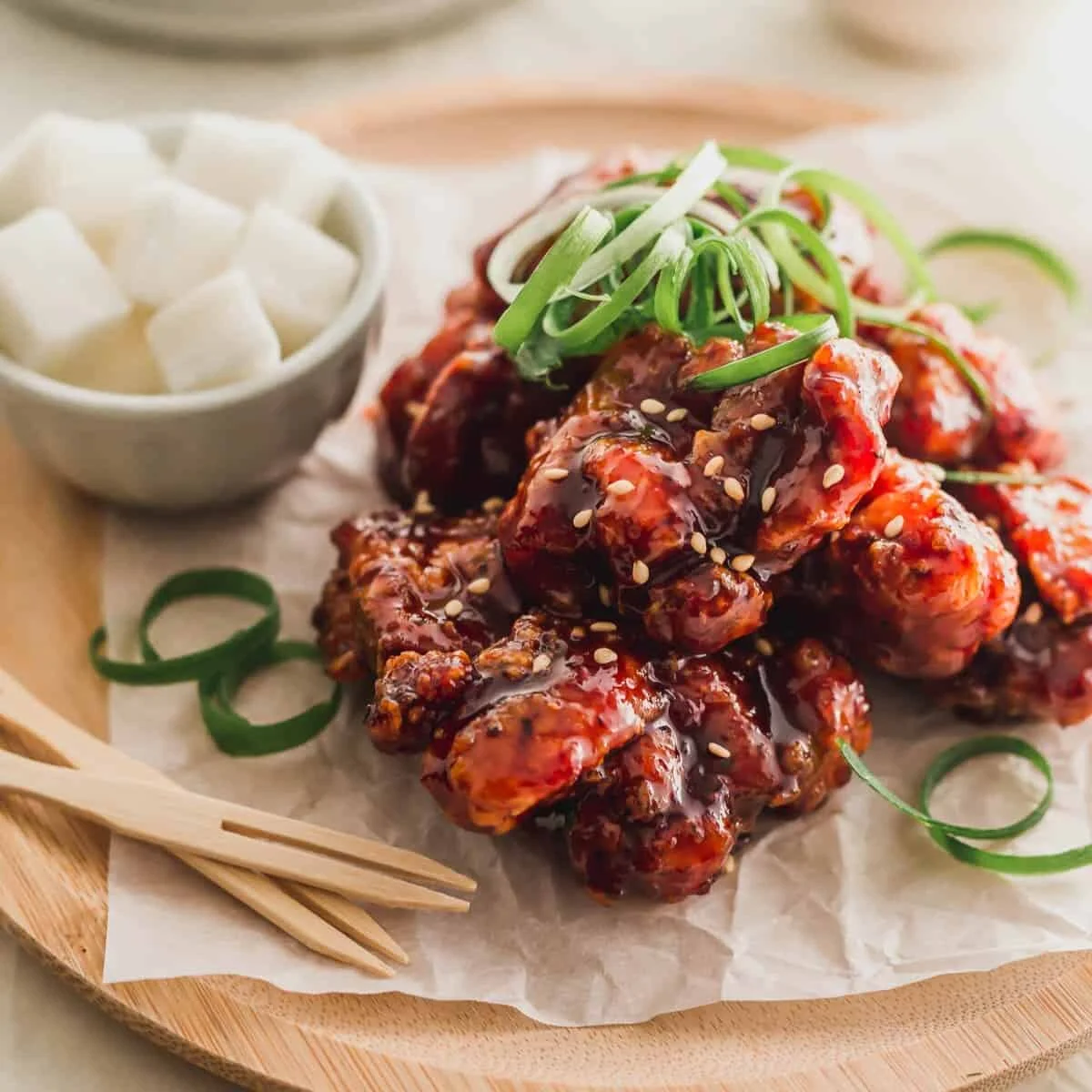
Korean fried chicken is made with small pieces of chicken coated in a light, crisp batter and fried twice. This version is served with two sauces: a sweet-spicy gochujang glaze and a sticky soy-garlic glaze.
Ingredients
- 500 gboneless chicken thigh, cut into small pieces (or chicken breast)
- 1/4 tspsea salt
- 1/4 tspblack pepper
- 1 tspgarlic powder
- 1/2 tspginger powder
- 120 ml (1/2 cup)whole milk (or buttermilk)
- 90 g (3/4 cup)sweet potato starch (or cornflour)
- 30 g (1/4 cup)plain flour
- 1 tspgarlic powder
- 1/4 tspsea salt
- 1 tspbaking powder
- 160 ml (2/3 cup)sparkling water
- 2 tbspgochujang (Korean red chilli paste)
- 1 tspgochugaru (Korean red chilli powder; omit if you prefer less heat)
- 2 tbspsoy sauce
- 2 tbsprice vinegar
- 4 tbsprice syrup (or honey)
- 2 tspsesame oil
- 2 tbspbrown sugar
- 1/2 tspfresh ginger, grated
- 2 tspgarlic, grated
- 1/4 tspblack pepper
- 120 ml (1/2 cup)soy sauce
- 12 clovesgarlic, minced
- 1 tspfresh ginger, grated
- 85 g (1/4 cup)honey
- 710–950 ml (3–4 cups)peanut oil, or another high-smoke-point oil such as rapeseed or grapeseed oil
- 2 tspsesame seeds
- 1spring onion, chopped or sliced into ribbons
Instructions
- 1
Season the chicken
Put the chicken pieces in a large bowl. Add the salt, black pepper, garlic powder and ginger powder, then stir to coat. Cover and marinate in the fridge for 20 minutes.
- 2
Add the milk
Pour in the milk and mix, making sure the chicken is submerged. Return the bowl to the fridge and leave for another 20 minutes.
- 3
Make the spicy sauce
Combine the gochujang, gochugaru, 2 tbsp soy sauce, rice vinegar, rice syrup, sesame oil, brown sugar, 2 tsp grated garlic, 1/2 tsp grated ginger and 1/4 tsp black pepper in a shallow frying pan. Simmer over medium-low heat, stirring until slightly thickened. Take the pan off the heat and set aside.
- 4
Make the garlic sauce
Put the 1/2 cup soy sauce, minced garlic, 1 tsp grated ginger and honey in another shallow frying pan. Simmer over medium-low heat, stirring until sticky and slightly thickened. Remove from the heat and set aside.
- 5
Mix the batter
Stir together the sweet potato starch, plain flour, 1 tsp garlic powder, 1/4 tsp salt and baking powder in a bowl. Whisk in the sparkling water until combined. Lift the chicken from the milk mixture and coat it thoroughly in the batter.
- 6
Fry the chicken
Heat the oil in a medium pot to 166°C. Let excess batter drip from the chicken, then fry in batches for 3–4 minutes, until lightly browned. Remove with a slotted spoon and drain on a paper-towel-lined tray; repeat with the remaining chicken.
- 7
Fry it again
Raise the oil temperature to 177°C. Fry the chicken pieces again for 3–4 minutes, until golden brown and cooked to an internal temperature of 74°C. Remove with a slotted spoon and drain on paper towel. Repeat with the remaining chicken.
- 8
Glaze and serve
Warm the gochujang sauce over medium-low heat. Add about half the chicken and gently turn to coat; remove from the heat and garnish with sesame seeds and spring onion. Repeat with the soy-garlic sauce and the remaining chicken, then serve immediately.
What is Korean fried chicken?
Korean fried chicken is known for a crisp coating and a glossy, boldly flavoured glaze. It is part of modern Korean food culture, where fried chicken is often enjoyed with drinks or shared as a meal.
This version uses small chicken pieces and fries them twice, then splits them between a spicy-sweet gochujang sauce and a sticky soy-garlic sauce. The two options make it easy to serve different heat preferences at the same table.
Nutrition and macros by portion
The nutrition label shows one serving as written: 661 calories, 26g protein, 86g carbs, 25g fat.
| Portion | Adjustment | kcal | Protein | Carbs | Fat |
|---|---|---|---|---|---|
| Lighter | Use less glaze | 463 kcal | 18g | 60g | 18g |
| This serving | As written | 661 kcal | 26g | 86g | 25g |
| Hungry | Add rice and vegetables | 992 kcal | 39g | 129g | 38g |
The chicken provides most of the protein, while the batter contributes much of the carbohydrate. The frying oil and sesame oil account for much of the fat, with additional carbohydrate coming from the sweeteners and sauces. Serve with vegetables and rice portions suited to your meal to make a more balanced plate.
Why the two-stage marinade matters
Season first: salt, pepper, garlic powder and ginger powder flavour the chicken before it is coated. The initial 20-minute rest gives the seasoning time to cling to the pieces.
Milk next: the second 20-minute rest lets the chicken sit in the milk mixture before battering. Keep the pieces submerged as directed, then lift them out for coating.
A light, crisp batter
Starch and flour: sweet potato starch provides the main coating, while plain flour and baking powder round out the batter. Cornflour can stand in for the sweet potato starch.
Cold fizz: sparkling water is whisked in just before coating. Mix only until incorporated, and coat each piece thoroughly after it comes out of the milk.
Why fry the chicken twice?
First fry: cook the pieces at 166°C for 3–4 minutes, in batches, until lightly browned. Avoid crowding the pot so the oil temperature can recover between additions.
Second fry: raise the oil to 177°C and fry for another 3–4 minutes. Look for a golden coating and check that the thickest pieces reach 74°C internally.
Keep the sauces separate
Gochujang glaze: this sauce combines chilli paste and chilli powder with rice vinegar, syrup, sesame oil and aromatics. Simmer it until slightly thickened; leave out the gochugaru if you want less heat.
Soy-garlic glaze: soy sauce, minced garlic, ginger and honey cook down to a sticky coating. Toss each batch of chicken in its own warm sauce just before serving to keep the finishes distinct.
Timing and serving
The recipe includes two 20-minute rests, sauce-making, and two rounds of frying, so allow time to work through the stages without rushing. The sauces can be prepared while the chicken marinates.
Serve the chicken straight after glazing, with sesame seeds and spring onion. Steamed rice and a simple crunchy salad or lightly dressed vegetables work well alongside the rich, savoury coatings.
Recipe notes & tips
- Cut the chicken into similarly sized pieces so they cook at a similar rate.
- Use a thermometer to bring the oil to 166°C and then 177°C for the two frying stages.
- Fry in batches rather than crowding the pot.
- Drain the chicken on paper towel between frying stages and after the second fry.
- Warm each sauce gently before tossing the chicken through it.
- Toss only the chicken you are ready to serve so the coating stays crisp for longer.
Variations
- Reduce the heat: leave out the gochugaru for a milder gochujang glaze.
- Use chicken breast: cut it into small, even pieces and follow the same method.
- Swap the starch: use cornflour instead of sweet potato starch.
- Choose buttermilk: use it in place of the whole milk for the marinade.
- Change the frying oil: use rapeseed or grapeseed oil instead of peanut oil.
- Adjust the glaze split: coat more pieces in whichever sauce your table prefers.
Common mistakes to avoid
- Crowding the pot: the oil temperature can drop, so fry the chicken in batches.
- Skipping the second fry: fry again at 177°C for 3–4 minutes to finish the crisp coating.
- Guessing the oil temperature: use a thermometer to maintain the temperatures specified in the method.
- Over-thickening the sauces: simmer only until the spicy sauce is slightly thickened and the garlic sauce is sticky.
- Coating too early: glaze the chicken just before serving so it does not sit in the sauce.
- Serving undercooked chicken: check that the thickest pieces reach 74°C internally.
How to store
For best texture, serve the chicken immediately after glazing. Refrigerate leftovers in an airtight container for up to 3 days; reheat in an oven or air fryer until hot, knowing the coating may soften and the sauce may darken slightly.
Frequently asked questions
Can I use chicken breast instead of thighs?
Yes. The recipe allows chicken breast; cut it into small, evenly sized pieces and check the internal temperature during the second fry.
Can I make the chicken less spicy?
Omit the gochugaru from the gochujang sauce. You can also serve more pieces with the soy-garlic glaze.
Can I use cornflour instead of sweet potato starch?
Yes, cornflour is listed as an alternative. The coating may differ slightly in texture, but the method stays the same.
How do I know the chicken is cooked?
The recipe calls for an internal temperature of 74°C. Check a thick piece after the second fry.
Can I prepare the sauces ahead?
You can make them during the chicken's marinating time. Warm each sauce over medium-low heat before tossing the chicken through it.
What should I serve with Korean fried chicken?
Steamed rice and a simple salad or lightly dressed vegetables make good accompaniments. Serve the chicken as soon as it has been glazed.
Cook it from the original
This recipe comes from siftandsimmer.com. Their page has the author’s own photos, notes and tips — the best place to cook it from.
Open the recipe on siftandsimmer.com