
Prue Leith’s Vegan Tropical Pavlova
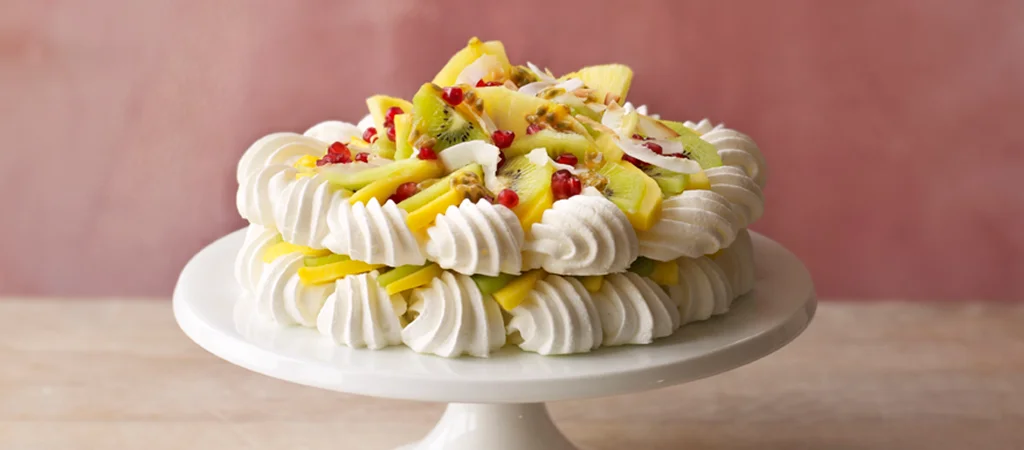
This vegan tropical pavlova layers crisp aquafaba meringue with coconut pastry cream, fresh fruit and mango coulis. It is an impressive make-ahead dessert for a celebration, with bright fruit balancing the sweet, rich layers.
Ingredients
- 200 mlaquafaba (drained from 1 1/2 cans of chickpeas)
- 1/2 tspcream of tartar
- 270 gcaster sugar
- 1/2vanilla pod, seeds scraped
- 1 tspxanthan gum
- 400 ml cancoconut milk
- 65 gcane sugar
- pinchsalt
- 1 tspvanilla extract
- 40 gcornflour
- 50 gvegan butter
- 50 gdesiccated coconut, toasted
- 100 mlcoconut yoghurt
- seeds from 1passion fruit
- 1ripe mango, peeled and roughly chopped
- 3 tbspicing sugar
- juice of 1/2lime
- 1/2pineapple, peeled, cored and sliced
- 1ripe mango, peeled and thinly sliced
- 2kiwi fruit, peeled and sliced
- seeds from 2passion fruit
- kernels from 1/2pomegranate
- 50 gvegan white chocolate
- 50 gcoconut flakes, toasted
Instructions
- 1
Prepare the trays
Heat the oven to 120°C/100°C fan (250°F/Gas ½). Draw a 20 cm circle on each sheet of baking paper on each baking tray, then turn the paper over so the pencil or ink is underneath.
- 2
Whisk the aquafaba
Pour the aquafaba into the bowl of a stand mixer fitted with a whisk. Add the cream of tartar and whisk at medium speed for 3–5 minutes, until foaming. Raise the speed to high and whisk for 5–10 minutes, until stiff peaks form.
- 3
Finish the meringue
Add the sugar 1 tablespoon at a time, whisking between additions, until the meringue is stiff. Add the vanilla seeds and sift the xanthan gum over the mixture, then whisk for another 30 seconds.
- 4
Pipe the circles
Spoon the mixture into a large piping bag fitted with a large star nozzle. Pipe two circles with decorative edges, using the 20 cm guides on the baking paper.
- 5
Bake the meringue
Bake the circles for 1 hour 15 minutes, until crisp and dry. Take them out of the oven and leave them to cool on the trays.
- 6
Heat the coconut milk
For the coconut pastry cream, pour three quarters of the coconut milk into a medium pan with the cane sugar, salt and vanilla extract. Set over a low heat and bring slowly to the boil.
- 7
Thicken the cream
Mix the cornflour with the remaining coconut milk until smooth, then add it to the pan. Cook over a medium heat, whisking continuously for 5–6 minutes, until thickened.
- 8
Cool the pastry cream
Take the coconut mixture off the heat and stir in the vegan butter and toasted desiccated coconut. Transfer it to a bowl, cover the surface with cling film to prevent a skin forming, and leave to cool. Chill until set.
- 9
Blend the coulis
Put the roughly chopped mango in a food processor with the icing sugar and lime juice. Blitz until smooth, then pour into a serving jug.
- 10
Coat the meringue bases
Melt the vegan white chocolate in a heatproof bowl set over a pan of simmering water. Carefully turn over the two cooled meringue shells and peel away the baking paper. Gently paint the chocolate over the base of each shell, then chill until set.
- 11
Finish the cream
Beat the coconut yoghurt and the seeds from one passion fruit into the set pastry cream until combined.
- 12
Layer the first shell
Put one meringue shell on a cake stand and spread over half the pastry cream. Arrange half of the prepared fruit on top, keeping the different fruits separate, and add half the coconut flakes.
- 13
Complete the pavlova
Carefully place the other meringue shell on top and spread over the remaining pastry cream. Add the remaining prepared fruit and coconut flakes, then serve immediately with the mango coulis.
What is a tropical pavlova?
Pavlova is a meringue-based dessert associated with Australia and New Zealand, usually served with a creamy topping and fruit. This version replaces egg whites with aquafaba, the liquid from cooked chickpeas, and builds the dessert in two crisp discs.
Coconut appears in the pastry cream, yoghurt and toasted topping, while mango, pineapple, kiwi, passion fruit and pomegranate bring sweet-tart, juicy contrast. A thin chocolate coating on the meringue bases helps keep the layers distinct.
Nutrition and macros by portion
The nutrition label shows one serving as written: 720 calories, 6g protein, 110g carbs, 28g fat.
| Portion | Adjustment | kcal | Protein | Carbs | Fat |
|---|---|---|---|---|---|
| Lighter | Smaller slice, extra fruit | 504 kcal | 4g | 77g | 20g |
| This serving | As written | 720 kcal | 6g | 110g | 28g |
| Hungry | Larger slice | 1080 kcal | 9g | 165g | 42g |
Most of the carbohydrates come from the sugars, meringue and fruit, while coconut milk, vegan butter, coconut and white chocolate supply much of the fat. The aquafaba and coconut yoghurt contribute a little protein, but this is principally a dessert rather than a protein-rich dish. Serve a slice with extra fresh fruit and keep the rest of the meal lighter if you want a more balanced plate.
Getting aquafaba meringue right
Whisk the aquafaba with cream of tartar until it is foamy before increasing the speed. Allow the full 5–10 minutes at high speed for stiff peaks to form.
Sugar: Add it gradually, one tablespoon at a time, and whisk between additions. This gives it time to incorporate into the foam rather than weighing it down all at once.
Xanthan gum: Sift it over the meringue, as directed, to help avoid lumps. The vanilla seeds go in at the same stage.
Making the coconut pastry cream
Warm most of the coconut milk with the cane sugar, salt and vanilla, bringing it slowly to the boil over a low heat. Keep the remaining milk cold for mixing with the cornflour.
Cornflour: Stir it into the reserved milk until smooth before adding it to the pan. Whisk continuously over medium heat for 5–6 minutes, until the mixture thickens.
Cooling: Stir in the vegan butter and toasted desiccated coconut off the heat. Cover the surface directly with cling film, then chill the cream until set before mixing in the yoghurt and passion fruit.
Dry, crisp meringue shells
Draw the circles on the reverse of the baking paper so the pencil or ink does not touch the meringue. Pipe to the guides, leaving the edges decorative with the star nozzle.
Bake at 120°C/100°C fan (250°F/Gas ½) for 1 hour 15 minutes. The shells should feel crisp and dry, and they need to cool fully on the trays before you handle them.
Protecting the layers
The recipe paints melted vegan white chocolate over the undersides of the cooled shells, then chills them until the coating sets. This creates a barrier between the meringue and the moist filling.
Handle the cooled shells carefully when peeling off the paper and turning them over. Assemble the pavlova close to serving time so the pastry cream and fruit do not soften the crisp meringue for too long.
Fruit, coulis and serving
Blend the roughly chopped mango with icing sugar and lime juice until smooth for a pourable coulis. Keep it in a jug so people can add it at the table.
Filling fruit: Arrange the prepared pineapple, mango, kiwi, passion fruit and pomegranate directly over the cream, without mixing them together first. This keeps the colours and flavours distinct in each layer.
Serve the pavlova as soon as it is assembled, with extra coulis alongside. It works well as the centrepiece after a lighter meal.
Recipe notes & tips
- Use a clean mixer bowl so the aquafaba can whip into a stable foam.
- Add the caster sugar slowly and wait for each spoonful to incorporate before adding the next.
- Toast the desiccated coconut and coconut flakes before starting, then let them cool.
- Chill the pastry cream until fully set before beating in the coconut yoghurt.
- Make the mango coulis ahead and keep it covered in the fridge until serving.
- Assemble the layers just before serving to preserve the crispness of the shells.
Variations
- Extra citrus: Add a little more lime juice to the mango coulis for a sharper finish.
- Fruit swap: Replace one of the listed fruits with another ripe tropical fruit, keeping the same general amount.
- Less sweet topping: Use less mango coulis over each slice and serve the rest at the table.
- Crunchy finish: Sprinkle extra toasted coconut flakes over the top just before serving.
- Individual portions: Pipe smaller meringue discs and assemble them with the same cream and fruit.
Common mistakes to avoid
- Adding sugar too quickly: The foam can lose volume; whisk in one tablespoon at a time.
- Under-whisking the aquafaba: The meringue may not hold its shape; continue until stiff peaks form.
- Skipping the cornflour slurry: Dry cornflour can clump; first blend it smoothly with the reserved coconut milk.
- Stopping the pastry cream too soon: It may not set properly; whisk continuously for the full 5–6 minutes until thickened.
- Filling warm shells: Heat and moisture can soften or damage them; cool the meringues completely first.
- Assembling too early: The filling can soften the crisp shells; layer the pavlova shortly before serving.
How to store
Store leftover assembled pavlova covered in the fridge and eat within a day; the meringue will soften as it sits. Keep unfilled meringue shells in an airtight container at room temperature, and refrigerate the pastry cream and coulis separately. Do not reheat.
Frequently asked questions
Can I make the meringue shells ahead?
Yes. Once completely cool, store them in an airtight container at room temperature until you are ready to assemble the pavlova.
Can I prepare the pastry cream in advance?
Yes. Chill it covered until set, then beat in the coconut yoghurt and passion fruit before layering.
How do I know the meringue is ready to bake?
It should hold stiff peaks after the sugar and xanthan gum have been incorporated. Pipe it into the two circles while it is still holding its shape.
Why does the recipe coat the meringue with white chocolate?
The chocolate layer forms a barrier between the shell and the moist filling. Chill the coated shells until the chocolate has set.
Can I assemble the pavlova the day before?
It is best assembled just before serving, because the filling and fruit will soften the meringue. You can prepare the shells, pastry cream and coulis separately in advance.
What should I serve with the pavlova?
Serve it with the mango coulis as directed. The fruit-topped slices need little else, though extra fresh fruit can be served alongside.
Cook it from the original
This recipe comes from thegreatbritishbakeoff.co.uk. Their page has the author’s own photos, notes and tips — the best place to cook it from.
Open the recipe on thegreatbritishbakeoff.co.uk