
Chocolate Champagne Truffles
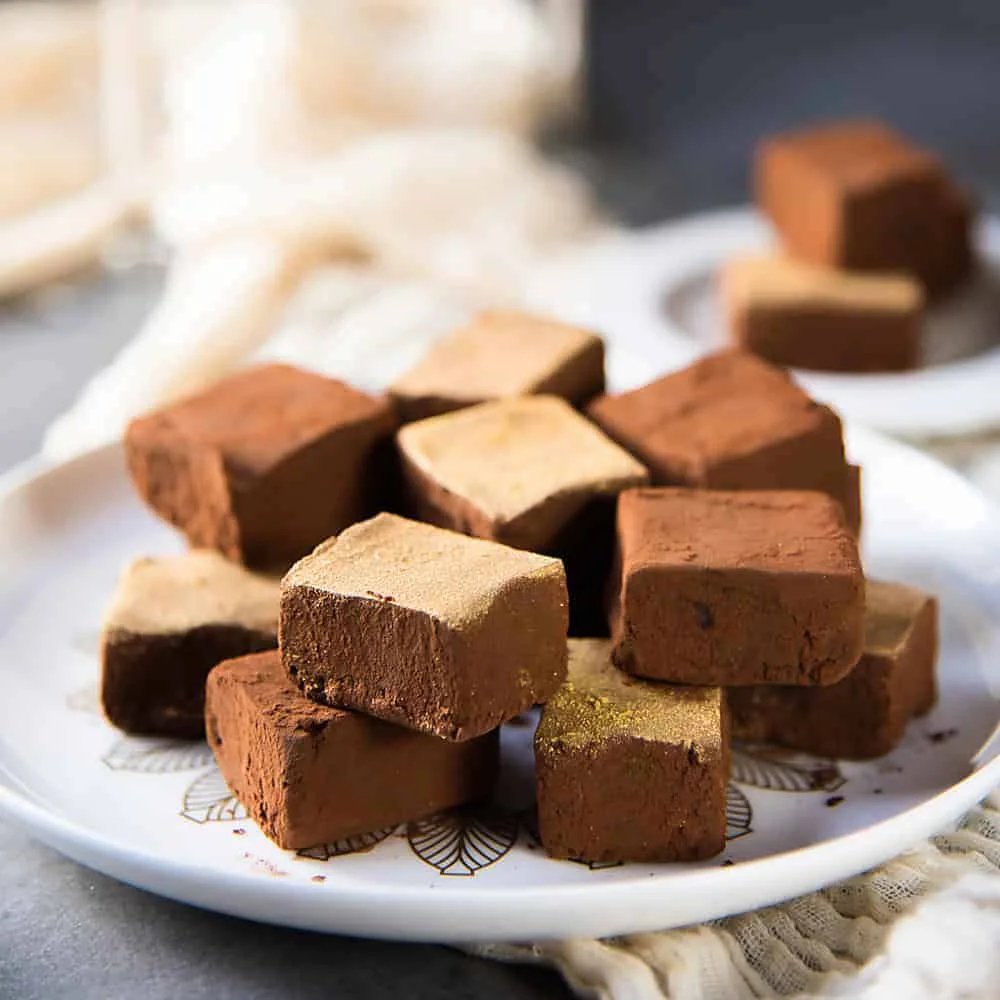
These soft, champagne-scented chocolate truffles set as a slab before being cut, so there is no tempering or rolling into balls. Finish them with cocoa powder and, if you like, a little edible gold for a celebration-ready treat.
Ingredients
- 340 gmilk chocolate callets or finely chopped milk chocolate
- 60 gsemi-sweet chocolate (about 50–55% cocoa), in callets or finely chopped
- 80 ml (⅓ cup)champagne
- 30 ml (2 tbsp)cream
- A pinchsalt
- 15 g (1 tbsp)butter
- 30 ml (2 tbsp)St-Germain liqueur or brandy
- 45 g (½ cup)Callebaut cocoa powder or Dutch cocoa powder
- To tastefood-grade gold lustre dust
Instructions
- 1
Prepare the pan
Butter a 15 × 15 cm (6 × 6 inch) square pan and line it with parchment or wax paper. A 18 × 18 cm (7 × 7 inch) pan or a 23 × 10 cm (9 × 4 inch) loaf pan also works; straight sides are preferable but not essential.
- 2
Combine ingredients
Put both chocolates, the champagne, cream and salt in a heatproof or metal bowl.
- 3
Melt the chocolate
Add a few inches of water to a saucepan and bring it to a simmer on the hob. Set the bowl over the pan and stir continuously until the mixture is smooth, with only a few small pieces of chocolate still unmelted.
- 4
Stir in additions
Take the bowl off the heat and add the butter and liqueur. Stir until the remaining chocolate pieces and butter have melted and the mixture is combined.
- 5
Fill the pan
Pour the chocolate mixture into the prepared pan.
- 6
Chill until set
Cover the pan to protect the chocolate from fridge odours, then refrigerate overnight. Alternatively, freeze for about 4 hours, keeping the pan completely level.
- 7
Cut into squares
Once set, lift the chocolate out by the parchment. Cut it into 20–25 squares with a warm, dry knife: warm the blade in hot water and wipe it dry, or use a blowtorch to heat it. Clean the blade between cuts.
- 8
Firm the edges
Return the cut truffles to the freezer for about 10–15 minutes. Once firm, carefully peel away the parchment and separate the squares along the cut lines.
- 9
Dust the tops
For the Nama-style finish, arrange the truffles close together on a flat plate or pan. Sift a thin layer of cocoa powder over them through a small sieve.
- 10
Add edible gold
For an optional gold finish, put about ⅛ teaspoon of gold lustre dust in the small sieve and tap it gently over the truffles. Refrigerate until ready to serve.
- 11
Coat each square
For the second serving method, roll each truffle in cocoa powder to coat all sides, then gently shake off the excess. Repeat with the remaining pieces.
- 12
Brush with gold
For half of the cocoa-coated truffles, place each on a small plate and brush excess cocoa from the surface with a dry paintbrush. With a clean, dry brush, pick up a little gold lustre dust and apply a thin layer to the top.
- 13
Chill to serve
Refrigerate the finished truffles until ready to serve.
What are champagne truffles?
These are set chocolate ganache squares, cut from a slab rather than rolled into balls. Their style is similar to Japanese nama chocolate, a soft, chilled confection often served in neat pieces.
The champagne brings a fruity note, while the mix of milk and semi-sweet chocolate gives the truffles sweetness with a little cocoa depth. Cocoa and optional gold dust make a simple finish look celebratory.
Nutrition and macros by portion
The nutrition label shows one serving as written: 92 calories, 1g protein, 10g carbs, 6g fat.
| Portion | Adjustment | kcal | Protein | Carbs | Fat |
|---|---|---|---|---|---|
| Lighter | Serve fewer truffles | 64 kcal | 1g | 7g | 4g |
| This serving | As written | 92 kcal | 1g | 10g | 6g |
| Hungry | Add a few more squares | 138 kcal | 2g | 15g | 9g |
The chocolate supplies most of the carbohydrates and fat, while the small amounts of cream and butter add further fat; the recipe also provides a little protein from the chocolate and dairy. Serve a few truffles with fresh fruit, or alongside a meal that includes vegetables and a protein-rich main.
Choosing the chocolate
Milk chocolate: this provides most of the sweetness and a creamy base. Callets melt readily, while finely chopped chocolate works well when the pieces are small and even.
Semi-sweet chocolate: the 50–55% cocoa chocolate adds a more pronounced chocolate flavour to balance the milk chocolate. Keeping the two types in the stated proportions helps retain the intended soft set.
Why use a double boiler?
Gentle heat: the bowl sits above simmering water, not directly on the hob. Stir often so the chocolate melts evenly without overheating.
Finishing off the heat: the butter and liqueur go in after the bowl is removed from the pan. Stir until everything is incorporated and the mixture looks smooth.
Getting neat cuts
Chilling: the mixture needs a long rest in the fridge, or about 4 hours in the freezer, to become firm enough to cut. Keep the pan level so the slab sets evenly.
Warm blade: a warm, dry knife helps make cleaner edges through the chilled chocolate. Wipe it clean between cuts, then briefly freeze the cut pieces to firm their edges before separating them.
Two ways to finish
Nama-style: leave the sides plain and sift a fine layer of cocoa over the tops. A light sprinkle of edible gold is optional.
Fully coated: roll each piece in cocoa, shake off the excess and brush the tops of half the truffles before applying gold. Both finishes are served chilled.
Serving and timing
Active preparation is about 50 minutes, but allow for the recipe’s roughly 8 hours of inactive setting time when planning ahead. The overnight fridge method is convenient; the freezer alternative takes about 4 hours for the slab to set.
Serve the truffles chilled alongside coffee or tea, or include them on a dessert platter with fresh berries. Keep them refrigerated until serving so they retain their soft, firm texture.
Recipe notes & tips
- Chop the chocolate finely if you are not using callets so it melts evenly.
- Keep the simmering water below the bowl rather than letting the bowl sit in the water.
- Cover the pan before chilling to prevent the chocolate picking up fridge odours.
- Keep the pan level while the mixture sets for evenly thick pieces.
- Use a dry knife after warming it, and wipe it between every cut.
- Use only food-grade lustre dust and apply it sparingly for a light finish.
Variations
- Use brandy: choose it instead of St-Germain for a different aromatic note.
- Skip the gold: finish with cocoa alone for a simpler look.
- Choose a cocoa finish: sift cocoa over the tops or coat each square on all sides.
- Change the pan: use the stated 18 × 18 cm square pan or 23 × 10 cm loaf pan instead.
- Make smaller pieces: cut the set slab into 25 squares rather than 20.
Common mistakes to avoid
- Overheating the chocolate: keep the water at a simmer and stir over gentle heat.
- Leaving the pan uncovered: cover it before chilling so the chocolate does not take on fridge odours.
- Chilling on a slope: set the pan on a flat surface so the slab is even.
- Cutting with a cold blade: warm the knife and dry it thoroughly for cleaner edges.
- Skipping the blade wipe: clean the knife between cuts to keep the squares tidy.
- Applying too much cocoa: dust or coat lightly, then shake or brush away the excess.
How to store
Keep the truffles covered in the refrigerator until serving. The recipe does not specify a storage duration, so make them ahead only for the overnight setting and keep leftovers chilled; reheating is not suitable for these truffles.
Frequently asked questions
Can I make these without a double boiler?
The method uses a heatproof bowl set over a saucepan of simmering water. Avoid placing the bowl directly on the hob, as gentle indirect heat helps melt the chocolate evenly.
How long do the truffles need to set?
Refrigerate them overnight, or freeze the slab for about 4 hours. After cutting, return the pieces to the freezer for 10–15 minutes to firm the edges.
Why is my chocolate mixture not completely smooth?
Stir continuously over the simmering water, then continue stirring off the heat after adding the butter and liqueur. The recipe allows a few small chocolate pieces to remain before the bowl comes off the heat; they should melt as you stir in the additions.
How do I get clean square pieces?
Make sure the slab is fully set, then cut with a warm, dry knife. Wipe the blade clean between cuts and briefly refreeze the pieces before separating them.
Do I have to use gold lustre dust?
No. It is optional; cocoa powder alone works for either finishing method. If using gold, choose food-grade lustre dust.
Can I use brandy instead of St-Germain?
Yes. The ingredient list gives brandy as an alternative to St-Germain liqueur; use the same 30 ml (2 tbsp) amount.
Cook it from the original
This recipe comes from theflavorbender.com. Their page has the author’s own photos, notes and tips — the best place to cook it from.
Open the recipe on theflavorbender.com