
Salmon in Spanish Tomato Sauce | Salmon en Salsa de Tomate
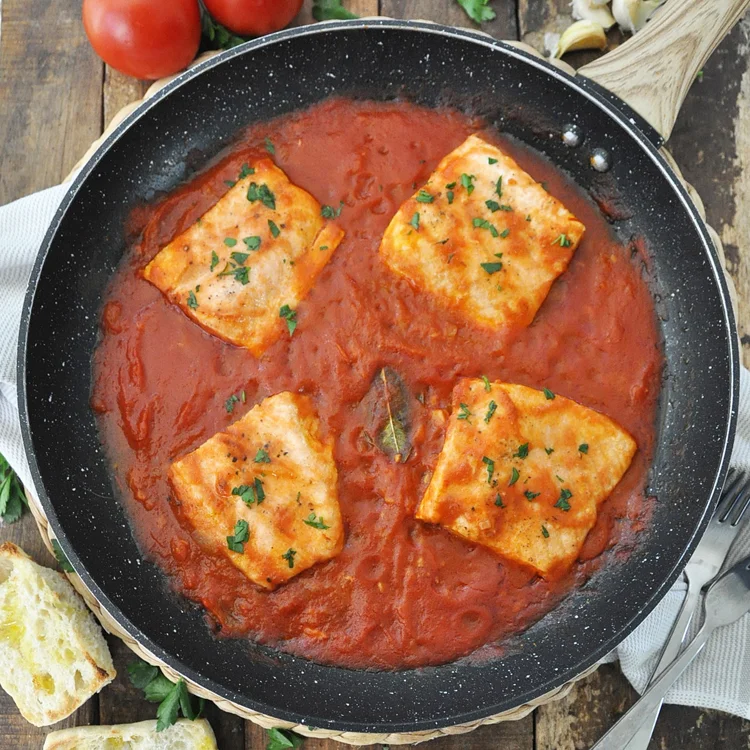
Salmon cooks gently in a Spanish-inspired tomato sauce scented with smoked paprika, saffron and bay. It is a one-pan dinner that brings a bright, savoury sauce and tender fish to the table in about 30 minutes.
Ingredients
- 30 ml (2 tbsp)extra-virgin olive oil
- 1 mediumonion
- 6 clovesgarlic
- 2.5 g (1 tsp)sweet smoked Spanish paprika
- 425 g (15 oz)tomato sauce (passata)
- 60 ml (¼ cup)vegetable stock
- 0.17 g (¼ tsp)saffron threads
- 1bay leaf
- 2 fillets, 225 g (8 oz) eachsalmon
- 10 ml (2 tsp)lemon juice
- to tastesea salt and black pepper
- to garnishchopped parsley
Instructions
- 1
Heat the oil
Set a large frying pan over medium heat and add the olive oil.
- 2
Chop the aromatics
As the oil heats, finely chop the onion and roughly chop the garlic.
- 3
Make the sauce
Add the onion and garlic to the hot pan and stir continuously. After 5 minutes, when the onion is translucent, stir in the paprika briefly. Add the passata, vegetable stock and saffron; season with sea salt and black pepper, then add the bay leaf and mix well. Leave the sauce to simmer.
- 4
Prepare the salmon
While the sauce simmers, place the salmon fillets on paper towels and pat them dry. Season with sea salt and black pepper, then cut each fillet into 2 evenly sized pieces, making 4 pieces in total.
- 5
Cook the fish
Once the sauce has simmered for 5 minutes and thickened slightly, arrange the salmon pieces in a single layer on top. Gently flip each piece, cover the pan and reduce the heat to low-medium. Simmer for 5 to 10 minutes, until the salmon is just cooked through, then remove the pan from the heat.
- 6
Finish and serve
Squeeze the lemon juice over the salmon and scatter over the chopped parsley. Serve from the pan or transfer the salmon and sauce to serving dishes.
What is salmon in Spanish tomato sauce?
This is a simple Spanish-inspired fish dish: salmon is gently cooked in a tomato sauce with garlic, smoked paprika, saffron and bay. Tomato-based sauces are a familiar part of Spanish home cooking, and here their fragrant, savoury character complements the rich fish.
The method keeps the salmon in the pan with the sauce rather than cooking it separately. A little stock loosens the passata, while lemon and parsley add a fresh finish.
Nutrition and macros by portion
The nutrition label shows one serving as written: 264 calories, 28g protein, 10g carbs, 13g fat.
| Portion | Adjustment | kcal | Protein | Carbs | Fat |
|---|---|---|---|---|---|
| Lighter | Use less olive oil | 185 kcal | 20g | 7g | 9g |
| This serving | As written | 264 kcal | 28g | 10g | 13g |
| Hungry | Add potatoes or rice | 396 kcal | 42g | 15g | 20g |
The salmon provides most of the protein and contributes fat, while the passata and onion provide most of the carbohydrates. Olive oil also contributes fat; serve the dish with vegetables and a measured portion of potatoes, rice or bread to round out the plate.
Build flavour in the sauce
Aromatics: finely chopped onion softens in the olive oil, while roughly chopped garlic brings a more noticeable savoury note. Stir them often so they soften without catching.
Spices: add the paprika briefly before the liquid ingredients, then stir in the saffron and bay with the passata and stock. The paprika can scorch if left in the hot pan for too long.
Choose and prepare the salmon
Dry surface: patting the fillets with paper towels removes surface moisture and helps the seasoning cling. Cut each fillet in half to make four pieces that fit in the pan.
Even pieces: aim for pieces of similar thickness so they cook at roughly the same rate. Handle them gently when turning, as the fish can begin to flake as it cooks.
Simmer gently for tender fish
Sauce first: give the tomato mixture its initial 5-minute simmer so it thickens slightly before the salmon goes in. A gentle simmer, rather than a vigorous boil, helps the sauce cook evenly.
Doneness: start checking after 5 minutes under the lid; the recipe allows 5 to 10 minutes depending on the pieces. Remove the pan once the fish is just cooked through, as it can continue cooking briefly in the hot sauce.
Finish with lemon and parsley
Add the lemon juice after taking the pan off the heat so its bright flavour stays distinct against the tomato and spices. Chopped parsley adds a fresh herbal contrast.
Serve the fish with plenty of sauce. Bread, potatoes or rice can make a useful accompaniment for soaking up what remains in the pan.
Plan the 30-minute cook
The sauce gets a 5-minute simmer before the salmon is added, and the covered fish then cooks for 5 to 10 minutes. Chop and season the salmon while the sauce simmers to make good use of that time.
Use a pan large enough to hold all four pieces in a single layer. If the pieces overlap, they may cook less evenly.
Recipe notes & tips
- Stir the onion and garlic continuously as they soften so they do not catch on the pan.
- Have the passata and stock ready before adding the paprika, which should only be stirred in briefly.
- Keep the salmon pieces in one layer so they cook evenly.
- Begin checking the salmon at 5 minutes under the lid, as thinner pieces may be ready sooner.
- Remove the bay leaf before serving if it is easy to find.
Variations
- Add chilli: stir a pinch of chilli flakes into the sauce with the paprika.
- Use fresh tomatoes: replace the passata with an equivalent amount of finely chopped ripe tomatoes and simmer until saucy.
- Add olives: stir sliced olives into the tomato sauce as it simmers.
- Try another fish: use firm fish fillets and check them carefully, since cooking time depends on their thickness.
- Add greens: stir a handful of spinach into the sauce just before adding the salmon.
Common mistakes to avoid
- Burning the paprika: stir it in briefly, then add the passata and stock straight away.
- Crowding the pan: arrange the four salmon pieces in one layer, using a larger pan if needed.
- Boiling the sauce hard: lower the heat to keep it at a gentle simmer.
- Overcooking the salmon: start checking at 5 minutes and stop when it is just cooked through.
- Skipping the pat-dry: use paper towels before seasoning so the fish is not wet on the surface.
How to store
Cool leftovers promptly and store them covered in the fridge for up to 2 days. Reheat gently in a covered pan over low heat until hot throughout; avoid vigorous boiling, which can toughen the salmon.
Frequently asked questions
Can I use frozen salmon?
Yes, thaw it fully in the fridge first, then pat it dry and season as directed. Cooking time may vary with the thickness of the pieces.
How do I know when the salmon is cooked?
Check the thickest part after 5 minutes of covered simmering. It should be just cooked through; continue in short intervals if needed, up to the recipe's 10-minute cooking window.
Can I make the tomato sauce ahead?
You can prepare the sauce through its initial 5-minute simmer ahead of time. Reheat it gently, then add the salmon and cook it just before serving.
What can I serve with it?
Serve with bread, potatoes or rice to accompany the sauce, and add a green vegetable or salad if you like.
Can I leave out the saffron?
Yes. The sauce will still have flavour from the paprika, garlic and bay, though it will miss saffron's distinctive aroma.
Cook it from the original
This recipe comes from spainonafork.com. Their page has the author’s own photos, notes and tips — the best place to cook it from.
Open the recipe on spainonafork.com