
Boneless Turkey Breast Roast
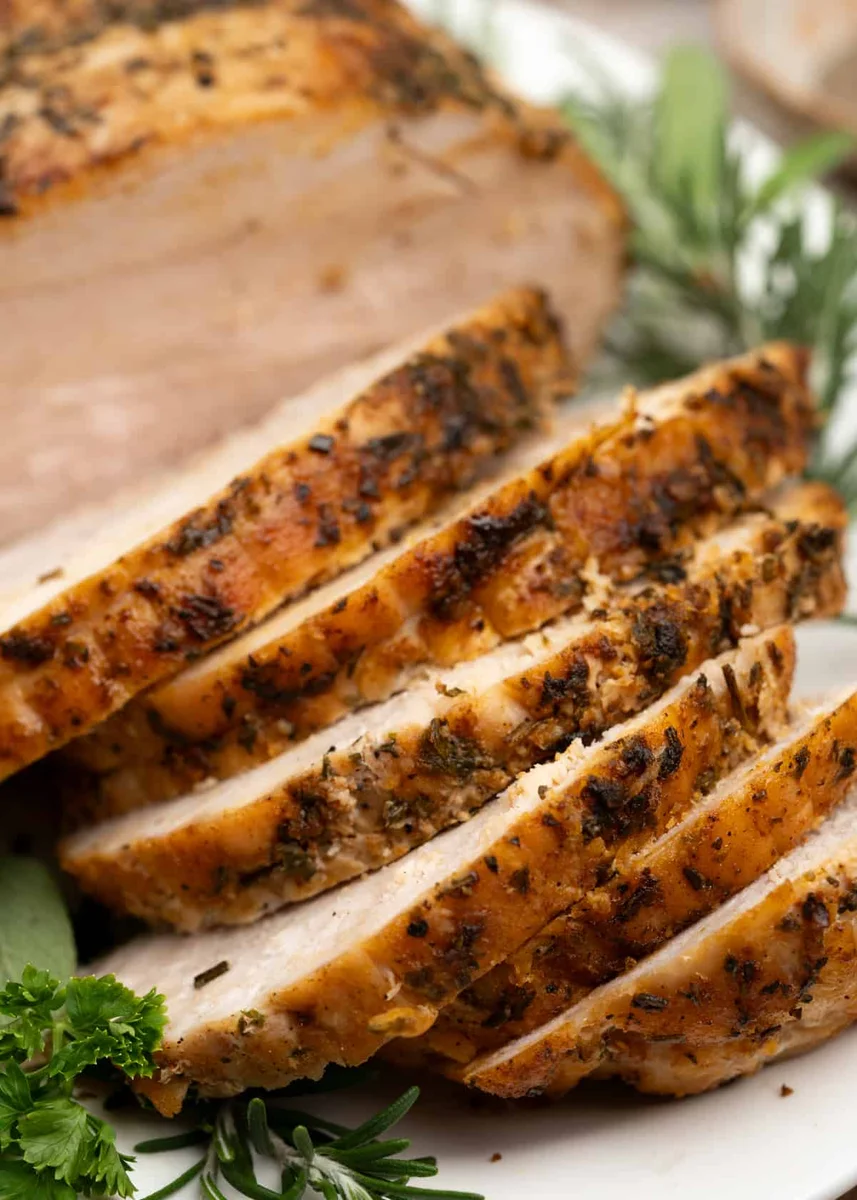
This American-style boneless turkey roast is coated in garlic, herbs and butter, then roasted over wine, stock, onion and garlic for a golden exterior and tender meat. A quick gravy made from the caramelised pan juices makes it a fitting centrepiece for a family meal.
Ingredients
- 1.8–2.3 kg (4–5 lb)boneless turkey roast in its casing
- 57 g (¼ cup)unsalted butter, melted
- 2 tablespoonsolive oil
- to tastesalt and black pepper
- 4–5garlic cloves, minced
- 2 teaspoonsfresh thyme, chopped
- 1 tablespoonfresh parsley, chopped
- 2 sprigsfresh rosemary, chopped
- 1 teaspoonsage, chopped
- 1 teaspoonsmoked paprika
- 120 ml (½ cup)white wine
- 590 ml (2½ cups)chicken stock
- 1 largeonion, quartered
- 1garlic bulb, halved
- 2 tablespoonsbutter, for the gravy
- 2 sprigsfresh rosemary, whole, for the gravy
- 2 tablespoonsplain flour, for the gravy
Instructions
- 1
Heat the oven
Preheat the oven to 177°C (350°F).
- 2
Prepare the turkey
If frozen, thaw the turkey in the fridge for 48 hours before cooking, then make sure it is completely thawed on the day. Pat it thoroughly dry with a kitchen towel.
- 3
Make the marinade
Mix the warm melted butter with the olive oil, chopped herbs, paprika, salt and pepper. Rub it over the turkey, keeping a couple of teaspoons aside for step 5.
- 4
Prepare the pan
Pour 355 ml (1½ cups) of chicken stock and 120 ml (½ cup) of wine into a 23 × 33 cm (9 × 13-inch) baking pan. Add the quartered onion and halved garlic bulb, cut-side down.
- 5
Set the turkey
Place a small trivet in the centre of the pan and set the seasoned turkey on it. Spread the reserved marinade over the top.
- 6
Roast the turkey
Bake uncovered for 1 hour 20–30 minutes, basting once after 45 minutes. Check the thickest part with a meat thermometer; it should read 71°C (160°F).
- 7
Rest the roast
Take the pan out of the oven and cover the turkey. Leave it to rest for at least 15 minutes before slicing.
- 8
Deglaze the pan
The pan should contain about 120 ml (½ cup) of stock along with the caramelised onion and garlic. Add the remaining 240 ml (1 cup) of chicken stock and scrape up the browned bits from the bottom.
- 9
Start the gravy
Melt 2 tablespoons of butter in a saucepan. Add 2 whole rosemary sprigs, then stir in 2 tablespoons of flour. Cook until the raw flour smell has gone, then turn the heat to its lowest setting.
- 10
Strain the juices
Set a colander over the saucepan and pour in the liquid from the baking pan, adding the onion and garlic too. Press them against the colander with the back of a spatula to push the roasted garlic flesh into the gravy.
- 11
Finish the gravy
Remove the colander and stir the gravy well. Simmer for 3–4 minutes, until it begins to thicken, then remove the rosemary sprigs. For a smoother gravy, strain it again.
- 12
Slice and serve
Use a sharp knife or scissors to remove the casing, then slice the turkey. Serve with the gravy and your favourite side.
What is a boneless turkey breast roast?
Turkey roast is a convenient American-style centrepiece made from boneless turkey breast, often shaped and held in a casing. It cooks more simply than a whole bird and is easy to carve into even slices.
This version pairs a garlic-and-herb butter coating with wine, stock and aromatics in the roasting pan. Those pan juices then become the base for a savoury gravy.
Nutrition and macros by portion
The nutrition label shows one serving as written: 238 calories, 34g protein, 3g carbs, 9g fat.
| Portion | Adjustment | kcal | Protein | Carbs | Fat |
|---|---|---|---|---|---|
| Lighter | Less gravy, extra vegetables | 167 kcal | 24g | 2g | 6g |
| This serving | As written | 238 kcal | 34g | 3g | 9g |
| Hungry | Larger turkey portion | 357 kcal | 51g | 5g | 14g |
Turkey provides most of the protein, while butter and olive oil contribute much of the fat. The small amount of carbohydrate comes mainly from the herbs, onion, garlic and the flour used in the gravy. Serve it with vegetables and a measured portion of potatoes or another starch to round out the plate.
The herb butter coating
Butter and oil: the melted butter carries the garlic, herbs and paprika over the roast, while olive oil makes the mixture easier to spread. Keep a little back to coat the top before baking.
Fresh herbs: thyme, parsley, rosemary and sage give the turkey its savoury aroma. Chop them finely so they distribute across the surface rather than clumping.
Setting up the roasting pan
Stock and wine: the liquid in the pan catches drips and provides the starting point for the gravy. The method uses 1½ cups of stock for roasting and reserves the remaining cup for deglazing.
Onion and garlic: placing them cut-side down lets them brown in the pan. They are strained into the gravy later, where their softened flesh adds flavour and body.
Roasting and checking doneness
A trivet holds the turkey above the liquid so the roast is not sitting directly in the stock and wine. Bake it uncovered and baste once after 45 minutes, as directed.
Temperature cue: check the thickest part with a meat thermometer and follow the recipe's target of 71°C (160°F). Roasting time can vary with the size and shape of the roast, so use the thermometer as your guide.
Resting before carving
Rest the turkey, covered, for at least 15 minutes before slicing. This gives the roast time to settle after baking and makes carving easier.
Remove the casing with a sharp knife or scissors once the turkey has rested. Slice across the roast and serve the pieces with gravy.
Making the gravy
Flour base: cook the flour in melted butter until its raw smell has gone, then lower the heat before adding the pan liquid. This gives the gravy a smooth, thickening base.
Straining: press the cooked onion and garlic through the colander to release their soft flesh into the sauce. Simmer for 3–4 minutes, and strain once more if you prefer a silkier finish.
What to serve alongside
Serve the sliced turkey and gravy with your favourite sides. Roasted or mashed potatoes, vegetables, or a crisp salad all make practical accompaniments.
For a balanced plate, include a generous serving of vegetables alongside the turkey and a portion of potato or another starchy side.
Recipe notes & tips
- Thaw the turkey fully in the fridge before roasting and pat it dry well.
- Chop the herbs finely so they spread evenly through the butter and oil.
- Keep a couple of teaspoons of the marinade aside before rubbing the turkey.
- Baste the roast once after 45 minutes, as instructed.
- Use a thermometer to check the thickest part rather than relying on the roasting time alone.
- Rest the turkey for at least 15 minutes before removing the casing and carving.
Variations
- Herb swap: use other fresh herbs you enjoy while keeping the total quantity similar.
- No wine: replace the white wine with an equal amount of chicken stock.
- Smoother gravy: strain the finished gravy again after simmering.
- Extra vegetables: serve with roasted seasonal vegetables alongside the turkey.
- Peppery finish: add extra black pepper to the gravy just before serving.
Common mistakes to avoid
- Partly frozen roast: thaw it completely in the fridge before cooking so it can roast evenly.
- Wet surface: pat the turkey dry before adding the marinade so the coating adheres well.
- Discarding all the marinade: reserve a couple of teaspoons to spread over the roast before baking.
- Guessing doneness: check the thickest part with a meat thermometer and use the recipe's 71°C (160°F) target.
- Skipping the rest: leave the roast covered for at least 15 minutes before slicing.
- Lumpy gravy: add the pan liquid carefully and stir well after removing the colander.
How to store
Refrigerate leftover turkey and gravy in covered containers within 2 hours of serving, and use within 3 days. Reheat gently until steaming hot; add a splash of stock to the gravy if it has thickened in the fridge.
Frequently asked questions
Can I roast the turkey from frozen?
No; thaw it completely in the fridge before cooking. The recipe suggests allowing 48 hours for thawing, then checking that it is fully thawed on the day.
How do I know when the roast is done?
Insert a meat thermometer into the thickest part. The method gives a target of 71°C (160°F).
Do I remove the casing before roasting?
The method keeps the casing on during roasting and removes it after the turkey has rested. Use a sharp knife or scissors to take it off before slicing.
Can I make the gravy without white wine?
Yes. Replace the wine with the same amount of chicken stock; the gravy will still use the roasted pan juices, onion and garlic.
Why does the recipe rest the turkey before carving?
Resting for at least 15 minutes gives the roast time to settle after baking and makes it easier to slice neatly.
Can I make the gravy smoother?
Yes. After simmering for 3–4 minutes and removing the rosemary, strain the gravy through a colander again.
Cook it from the original
This recipe comes from theflavoursofkitchen.com. Their page has the author’s own photos, notes and tips — the best place to cook it from.
Open the recipe on theflavoursofkitchen.com