
Five Spice Chicken Stir-fry
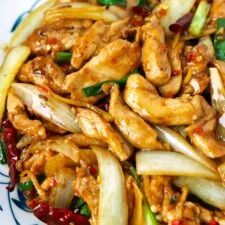
This Chinese-inspired five-spice chicken stir-fry combines tender chicken, aromatic ginger and garlic, onion and chillies in a glossy, savoury-sweet sauce. It comes together in about 30 minutes and is easy to serve with rice, noodles or courgette noodles.
Ingredients
- 250 g (9 oz)chicken thigh fillets, excess fat trimmed and cut into bite-sized pieces
- 1/8 tspground white pepper
- 1 tsppotato starch
- 1/2 tbsplow-sodium light soy sauce
- 1 tspShao Xing rice wine (or dry sherry)
- 1/2 tsppotato starch
- 1/8 tspkosher salt (use half as much if using iodised table salt)
- 1/2 tspChinese five-spice powder
- 1 tspwhite sugar (or another sweetener)
- 1 tbsplow-sodium light soy sauce
- 1 tbspShao Xing rice wine
- 1/2 tbspChinkiang vinegar (or a mixture of half distilled white vinegar and half balsamic vinegar)
- 1/2 tspdark soy sauce
- 1/2 tspsesame oil
- 1/2 tsppure chilli oil, optional, without flakes or seeds
- 3 tbspwater
- 1/3 mediumyellow onion, sliced into 6 mm strips and halved across the middle
- 2 mediumspring onions, cut into 2.5 cm pieces, white and light green parts separated from dark green parts
- 1-inch piece (about 2 tbsp julienned)fresh ginger, cut into fine strips
- 3 clovesgarlic, minced
- 1–3fresh red chillies, to taste, destemmed and finely chopped
- 3–10dried red chillies, to taste, snipped into 1.3 cm pieces
- 2 tbsppeanut oil (or another neutral oil with a high smoke point)
Instructions
- 1
Marinate chicken
Trim the chicken if needed and cut it into bite-sized pieces. Put it in a medium bowl with the white pepper, 1 tsp potato starch, 1/2 tbsp light soy sauce and 1 tsp Shao Xing rice wine. Mix to coat and set aside.
- 2
Mix the sauce
In a small bowl or measuring jug, whisk together the remaining 1/2 tsp potato starch, salt, five-spice powder, sugar, 1 tbsp light soy sauce, 1 tbsp Shao Xing rice wine, Chinkiang vinegar, dark soy sauce, sesame oil, chilli oil if using, and water until combined.
- 3
Prepare vegetables
Prepare the onion, spring onions, ginger, garlic and fresh and dried chillies as described in the ingredients. For a milder dish, remove some or all of the dried chilli seeds, or leave the dried chillies whole for aroma with less heat.
- 4
Cook the chicken
Heat 2 tbsp peanut oil in a large wok over high heat. Add the chicken and quickly spread it out. Cook undisturbed for 30 seconds, then stir-fry for another 30–40 seconds, until about 80% cooked. Transfer it with a slotted spoon to a clean bowl and set aside.
- 5
Fry aromatics
Heat the oil left in the wok over medium-high heat. Add the yellow onion, the white and light green spring onion parts, and ginger. Stir-fry for 20 seconds, until the ginger is fragrant, then add the garlic and fry for another 20 seconds.
- 6
Add the chillies
Add the fresh and dried red chillies and stir-fry for 20 seconds to combine.
- 7
Thicken the sauce
Return the chicken and any juices in the bowl to the wok. Briefly stir the sauce to loosen the starch that has settled, then turn the heat to high and pour it over the chicken and vegetables. Stir-fry for 1 minute, until the sauce thickens and coats everything. If it thickens too quickly, add a splash of water and continue stir-frying.
- 8
Finish and serve
Toss in the dark green spring onion parts and turn off the heat. Transfer to a serving plate and serve straight away with warm steamed rice, cooked noodles or courgette noodles.
What is five-spice chicken stir-fry?
Chinese five-spice is a fragrant blend commonly built around warming, sweet and savoury flavours. This quick stir-fry pairs it with chicken, soy, rice wine and black vinegar, while ginger, garlic and chillies bring freshness and heat.
The method draws on the fast cooking of wok-style stir-frying: cook the chicken first, then fry the aromatics and bring everything together with a starch-thickened sauce. That order helps the chicken brown rather than stew and lets the sauce cling to each piece.
Nutrition and macros by portion
The nutrition label shows one serving as written: 379 calories, 28g protein, 19g carbs, 22g fat.
| Portion | Adjustment | kcal | Protein | Carbs | Fat |
|---|---|---|---|---|---|
| Lighter | Use less peanut oil | 265 kcal | 20g | 13g | 15g |
| This serving | As written | 379 kcal | 28g | 19g | 22g |
| Hungry | Serve with extra rice | 569 kcal | 42g | 28g | 33g |
The chicken supplies most of the protein, while the sugar and starch contribute some of the carbohydrates. Peanut oil and sesame oil account for much of the fat; serve with a generous side of vegetables to balance the plate.
Why marinate the chicken?
Chicken thighs stay tender through the brief, high-heat cooking, while a small amount of potato starch helps the seasonings coat the pieces. Give the chicken a thorough mix so there are no dry patches before it goes into the wok.
Have the sauce ready before you start cooking. The work at the hob moves quickly, and the starch in the sauce settles if it stands, so stir it again just before pouring.
Build the sauce
Seasoning balance: light soy brings salt and savouriness, dark soy adds depth, and Shao Xing rice wine gives the sauce a rounded aroma. Sugar offsets the vinegar and chillies without making the dish taste overtly sweet.
Thickening: potato starch needs to be evenly mixed into the water-based sauce. Stir it from the bottom immediately before adding it to the wok so it thickens evenly rather than forming lumps.
Control the chilli heat
Fresh chillies add a sharper heat, while dried chillies contribute a deeper aroma as they fry. The recipe gives a range for both, so use fewer to start if you are unsure about the heat level.
For a gentler result, shake the seeds out of the dried chillies or leave them whole. Avoid letting the chillies scorch in the hot wok, as they can become bitter.
Get the wok timing right
Chicken: spread the pieces out as soon as they go into the hot wok and leave them for the first 30 seconds. This gives the surfaces time to sear before you stir-fry them for another 30–40 seconds.
Aromatics: reduce the heat to medium-high for the onion, spring onion and ginger, then add the garlic after 20 seconds. The garlic needs only another 20 seconds before the chillies go in.
Look for a glossy finish
The chicken is only about 80% cooked when it is first removed; it finishes cooking in the wok with the sauce. Once the sauce has been added, stir-fry for 1 minute, until it thickens and coats the chicken.
If the sauce turns sticky before the chicken is ready, add a splash of water and keep stir-frying. Finish with the dark green spring onion parts off the heat to retain their colour and freshness.
What to serve alongside
Warm steamed rice is a straightforward match for the savoury sauce. Cooked noodles also work well, while courgette noodles make a lighter, vegetable-forward accompaniment.
For a fuller plate, serve with extra steamed vegetables such as greens or broccoli. Keep them simply seasoned so they do not compete with the punchy sauce.
Recipe notes & tips
- Cut the chicken into similarly sized pieces so they cook at a similar rate.
- Measure and prepare all the aromatics and sauce ingredients before heating the wok.
- Use a large wok and spread the chicken out quickly to encourage searing.
- Stir the sauce again just before adding it, as the potato starch settles.
- Keep a little water nearby in case the sauce thickens before the chicken is ready.
- Adjust the number of fresh and dried chillies to suit your preferred heat.
Variations
- Milder version: Remove the dried chilli seeds or leave the dried chillies whole.
- Dry sherry: Use dry sherry in place of Shao Xing rice wine if needed.
- Vinegar swap: Mix equal parts distilled white vinegar and balsamic vinegar to replace Chinkiang vinegar.
- Different oil: Replace peanut oil with another neutral oil that can handle high heat.
- Noodle bowl: Serve the finished stir-fry over cooked noodles instead of rice.
Common mistakes to avoid
- Crowded wok: The chicken may steam instead of sear, so use a large wok and spread the pieces out.
- Unmixed starch: Starch can settle at the bottom of the sauce, so stir it again just before pouring.
- Burnt garlic: Add it after the onion and ginger have fried for 20 seconds, and cook it for only another 20 seconds.
- Too much heat: Use fewer chillies or discard their seeds for a milder stir-fry.
- Over-thick sauce: Add a splash of water and keep stir-frying if the sauce thickens too quickly.
How to store
Refrigerate leftovers in an airtight container for up to 3 days. Reheat in a frying pan or wok until piping hot, adding a splash of water if the sauce has thickened; avoid reheating more than once.
Frequently asked questions
Can I use chicken breast instead of thigh?
Yes, cut it into bite-sized pieces of similar size. Breast can dry out more readily, so watch the cooking closely and make sure it is fully cooked before serving.
How can I make the stir-fry less spicy?
Use fewer fresh and dried chillies, and remove the dried chilli seeds. Leaving dried chillies whole can add aroma with less heat.
Can I make the sauce ahead?
You can mix it ahead and keep it covered in the fridge. Stir thoroughly just before using because the potato starch settles.
What can I use instead of Shao Xing rice wine?
Use dry sherry as the stated substitute. The same replacement can be used for both amounts in the recipe.
What should I serve with this stir-fry?
Serve it with warm steamed rice, cooked noodles or courgette noodles. Extra steamed vegetables also make a good side.
How do I know when the sauce is ready?
After about 1 minute of stir-frying, it should have thickened enough to coat the chicken and vegetables. If it becomes too thick, loosen it with a splash of water.
Cook it from the original
This recipe comes from thatspicychick.com. Their page has the author’s own photos, notes and tips — the best place to cook it from.
Open the recipe on thatspicychick.com