
Spinach Lasagna
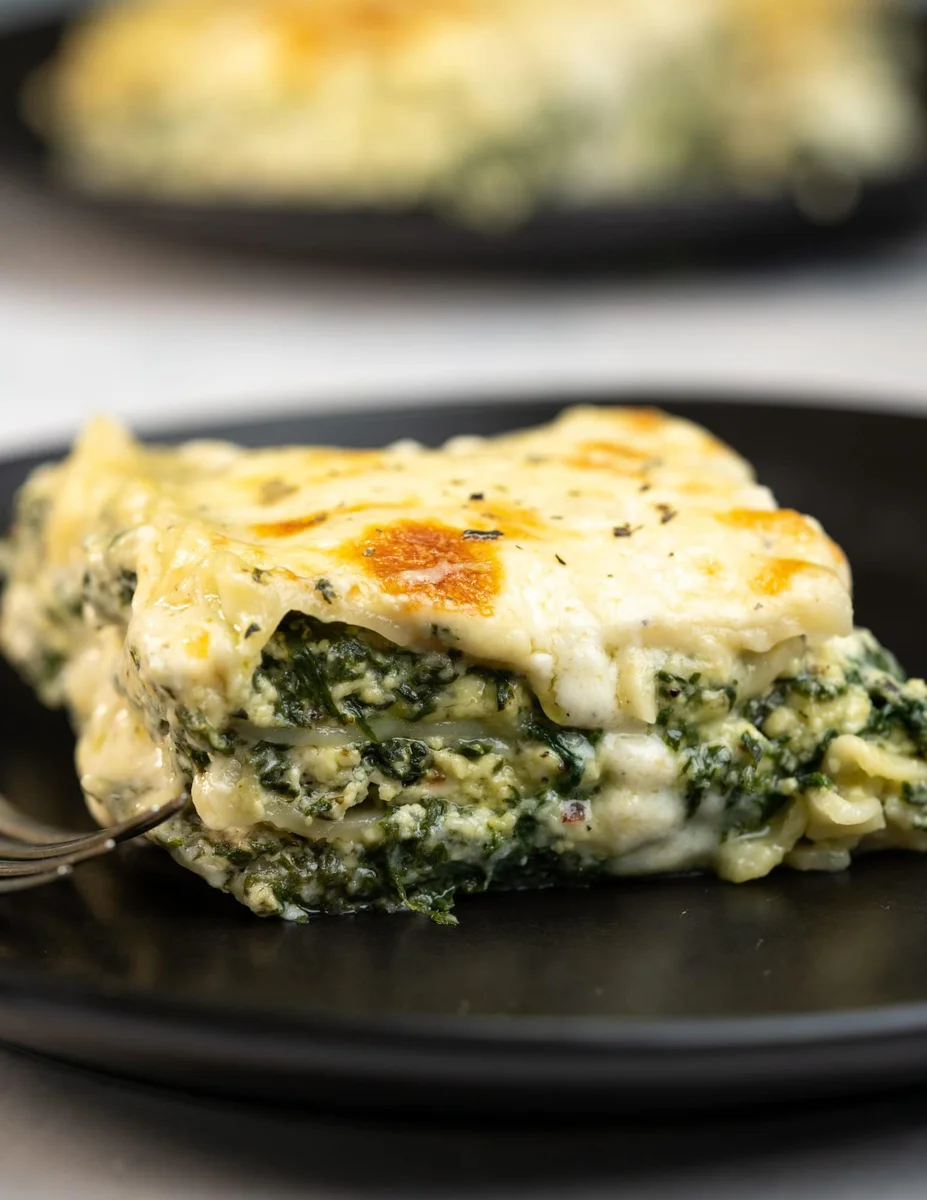
Spinach lasagna layers pasta with a creamy white sauce and a savoury filling of spinach, ricotta and three cheeses. It makes a hearty vegetarian bake, with nutmeg adding a gentle warmth to the rich, cheesy layers.
Ingredients
- 1/2 tablespoongarlic cloves
- 113 g (4 tablespoons)unsalted butter
- 30 g (1/4 cup)plain flour
- 355 ml (1.5 cups)chicken stock
- 240 ml (1 cup)half-and-half (or equal parts double cream and milk)
- about 110 g (1 cup)mozzarella
- 1 teaspoonsea salt
- 1/2 teaspoonblack pepper
- 1 tablespoonolive oil
- 1/2 mediumonion, finely chopped
- 1 tablespoongarlic cloves, minced
- 700 gfresh spinach leaves
- 2eggs
- about 110 g (1 cup)mozzarella
- 400 gricotta
- about 75 g (3/4 cup)grated Parmesan
- 1 teaspoonItalian seasoning
- a large pinchnutmeg
- 1/2 teaspoonsalt
- 1/4 teaspoonpepper
- 12lasagne sheets
- about 110 g (1 cup)mozzarella, for sprinkling on top
- to tastefresh parsley
Instructions
- 1
Start the sauce
Heat the olive oil and butter in a saucepan. Add the garlic and sauté for about 30 seconds, until fragrant.
- 2
Cook the flour
Stir in the flour and cook over low heat for 1 minute, until the mixture bubbles. Keep it pale; do not let the flour brown.
- 3
Add the liquids
Turn the heat down and gradually stir in the chicken stock, followed by the half-and-half. Keep stirring until the sauce is smooth and free of lumps.
- 4
Finish the sauce
Turn off the heat, season with the sea salt and black pepper, then stir in 1 cup of mozzarella.
- 5
Prepare fresh spinach
If using fresh spinach, blanch it in hot water for 1 minute, then transfer it to ice-cold water. Drain well, chop and squeeze out as much water as possible.
- 6
Drain frozen spinach
If using frozen spinach instead, defrost it and squeeze it well to remove the liquid.
- 7
Soften the aromatics
Heat another tablespoon of oil in a frying pan. Add the chopped onion and garlic, and sauté until the onion is soft and the garlic smells aromatic.
- 8
Cook the spinach
Add the spinach and cook for 3–4 minutes, allowing any remaining moisture to evaporate. Leave the mixture to cool.
- 9
Drain the ricotta
Drain the ricotta well.
- 10
Mix the filling
In a large bowl, combine the cooked spinach mixture, mozzarella, ricotta, Parmesan, eggs, Italian seasoning, salt and pepper. Mix thoroughly.
- 11
Cook the pasta
Bring plenty of salted water to the boil in a large pan. Cook the 12 lasagne sheets until just al dente. They can be slightly undercooked, as they will finish cooking in the oven with the sauce.
- 12
Heat the oven
Preheat the oven to 200°C (425°F).
- 13
Prepare the dish
Use a 23 × 33 cm (9 × 13-inch) baking dish and spread a couple of tablespoons of white sauce over the base.
- 14
Build the layers
Arrange 3 lasagne sheets in the dish. Spread one-third of the spinach mixture over them, using about 1/2 cup, then add 1/3 cup of white sauce.
- 15
Repeat the layers
Repeat the pasta, spinach mixture and sauce layers twice more, finishing with lasagne sheets as the top layer.
- 16
Cover and bake
Spread the remaining white sauce over the top. Insert 6–7 toothpicks, spaced apart, to keep the foil from touching the sauce. Loosely cover the dish with foil and bake for 30 minutes.
- 17
Remove the cover
Carefully take the dish out of the oven, then remove the foil and toothpicks.
- 18
Brown the cheese
Sprinkle 1 cup of mozzarella over the lasagne. Bake for a further 10–12 minutes, until the cheese is bubbling and small brown spots appear.
- 19
Rest and garnish
Sprinkle fresh parsley over the top and leave the lasagne to rest for 10 minutes before cutting, so it holds its shape.
What is spinach lasagna?
Lasagna is a layered baked pasta dish with roots in Italian cooking, while this version follows an American-style approach with a generous cheese filling and a creamy white sauce. Spinach gives the ricotta mixture its leafy character, and a pinch of nutmeg brings a subtle warmth.
The separate sauce and filling make it easier to spread the components evenly between the pasta layers. A final layer of mozzarella browns on top for a bubbling, golden finish.
Nutrition and macros by portion
The nutrition label shows one serving as written: 753 calories, 34g protein, 62g carbs, 42g fat.
| Portion | Adjustment | kcal | Protein | Carbs | Fat |
|---|---|---|---|---|---|
| Lighter | Smaller slice, more salad | 527 kcal | 24g | 43g | 29g |
| This serving | As written | 753 kcal | 34g | 62g | 42g |
| Hungry | Larger lasagne slice | 1130 kcal | 51g | 93g | 63g |
The lasagne’s carbohydrates mainly come from the pasta and flour, while butter, half-and-half and cheese contribute much of the fat. Ricotta, mozzarella, Parmesan and eggs provide most of the protein. Pair a slice with a generous salad or non-starchy vegetables for a more balanced plate.
Building a smooth white sauce
Pale roux: cooking the flour in butter without browning it helps keep the finished sauce light in colour. Stir over low heat until it bubbles, then add the liquids gradually.
Steady stirring: pour in the stock first and the half-and-half afterwards, mixing as you go. This helps the sauce come together without lumps; stir in the mozzarella once the pan is off the heat.
Getting the spinach ready
Fresh leaves: blanch them briefly, cool them in ice water and squeeze them very well after chopping. Removing excess water matters because watery spinach can loosen the filling.
Pan cooking: sauté the spinach with the softened onion and garlic for 3–4 minutes, then let it cool before mixing it with the eggs and cheeses. The cooling step also helps avoid adding a hot mixture to the eggs.
Making a cohesive filling
Well-drained ricotta: drain it before mixing so the filling stays thick enough to spread between the sheets. Combine it with the mozzarella, Parmesan, eggs and seasonings until evenly mixed.
Nutmeg and seasoning: the recipe uses a large pinch of nutmeg alongside Italian seasoning, salt and pepper. Taste and adjust the seasoning before layering if needed.
Layering and pasta texture
Al dente sheets: cook the lasagne until just al dente, or a little short of that point, as the pasta will bake again with the sauce. Handle the sheets gently so they are easier to arrange.
Even layers: divide the spinach mixture into three portions and repeat the pasta, filling and sauce sequence three times. Finish with pasta and the remaining white sauce before covering the dish.
Knowing when it is ready
Covered bake: bake the assembled lasagne, loosely covered with foil, for 30 minutes at 200°C (425°F). Toothpicks hold the foil away from the sauce so it does not stick.
Cheese topping: remove the cover, add the final mozzarella and bake for another 10–12 minutes. Look for bubbling cheese with small browned patches, then rest the dish for 10 minutes before slicing.
What to serve with it
Fresh contrast: serve a slice with a crisp green salad dressed with a light vinaigrette. The fresh, sharp flavours balance the creamy sauce and cheese.
Simple sides: steamed green beans or roasted vegetables also work well. Keep the accompaniments straightforward so the spinach and layered cheeses remain the focus.
Recipe notes & tips
- Squeeze the blanched spinach thoroughly so it does not water down the filling.
- Add the stock and half-and-half gradually while stirring to help keep the white sauce smooth.
- Let the spinach mixture cool before combining it with the eggs and cheeses.
- Cook the sheets only until just al dente, as they will continue cooking in the oven.
- Use toothpicks to stop the foil from sticking to the sauced top.
- Rest the baked lasagne for 10 minutes before cutting for cleaner slices.
Variations
- Frozen spinach: thaw it completely and squeeze out all the liquid before cooking.
- Herb change: use a different dried herb blend in place of the Italian seasoning.
- Extra nutmeg: add another small pinch if you want its warm flavour to come through more.
- More browning: leave the lasagne uncovered for the final 10–12 minutes, as directed.
- Fresh garnish: scatter chopped parsley over the top just before serving.
Common mistakes to avoid
- Wet spinach: squeeze it firmly after blanching, then cook off any remaining moisture in the pan.
- Browned roux: keep the flour and butter mixture over low heat and stop cooking once it bubbles.
- Lumpy sauce: add the liquids slowly and stir continuously as they go in.
- Overcooked pasta: stop at just al dente because the sheets bake again in the sauce.
- Hot filling: cool the spinach mixture before mixing it with the eggs.
- Rushed slicing: wait the full 10 minutes after baking so the layers can settle.
How to store
Cool leftovers, cover them or transfer them to an airtight container, and refrigerate for up to 3 days. Reheat portions in the oven, covered, until hot throughout, or microwave them in short bursts.
Frequently asked questions
Can I use frozen spinach?
Yes. Defrost it fully and squeeze out as much liquid as possible before adding it to the pan. The method still calls for cooking it briefly with the onion and garlic.
Can I use no-boil lasagne sheets?
The recipe specifies cooking 12 sheets in salted water until just al dente. No-boil sheets may need different liquid and baking adjustments, so follow their packet instructions if substituting.
Why does the spinach need to be squeezed?
Excess water can make the filling loose and the finished layers watery. Drain and squeeze the spinach well, then cook it for 3–4 minutes to evaporate any remaining moisture.
Can I assemble the lasagne ahead of time?
The recipe does not give make-ahead instructions. For best results, assemble it shortly before baking so the cooked pasta does not sit soaking in the sauce.
How do I know the lasagne is done?
After 30 minutes covered, add the mozzarella and bake for another 10–12 minutes. The topping should be bubbling with small browned spots.
Why should it rest before serving?
A 10-minute rest helps the sauce and filling settle, making it easier to cut and lift neat portions.
Cook it from the original
This recipe comes from theflavoursofkitchen.com. Their page has the author’s own photos, notes and tips — the best place to cook it from.
Open the recipe on theflavoursofkitchen.com