
Meatball Casserole
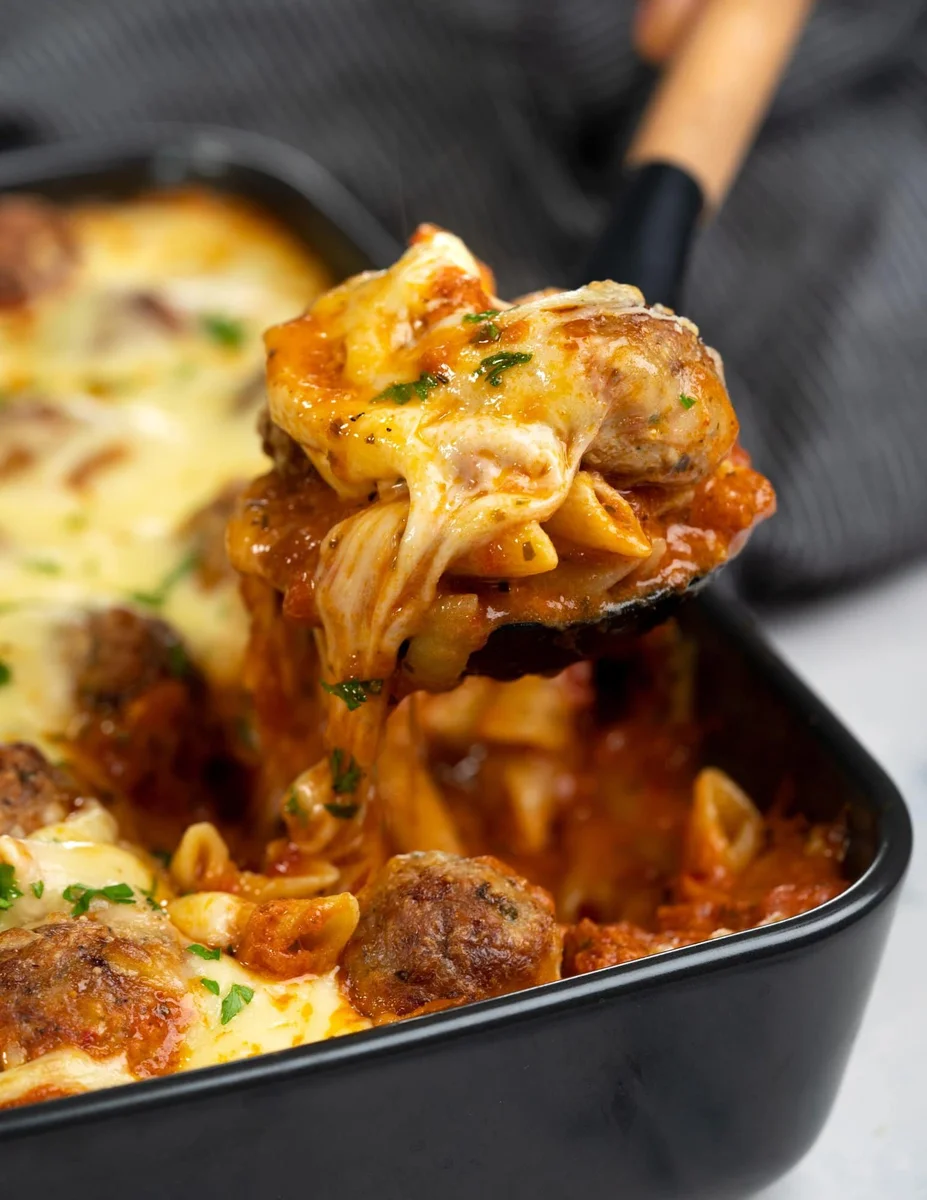
This American-style meatball casserole bakes dry pasta in marinara, stock and milk, with cooked meatballs and melted cheese on top. It is a convenient one-dish meal when you want a hearty pasta bake without boiling the pasta separately.
Ingredients
- 500 g (16 oz)dry pasta
- 1 jar (680–794 g; 24–28 oz)marinara sauce
- 24–30cooked meatballs
- 360 ml (1½ cups)chicken stock
- 240 ml (1 cup)water
- 240 ml (1 cup)milk
- 1 teaspoonItalian seasoning
- 1 teaspoon, or to tastered pepper flakes
- 2 teaspoonsolive oil
- to tastesalt
- ⅓ cup (80 ml)shredded Parmesan cheese
- 1½ cups (360 ml)shredded mozzarella
- to tastechopped parsley
Instructions
- 1
Preheat the oven
Heat the oven to 220°C (425°F).
- 2
Combine the pasta
Put the uncooked pasta, marinara sauce, chicken stock, water, milk, olive oil, Italian seasoning, red pepper flakes and salt in a 23 × 33 cm (9 × 13-inch) baking dish. Stir to combine.
- 3
Add the meatballs
Arrange the cooked meatballs over the pasta mixture. Cover the dish tightly with foil and bake for 35–40 minutes.
- 4
Remove the dish
Carefully take the baking dish out of the oven; it will be heavy.
- 5
Check the pasta
Remove the foil, stir gently once and check whether the pasta is done. The dish will go back into the oven for a further 10 minutes.
- 6
Melt the cheese
Sprinkle the Parmesan and mozzarella over the top. Bake for another 8–10 minutes, until the cheese is melted and bubbling, then broil for a few minutes to brown the surface.
- 7
Garnish and serve
Scatter chopped parsley over the casserole and serve.
What is meatball casserole?
Meatball casserole is an American-style baked pasta dish that brings meatballs, sauce and cheese together in one dish. This version cooks the pasta directly in the marinara mixture, so there is no separate pan of boiling pasta.
One-dish method: Stock, water and milk provide the liquid the dry pasta needs as it bakes. Adding cooked meatballs and a cheesy finish makes it a filling, straightforward supper.
Nutrition and macros by portion
The nutrition label shows one serving as written: 627 calories, 31g protein, 71g carbs, 24g fat.
| Portion | Adjustment | kcal | Protein | Carbs | Fat |
|---|---|---|---|---|---|
| Lighter | More vegetables, less cheese | 439 kcal | 22g | 50g | 17g |
| This serving | As written | 627 kcal | 31g | 71g | 24g |
| Hungry | Larger pasta portion | 941 kcal | 47g | 107g | 36g |
The pasta supplies most of the carbohydrates, while the meatballs contribute much of the protein and the cheese, milk and olive oil add fat. Pair a serving with a generous portion of vegetables or salad to round out the plate.
Choosing the pasta and sauce
Pasta shape: Short shapes such as penne or rigatoni are convenient in a casserole and easy to serve alongside the meatballs. Whichever shape you use, keep the stated quantity so the liquid-to-pasta balance stays close to the recipe.
Marinara: Use a jarred sauce you enjoy, since its flavour forms the base of the dish. The recipe gives a range of jar sizes, so check the liquid level as the casserole bakes.
Getting the liquid right
Even mixing: Stir the pasta thoroughly with the marinara, stock, water and milk before adding the meatballs. This helps distribute the liquid around the dry pasta.
Covered baking: Seal the foil tightly for the first 35–40 minutes. The trapped heat and moisture help the pasta cook; opening the dish early can let steam escape.
Checking pasta doneness
At the first check: Carefully remove the foil and stir once, then taste a piece of pasta to judge its texture. If it is still firm, the final baking time gives it more time to soften.
Before serving: The pasta should be tender, and the sauce should be hot throughout. Handle the heavy dish carefully when taking it out of the oven.
Finishing with cheese
Cheese layer: Sprinkle both cheeses evenly over the casserole so each portion gets some of the Parmesan and mozzarella. Bake until the topping is melted and bubbling.
Browning: A few minutes under the broiler gives the top brown spots. Watch it closely during this brief final step so the cheese does not burn.
Serving the casserole
Fresh finish: Chopped parsley adds colour and a fresh note against the rich sauce and cheese. Add it after baking, just before serving.
On the side: A crisp green salad or steamed vegetables make a simple accompaniment. Serve straight from the baking dish while the cheese is still soft.
Recipe notes & tips
- Use a baking dish large enough to hold the pasta and liquid without filling it to the rim.
- Stir the ingredients well before adding the meatballs so the pasta is coated in the sauce mixture.
- Cover the dish tightly with foil during the first bake to retain moisture.
- Check the pasta by tasting a piece rather than relying only on its appearance.
- Keep a close eye on the cheese while broiling, as it can brown quickly.
- Let portions settle briefly after baking so they are easier to serve.
Variations
- Adjust the heat: Reduce or omit the red pepper flakes for a milder casserole.
- Add vegetables: Stir in chopped spinach before baking for a vegetable addition.
- Try another cheese: Replace some of the mozzarella with provolone for a different finish.
- Use a different pasta: Choose another short pasta shape, keeping the same quantity.
- Add herbs: Finish with chopped basil instead of parsley for a fresh herbal note.
Common mistakes to avoid
- Loose foil: Steam can escape and leave the pasta undercooked; seal the dish tightly for the first bake.
- Uneven mixing: Dry pasta may cook inconsistently; stir the sauce and liquid through it before adding meatballs.
- Skipping the doneness check: Pasta shapes can cook at different rates; taste a piece after removing the foil.
- Over-broiling: The cheese can burn under intense heat; watch it closely and stop once brown spots appear.
- Rushing the removal: The casserole dish is heavy; use oven gloves and lift it carefully.
How to store
Refrigerate leftovers in a covered container within 2 hours and eat within 3–4 days. Reheat portions until piping hot in the microwave or in an oven-safe dish, covered with foil to help prevent drying out.
Frequently asked questions
Can I use a different pasta shape?
Yes, another short pasta shape can work. Keep the quantity the same and check its doneness during baking, as shapes may cook at different rates.
Do I need to cook the pasta first?
No. The recipe uses dry, uncooked pasta, which bakes in the marinara, stock, water and milk.
Can I use uncooked meatballs?
The recipe calls for cooked meatballs. Cook them before arranging them on top, as the method does not give instructions for baking raw meatballs.
How can I tell when the pasta is done?
After the covered bake, remove the foil and taste a piece of pasta. If it is still firm, continue baking and check again before serving.
Can I prepare the casserole ahead?
The recipe is written for baking immediately after combining the ingredients. For the most reliable pasta texture, assemble and bake it without a long wait.
Can I freeze leftovers?
You can freeze portions in airtight, freezer-safe containers, though pasta may soften slightly after thawing. Defrost in the fridge and reheat until piping hot.
Cook it from the original
This recipe comes from theflavoursofkitchen.com. Their page has the author’s own photos, notes and tips — the best place to cook it from.
Open the recipe on theflavoursofkitchen.com