
Homemade Thai Green Curry Paste
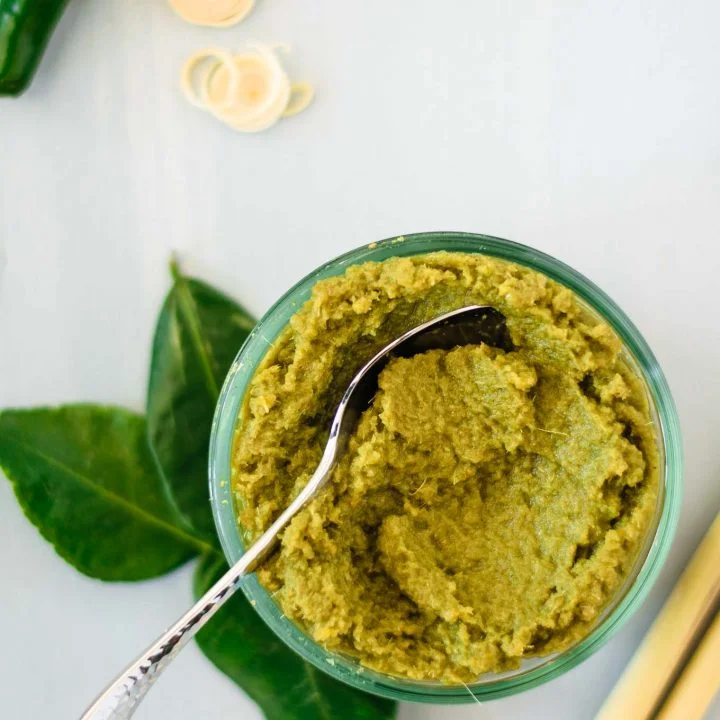
This Thai green curry paste blends fresh aromatics, herbs and toasted spices into a fragrant base for curries. It takes about 15 minutes to make, and its flavour deepens after resting overnight.
Ingredients
- 2 g (1 tsp)whole cumin seeds
- 3 g (2 tsp)whole coriander seeds
- 35 g (¼ cup), about 2 stalkslemongrass, thinly sliced
- 11 g (½ cup), about 12 stemsloosely packed coriander stems and leaves
- 4serrano chillies, coarsely chopped
- 125 g (1 cup)shallot, coarsely chopped
- 25 g (3 tbsp), about 8 clovesgarlic, coarsely chopped
- 14 g (2 tbsp)ginger or galangal, coarsely chopped
- 1 small double-sided leafkaffir lime leaf, finely chopped
- 1 tbspsoy sauce
- 1 tspwhite pepper
Instructions
- 1
Toast the seeds
Toast the cumin and coriander seeds in a non-stick frying pan over low heat for 2–4 minutes, until slightly darker and fragrant. Grind them to a powder using a spice grinder, a pestle and mortar, or a rolling pin and a zip-lock bag.
- 2
Blend the paste
Put the sliced lemongrass in a narrow-based blender or small food processor and pulse until finely chopped. Add the ground spices and all the remaining ingredients, then blend until fairly smooth, scraping down the sides as needed. Add a little water if necessary to help the mixture move.
- 3
Chill and store
Refrigerate the paste; its flavours meld and taste better after an overnight rest. It keeps for about a week in the fridge and can be frozen for longer storage.
What is Thai green curry paste?
Green curry paste is a Thai cooking base made by pounding or blending fresh aromatics, herbs and spices into a concentrated mixture. This homemade version uses lemongrass, chillies, coriander and lime leaf for its fresh, citrusy character.
Toasted cumin and coriander add depth, while the shallot, garlic and ginger or galangal build a savoury, fragrant foundation. Blending the ingredients finely makes the paste easy to stir into a curry.
Nutrition and macros by portion
The nutrition label shows one serving as written: 240 calories, 8g protein, 51g carbs, 2g fat.
| Portion | Adjustment | kcal | Protein | Carbs | Fat |
|---|---|---|---|---|---|
| Lighter | Use less paste | 168 kcal | 6g | 36g | 1g |
| This serving | As written | 240 kcal | 8g | 51g | 2g |
| Hungry | Make a larger curry | 360 kcal | 12g | 77g | 3g |
Most of the carbohydrates come from the shallot, lemongrass and other vegetables; the cumin and coriander seeds contribute a small amount of fat, while the herbs, garlic and ginger add modest amounts of protein. The soy sauce contributes much of the sodium. Since this is a concentrated paste rather than a complete meal, pair a serving of curry made with it with vegetables and a suitable protein source.
Why toast the spices?
Whole cumin and coriander seeds are toasted briefly before grinding to bring out their aroma. Keep the pan over low heat and watch for a slight change in colour and a fragrant smell; the seeds can scorch if left unattended.
Grind them after toasting so they combine evenly with the fresh ingredients. A spice grinder is quick, while a pestle and mortar or rolling pin also works.
Prep the aromatics
Lemongrass: Slice it thinly before blending, as the first pulse helps break down its fibrous texture.
Chillies: Coarsely chop the serranos so they are easier to process. Their seeds and membranes contribute heat, so keep or remove them according to your preference.
Herbs and roots: Use the coriander stems as well as the leaves, and chop the shallot, garlic and ginger or galangal to help the blender.
Getting the texture right
The finished paste should be relatively smooth, but it does not need to be perfectly uniform. Stop and scrape down the sides if larger pieces cling to the bowl.
If the ingredients are not moving, add just a little water to help them blend. Too much can make the paste runny, so add it gradually.
Choose ginger or galangal
The recipe gives a choice of ginger or galangal. Ginger is a practical substitute when galangal is unavailable, while galangal gives the paste a distinctive, peppery citrus note.
Fresh kaffir lime leaf adds a bright fragrance. Chop it finely so it disperses throughout the paste rather than leaving large pieces.
Rest before using
The paste can be used as soon as it is blended, but an overnight rest in the fridge gives the flavours time to meld. Make it ahead when you want to shorten the preparation for a curry.
Stir it into a curry base according to the recipe you are following, then adjust the seasoning of the finished dish to taste.
Ways to use the paste
Use the paste as a flavour base for a Thai-style curry with coconut milk, vegetables, tofu, chicken or prawns. It also works in soups or marinades when used in smaller amounts.
For a balanced meal, serve a curry made with the paste alongside rice and a generous portion of vegetables.
Recipe notes & tips
- Toast the seeds gently and take them off the heat as soon as they smell fragrant.
- Chop the lemongrass thinly so it blends more easily.
- Scrape the blender or processor sides whenever ingredients stick.
- Add water a little at a time only if the mixture will not move.
- Let the paste rest overnight in the fridge for a more melded flavour.
Variations
- Use galangal: Choose it instead of ginger for a peppery, citrusy aromatic note.
- Adjust the heat: Remove some chilli seeds and membranes for a milder paste.
- Add more lime leaf: Use a little extra finely chopped leaf for a brighter citrus aroma.
- Use a pestle and mortar: Pound the ingredients in batches if you do not have a suitable blender.
- Make it ahead: Freeze portions so you can use only what you need for a future curry.
Common mistakes to avoid
- Scorching the seeds: Keep the pan on low heat and remove the seeds when fragrant and slightly darker.
- Leaving lemongrass in large pieces: Slice it thinly and pulse it before adding the other ingredients.
- Overfilling a large blender: Use a narrow-based blender or small food processor so the ingredients can circulate.
- Adding too much water: Add only a small amount when needed to help the mixture blend.
- Skipping the scrape-down: Stop and scrape the sides so the paste blends evenly.
How to store
Keep the paste in a covered container in the fridge for about a week. For longer storage, freeze it in portions; thaw what you need in the fridge before using.
Frequently asked questions
Can I use ginger instead of galangal?
Yes. The recipe allows either ginger or galangal; ginger is a convenient alternative if galangal is hard to find.
How spicy is this paste?
It contains four serrano chillies, so it can be quite hot. For a milder paste, remove some of the seeds and membranes before blending.
Can I use a pestle and mortar?
Yes. The toasted seeds can be ground with a pestle and mortar, and you can use it to work the remaining ingredients into a paste in batches.
Does the paste need to rest overnight?
No, you can use it straight away. Resting it overnight in the fridge lets the flavours meld and is recommended for the best flavour.
How long does homemade green curry paste keep?
It keeps for about a week in the fridge and freezes well for longer storage.
Why is my paste not blending?
Pause to scrape down the sides and help the ingredients settle towards the blades. If they still will not move, add a little water and blend again.
Cook it from the original
This recipe comes from thecuriouschickpea.com. Their page has the author’s own photos, notes and tips — the best place to cook it from.
Open the recipe on thecuriouschickpea.com