
Classic Garlic & Lemon Hummus
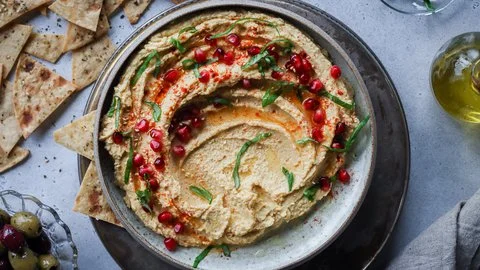
This quick, smooth hummus brings together chickpeas, tahini, garlic and lemon in a versatile Mediterranean-inspired dip. Make it in minutes for dipping vegetables, spreading in sandwiches or adding to bowls.
Ingredients
- 360 g (1½ cups)cooked chickpeas
- 1lemon
- 30 ml (2 tbsp)tahini
- 15 ml (1 tbsp)extra-virgin olive oil
- 2garlic cloves
- 2.5 ml (½ tsp)salt
- 60 ml (¼ cup)ice water
Instructions
- 1
Blend the ingredients
Put the chickpeas, lemon, tahini, olive oil, garlic and salt in a food processor, leaving out the water. Blend on high until smooth.
- 2
Add half the water
With the processor running, pour in half the ice water in a thin, steady stream. If you prefer, add all the water with the other ingredients at the start.
- 3
Adjust and serve
Taste the hummus. If it is too thick, blend in the remaining water; for a creamier texture, add more olive oil and/or tahini, or add lemon juice for extra zest. Plate, garnish as desired and serve.
What is hummus?
Hummus is a Middle Eastern and Mediterranean-region dip made most often from chickpeas, tahini, lemon and garlic. This version keeps to that familiar combination and uses a food processor for a quick, smooth result.
The ice water helps loosen the chickpeas as they blend, while lemon and garlic bring brightness and bite. Serve it as a dip, spread or savoury addition to a meal.
Nutrition and macros by portion
The nutrition label shows one serving as written: 125 calories, 5g protein, 14g carbs, 6g fat.
| Portion | Adjustment | kcal | Protein | Carbs | Fat |
|---|---|---|---|---|---|
| Lighter | Use less olive oil | 88 kcal | 3g | 10g | 4g |
| This serving | As written | 125 kcal | 5g | 14g | 6g |
| Hungry | Serve a larger portion | 188 kcal | 7g | 21g | 9g |
The chickpeas provide most of the carbohydrates and contribute some protein, while tahini and olive oil supply much of the fat. Pair a serving with vegetables and a protein-rich accompaniment to make a more balanced plate.
The ingredients that matter
Chickpeas: cooked chickpeas form the base, so drain them well if they come from a tin. Their softness makes it easier to blend the hummus evenly.
Tahini and oil: tahini brings a nutty, savoury character, while extra-virgin olive oil adds richness. The recipe suggests adding more of either if you want a creamier finish.
Lemon and garlic: lemon juice gives the dip its fresh edge, and garlic adds savoury warmth. Taste before serving so you can adjust the lemon to suit.
Getting a smooth texture
Blend the ingredients thoroughly before judging the consistency. Scrape down the sides of the processor if chickpeas or tahini cling there, then blend again until the mixture looks even.
Add the ice water gradually rather than tipping it all in at once. This gives you more control over how thick or loose the finished hummus becomes.
Adjusting the flavour
Taste the hummus after blending and before plating. Add the remaining water if it feels too thick, or a little extra lemon juice if you want more zest.
More tahini or olive oil can make the texture richer and creamier. Add these in small amounts and blend again, since they also change the flavour.
How to serve it
Spoon the hummus into a shallow dish and serve it with vegetable sticks, crackers or warm flatbread. It also works as a spread in sandwiches and wraps.
For a meal, add a spoonful to a nourish bowl or use it as a base for a pasta sauce or salad dressing. Keep the hummus plain if you want it to work across several dishes.
Timing and preparation
The stated total time is 5 minutes, and the food processor does most of the work. Measure out the ingredients before blending so you can add the water steadily.
Because the recipe is served straight after blending, make any texture and seasoning adjustments before plating. If preparing ahead, chill it and stir before serving.
Recipe notes & tips
- Drain canned chickpeas well so excess liquid does not thin the hummus.
- Pour the water in gradually to control the final consistency.
- Let the food processor run long enough for the chickpeas to become smooth.
- Taste before serving and adjust the lemon juice to your preference.
- Scrape down the processor bowl if ingredients collect on the sides.
Variations
- More lemon: Blend in extra lemon juice for a sharper, brighter dip.
- Extra tahini: Add a little more tahini for a richer, nuttier flavour.
- Roasted garlic: Use roasted garlic instead of raw for a milder taste.
- Herb finish: Stir through chopped parsley or coriander before serving.
- Spiced topping: Dust the plated hummus with paprika or ground cumin.
Common mistakes to avoid
- Adding all the water at once: the hummus may turn too loose; blend in the water gradually.
- Under-blending: a grainy texture can remain; continue processing until smooth.
- Skipping the taste test: lemon and garlic can vary in strength; taste and adjust before serving.
- Using poorly drained chickpeas: extra liquid can make the hummus thin; drain them thoroughly.
- Adding extra oil too quickly: the dip can become overly rich; blend in small additions and reassess.
How to store
Keep leftover hummus in an airtight container in the fridge and use within 3–4 days. Stir before serving; if it has thickened, loosen it with a little water.
Frequently asked questions
Can I make this hummus without a food processor?
A food processor gives the smoothest result, but you can try a powerful blender. Stop to scrape down the sides as needed.
Do I have to add the ice water while blending?
No. The recipe allows you to add the water with the other ingredients at the start, though adding it gradually makes the consistency easier to control.
What can I use if I do not have tahini?
Tahini is a defining ingredient in this recipe, so leaving it out will change the flavour. You can still blend the chickpeas with the other ingredients, adjusting the water to suit.
How can I make the hummus creamier?
Blend in a little more olive oil and/or tahini, as suggested in the recipe. Add small amounts, then taste and check the texture.
What should I serve with hummus?
Try vegetable sticks, crackers or flatbread, or spread it in sandwiches and wraps. It also works as a topping for bowls.
Cook it from the original
This recipe comes from pickuplimes.com. Their page has the author’s own photos, notes and tips — the best place to cook it from.
Open the recipe on pickuplimes.com