
Golden Overnight Couscous
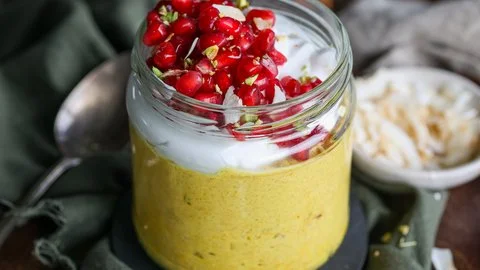
This Middle Eastern-inspired breakfast combines couscous soaked overnight in coconut milk with tahini, apricots and warming spices. It is a make-ahead alternative to porridge, finished with coconut yoghurt, pomegranate and pistachios.
Ingredients
- 180 ml (¾ cup)light canned coconut milk
- 45 g (¼ cup)couscous
- 30 g (2 tbsp)tahini
- 3dried apricots
- 5 ml (1 tsp)maple syrup
- ½ tsporange zest
- ½ tspground cinnamon
- ¼ tspground turmeric
- 1 pinchground black pepper
- 120 g (½ cup)unsweetened coconut yoghurt
- 35 g (¼ cup)pomegranate seeds
- 8 g (1 tbsp)unsalted roasted pistachios
Instructions
- 1
Combine ingredients
Put the coconut milk, couscous, tahini, dried apricots, maple syrup, orange zest, cinnamon, turmeric and black pepper into a jar, then mix them together.
- 2
Chill overnight
Cover the jar and leave it in the fridge overnight.
- 3
Add toppings
In the morning, add any desired toppings and serve.
What is overnight couscous?
Couscous is a small pasta made from wheat semolina and is used in dishes across North Africa and the Middle East. Here, it is treated as a breakfast grain, softened in liquid in the fridge rather than cooked on the hob.
This version is Middle Eastern-inspired rather than a traditional regional breakfast. Tahini, cinnamon and turmeric give the mixture a nutty, gently spiced flavour, while apricots add sweetness.
Nutrition and macros by portion
The nutrition label shows one serving as written: 711 calories, 15g protein, 86g carbs, 37g fat.
| Portion | Adjustment | kcal | Protein | Carbs | Fat |
|---|---|---|---|---|---|
| Lighter | Use less tahini | 498 kcal | 10g | 60g | 26g |
| This serving | As written | 711 kcal | 15g | 86g | 37g |
| Hungry | Make a larger serving | 1067 kcal | 22g | 129g | 56g |
Couscous and apricots provide most of the carbohydrates, while coconut milk and tahini contribute much of the fat. The couscous, tahini, yoghurt and pistachios also contribute protein; for a more balanced plate, pair the serving with fresh fruit.
Why these ingredients work
Coconut milk: its richness softens the couscous as it rests and gives the breakfast a creamy base.
Tahini and spices: tahini brings a savoury, toasted sesame note, while cinnamon, turmeric, pepper and orange zest add warmth and fragrance.
Apricots: chopped dried fruit is easy to stir through before chilling and lends sweetness to the couscous.
Getting the texture right
Mix thoroughly so the couscous is evenly coated and the tahini is distributed through the coconut milk. The mixture should be moist before it goes into the fridge.
After chilling, the couscous should be tender and have absorbed much of the liquid. If it seems firmer than you like, stir it well before adding the toppings.
Plan the overnight rest
The method needs an overnight chill, so prepare the jar the evening before you want to eat. Keeping it covered in the fridge gives the couscous time to soften without any morning cooking.
Add the coconut yoghurt, pomegranate and pistachios in the morning, as directed, for a fresh contrast to the softened mixture.
Finishing and serving
Coconut yoghurt adds a cool, creamy topping; pomegranate seeds bring juicy tartness, and pistachios contribute crunch. Add them just before serving so their textures remain distinct.
The recipe makes one serving. If you want a more substantial breakfast, serve it with another piece of fruit or a side that suits your appetite.
Recipe notes & tips
- Stir the tahini into the liquid thoroughly to prevent dense pockets.
- Chop the apricots if you prefer smaller pieces in each spoonful.
- Use a jar with enough room to mix the ingredients easily.
- Keep the jar covered while it rests in the fridge.
- Add the yoghurt, pomegranate and pistachios just before serving.
Variations
- Use fresh citrus: add a little extra orange zest for a brighter aroma.
- Change the dried fruit: replace the apricots with another chopped dried fruit.
- Add extra crunch: scatter on more roasted pistachios when serving.
- Adjust the spice: increase or reduce the cinnamon to suit your taste.
- Try another topping: add a fruit topping of your choice in the morning.
Common mistakes to avoid
- Uneven mixing: stir the tahini into the coconut milk well before chilling.
- Skipping the rest: leave the jar overnight so the couscous has time to soften.
- Leaving the jar uncovered: cover it before placing it in the fridge.
- Adding toppings too early: wait until morning to add the yoghurt, pomegranate and pistachios.
- Expecting cooked-grain texture: check the couscous after its overnight soak and stir before serving.
How to store
Keep the covered jar in the fridge and eat it the next morning. The method specifies an overnight rest and does not give a longer storage period; add the toppings just before serving. This recipe is served chilled, so reheating is not needed.
Frequently asked questions
Can I make this without a jar?
Yes. Use another covered container that is large enough to mix the ingredients and hold the overnight portion.
How long does the couscous need to chill?
The recipe calls for an overnight rest in the fridge.
Should I cook the couscous first?
No cooking step is included. The couscous softens in the coconut milk as it rests overnight.
When should I add the toppings?
Add the coconut yoghurt, pomegranate seeds and pistachios in the morning, just before serving.
Can I use a different dried fruit?
Yes, you can swap the apricots for another chopped dried fruit, though the sweetness and flavour will change.
Cook it from the original
This recipe comes from pickuplimes.com. Their page has the author’s own photos, notes and tips — the best place to cook it from.
Open the recipe on pickuplimes.com