
Rice and Chickpea Salad with Peanut Sauce
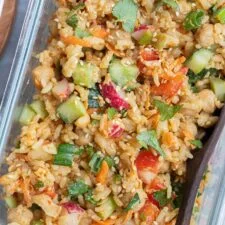
This colourful rice and chickpea salad combines crisp vegetables, herbs and toasted sesame seeds with a creamy, savoury peanut sauce. Serve it warm or cold for an easy plant-based lunch that is simple to portion ahead.
Ingredients
- 710 ml (3 cups)cooked rice, white or brown
- 2 cans (425 g / 15 oz each)chickpeas, drained and rinsed
- 240 ml (1 cup)cucumber, diced
- 1 smallred pepper, diced
- 240 ml (1 cup)carrot, shredded
- 240 ml (1 cup)celery, diced
- 120 ml (½ cup)radish, thinly sliced
- 120 ml (½ cup)spring onion, thinly sliced
- 120 ml (½ cup)coriander, chopped
- 80 ml (⅓ cup)sesame seeds, toasted
- 120 ml (½ cup)natural smooth peanut butter, preferably with no added sugar
- 60 ml (¼ cup)tamari or soy sauce
- 30 ml (2 tablespoons)rice wine vinegar or distilled white vinegar
- 10 ml (2 teaspoons)pure maple syrup
- 10 ml (2 teaspoons)toasted sesame oil
- 1–2 clovesgarlic, grated
- 5 ml (1 teaspoon)fresh ginger, grated
- 5–10 ml (1–2 teaspoons)garlic chilli paste or chilli crunch
- 15–30 ml (1–2 tablespoons)water, at room temperature
- to tastesalt, if desired
Instructions
- 1
Combine the salad
Put the cooled rice and chickpeas in a large bowl. Add the cucumber, celery, red pepper, radish, carrot, spring onion and coriander, then mix briefly.
- 2
Make the sauce
In a medium bowl, stir together all the peanut sauce ingredients except the water. Add water as needed to thin the sauce, depending on how creamy the peanut butter is; about 30 ml (2 tablespoons) was used here.
- 3
Dress and serve
Pour the peanut sauce over the rice salad and add the toasted sesame seeds. Mix thoroughly so everything is coated. Divide into meal-prep containers and refrigerate until needed, or serve straight away or at room temperature.
What is rice and chickpea salad?
This is an American-style composed salad built around cooked rice, chickpeas and a generous mix of chopped vegetables. It brings together the filling base of a grain salad with fresh, crunchy ingredients and a creamy dressing.
Peanut sauces appear in many food traditions, so this version is best understood as a flexible home-cooking combination rather than a claim to one specific origin. Its appeal is the contrast of tender rice and chickpeas, crisp vegetables and a savoury, tangy sauce.
Nutrition and macros by portion
The nutrition label shows one serving as written: 463 calories, 18g protein, 81g carbs, 8g fat.
| Portion | Adjustment | kcal | Protein | Carbs | Fat |
|---|---|---|---|---|---|
| Lighter | More vegetables, less rice | 324 kcal | 12g | 57g | 6g |
| This serving | As written | 463 kcal | 18g | 81g | 8g |
| Hungry | Larger portion | 695 kcal | 27g | 121g | 12g |
The rice supplies most of the carbohydrates, while chickpeas contribute both carbohydrates and plant protein. Peanut butter and sesame oil provide much of the fat, with chickpeas adding further protein; serve a portion with extra fresh vegetables for a more abundant plate.
Build the base
Cooled rice: use rice that has been cooked and cooled before mixing, as directed. This helps keep the salad distinct rather than turning it soft and sticky.
Chickpeas: drain and rinse them well before adding. They give the salad a tender, substantial element alongside the rice.
Keep the vegetables crisp
Crunchy additions: cucumber, celery and radish add freshness and bite, while carrot and red pepper bring a softer crunch. Dice or slice them finely enough to distribute through each portion.
Fresh herbs: spring onion and coriander give the mixture a lively finish. Mix them in gently so they remain evenly scattered through the bowl.
Get the sauce consistency right
Smooth mixture: combine the sauce ingredients before adding the water. Peanut butter can vary in thickness, so the amount of water needed is not fixed.
Thin gradually: stir in the water a little at a time until the sauce is pourable enough to coat the salad. The recipe uses about 30 ml (2 tablespoons), but you may need less.
Finish with sesame
Toasted seeds: add the sesame seeds when dressing the salad, then mix thoroughly. They bring a nutty note and small pops of texture throughout.
Even coating: turn the ingredients over from the bottom of the bowl as you mix. This helps distribute the sauce through the rice and chickpeas rather than leaving it pooled in one spot.
Serve it your way
Cold or room temperature: chill the finished salad in meal-prep containers or serve it straight away at room temperature. The recipe also allows for serving it warm, provided the rice is cooled before the salad is assembled.
Simple sides: serve it on its own for lunch, or alongside extra crunchy vegetables or a light soup. Keep any extra sauce separate if you want to adjust the coating at the table.
Recipe notes & tips
- Cool the rice before mixing it with the vegetables and chickpeas.
- Rinse and drain the chickpeas thoroughly so excess liquid does not dilute the dressing.
- Add water to the peanut sauce gradually, since different peanut butters need different amounts.
- Toast the sesame seeds before adding them for a more pronounced nutty flavour.
- Taste the combined salad before adding salt, as tamari or soy sauce is already savoury.
- For meal prep, divide the salad into individual containers once it is thoroughly mixed.
Variations
- Use brown rice: swap in cooked brown rice for a nuttier base.
- Adjust the heat: use the lower amount of chilli paste for a milder dressing.
- Change the vinegar: use distilled white vinegar if rice wine vinegar is unavailable.
- Choose tamari: use tamari in place of soy sauce if that is your preference.
- Add extra crunch: increase the cucumber or radish while keeping the rest of the ingredients the same.
Common mistakes to avoid
- Using hot rice: it can soften the vegetables; cool the cooked rice before combining.
- Adding all the water at once: the sauce may become too thin; stir it in gradually.
- Leaving chickpeas wet: excess liquid can loosen the dressing; drain and rinse them well.
- Under-mixing the salad: some portions may lack sauce; fold thoroughly until the ingredients are coated.
- Over-salting early: tamari or soy sauce is already salty; taste the finished mixture before seasoning.
How to store
Store the salad in airtight containers in the refrigerator and eat within 3–4 days. Serve it chilled or bring a portion to room temperature before eating; if the dressing thickens, stir in a small splash of water.
Frequently asked questions
Can I make this salad ahead?
Yes. Mix it and portion it into meal-prep containers, then refrigerate until ready to eat.
Can I serve it warm?
Yes, it can be served warm or cold. The method calls for cooled rice when assembling the salad, and also says it can be served immediately or at room temperature.
How much water should I add to the peanut sauce?
Start with a little and add more until it is pourable. The recipe uses about 30 ml (2 tablespoons), though the amount depends on the peanut butter.
Can I use white or brown rice?
Either works; use 710 ml (3 cups) cooked rice, as listed.
Can I use soy sauce instead of tamari?
Yes. The recipe allows either tamari or soy sauce in the dressing.
When should I add the sesame seeds?
Add the toasted sesame seeds when you pour the sauce over the salad, then mix everything together.
Cook it from the original
This recipe comes from shelikesfood.com. Their page has the author’s own photos, notes and tips — the best place to cook it from.
Open the recipe on shelikesfood.com