
Microwave Poached Eggs
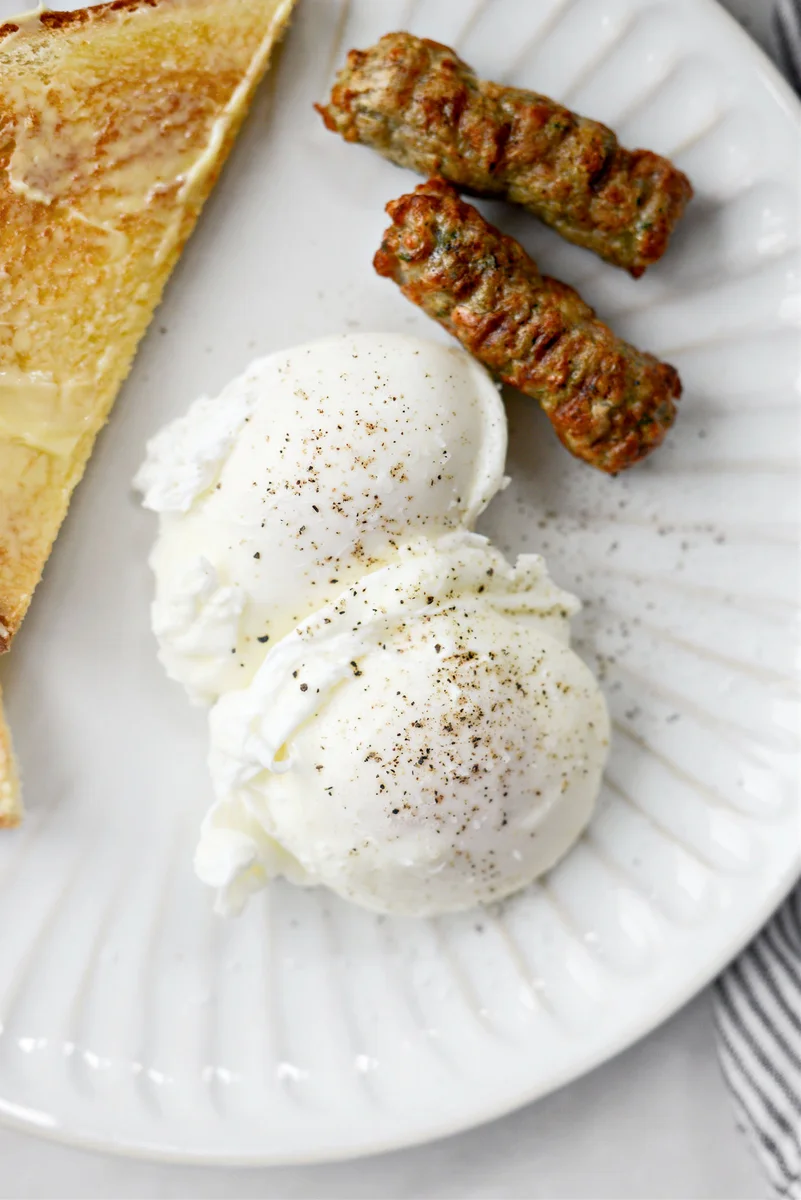
Microwave poached eggs offer a quick way to get a tender white and runny yolk without a pan of simmering water. Vinegar helps the egg hold its shape, while short bursts in the microwave make it easy to check for doneness.
Ingredients
- 240 ml (1 cup)water
- 1¼ teaspoonswhite vinegar
- 1 largeegg
- to tastekosher salt, for serving
- to tastefreshly ground black pepper, for serving
Instructions
- 1
Boil the water
Bring 240 ml (1 cup) of water to a boil.
- 2
Add the vinegar
While the water heats, pour 1¼ teaspoons of white vinegar into a microwave-safe ramekin or bowl.
- 3
Crack the egg
Crack the egg into a separate small bowl.
- 4
Combine carefully
When the water boils, carefully pour it into the ramekin with the vinegar. Slowly lower the egg into the hot liquid straight away, taking care not to splash.
- 5
Cook the egg
Use oven mitts or a thick towel to move the ramekin into the microwave. Cook for 20 to 30 seconds, then carefully remove it, using a towel if the ramekin is hot.
- 6
Flip and finish
With a slotted spoon, gently turn the egg over. Microwave for another 15 to 20 seconds, or until the white is set. Lift the egg out with the slotted spoon and let it drain on kitchen paper.
- 7
Make a second egg
To make two eggs, start the second one as the first drains. Pour the remaining boiling water into a second ramekin, add the other egg carefully and microwave for 30 seconds. Carefully flip the egg in the vinegar water, then microwave for another 15 to 20 seconds, or until the white is set. Transfer it to a kitchen-paper-lined plate before serving. Cooking two eggs at once can change the timing.
- 8
Choose a serving
For ideas on how to enjoy poached eggs, consult the publisher’s accompanying post.
What are microwave poached eggs?
A poached egg is cooked without its shell in hot liquid, leaving a soft yolk surrounded by a tender white. This American-style microwave method uses vinegar water in a small dish instead of a saucepan, making it a convenient option for a single serving.
The short cooking intervals are central to the method: they let you check the white and adjust the timing for your microwave.
Nutrition and macros by portion
The nutrition label shows one serving as written: 145 calories, 13g protein, 1g carbs, 10g fat.
| Portion | Adjustment | kcal | Protein | Carbs | Fat |
|---|---|---|---|---|---|
| Lighter | Use less added salt | 102 kcal | 9g | 1g | 7g |
| This serving | As written | 145 kcal | 13g | 1g | 10g |
| Hungry | Make a second egg | 218 kcal | 20g | 2g | 15g |
The egg provides most of this serving’s protein and fat, while the water and vinegar contribute little energy; the listed carbohydrate amount is small. Pair it with toast or vegetables for a more substantial plate, adjusting the sides to suit your appetite.
Why vinegar and a small dish matter
Vinegar: it gives the egg white an acidic cooking liquid, helping it gather around the yolk as it sets.
Ramekin: a small, microwave-safe vessel keeps the egg immersed in the hot water. Choose one with enough room for the water and egg, and handle it carefully once heated.
Adding the egg safely
Hot water: pour the freshly boiled water into the vinegar before adding the egg. Lower the egg in slowly to reduce splashing.
Separate bowl: cracking the egg into a small bowl first makes it easier to slide it into the ramekin gently and check for shell fragments.
How to judge doneness
The method starts with 20 to 30 seconds of microwave cooking, followed by a careful flip and another 15 to 20 seconds. Look for a white that has set; if it is still loose, continue in short intervals and check again.
Microwave power and the shape of the dish can affect the result, so treat the times as a starting point rather than a guarantee.
Draining and serving
Slotted spoon: lift the egg gently so it does not break, then allow excess water to drain back into the ramekin.
Kitchen paper: briefly resting the egg on it removes surface water before serving. Finish with kosher salt and freshly ground black pepper to taste.
Making more than one
The recipe’s two-egg directions cook the eggs one after another, using a second ramekin and the remaining boiling water. The timing for the second egg is 30 seconds, followed by a flip and another 15 to 20 seconds.
The recipe notes that cooking two eggs at the same time can throw off the cooking time. For a more predictable result, prepare them separately.
Recipe notes & tips
- Use a microwave-safe ramekin or bowl that can hold the egg beneath the water.
- Crack the egg into a separate bowl so it is easier to lower gently into the hot liquid.
- Use oven mitts or a thick towel when moving the hot ramekin.
- Check the white after the stated cooking times and add short bursts if it is not yet set.
- Use a slotted spoon to lift the egg and let it drain before serving.
Variations
- Serve on toast: place the drained egg on a slice of toast for a simple breakfast.
- Add greens: serve with cooked spinach or wilted greens alongside.
- Try herbs: finish with chopped chives or parsley for a fresh note.
- Add chilli: sprinkle with chilli flakes for a little heat.
- Make it a pair: prepare a second egg separately, following the recipe’s additional timing.
Common mistakes to avoid
- Adding the egg too quickly: lower it gently into the hot vinegar water to avoid splashing and help it stay intact.
- Overcooking: microwave times vary, so check the white after each short interval.
- Handling the ramekin bare-handed: use oven mitts or a thick towel because the dish and liquid are hot.
- Flipping roughly: turn the egg slowly with a slotted spoon to reduce the chance of breaking it.
- Skipping the drain: let the egg rest on kitchen paper so excess water does not end up on the plate.
How to store
Poached eggs are best served straight away for the softest texture. If you need to hold one briefly, keep it covered in the refrigerator and reheat gently in hot water until warmed through; avoid microwaving it for long, as the yolk can overcook.
Frequently asked questions
Can I cook two eggs at the same time?
The recipe advises against it because cooking times can be less reliable. Prepare the eggs one after another in separate ramekins instead.
Why add vinegar to the water?
The vinegar helps the egg white gather around the yolk as it cooks. Use the specified 1¼ teaspoons.
How do I know when the egg is done?
The white should be set. If it still looks loose after the stated intervals, continue cooking briefly and check again.
Why did my egg cook differently from the suggested time?
Microwaves and dishes can vary, so the same timing may not give identical results. Adjust the cooking time in short increments.
Can I use a mug instead of a ramekin?
Use another microwave-safe vessel only if it can hold the egg and water comfortably. Take care when handling it after heating.
How should I serve the egg?
Drain it on kitchen paper and season with kosher salt and freshly ground black pepper. It also pairs well with toast or vegetables.
Cook it from the original
This recipe comes from simplyscratch.com. Their page has the author’s own photos, notes and tips — the best place to cook it from.
Open the recipe on simplyscratch.com