
Mango and Coconut Pannacotta
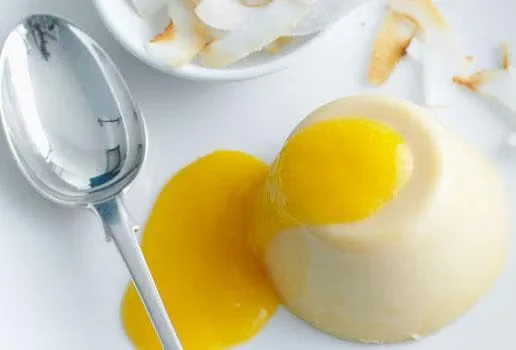
A chilled coconut-flavoured panna cotta served with fresh mango purée and slices. It’s a simple make-ahead dessert with a softly set texture and bright fruit on top.
Ingredients
- 1 can (375 ml)CARNATION Light & Creamy Coconut Flavoured Cooking Milk
- 2 tbspsugar
- 2.5 tspgelatine
- 2.5 tbsphot water
- 1 mediummango, peeled
Instructions
- 1
Warm the milk
Put the coconut-flavoured cooking milk and sugar in a small saucepan. Stir over a low heat until the sugar dissolves.
- 2
Add the gelatine
Dissolve the gelatine in the hot water, then stir it into the milk mixture and mix well.
- 3
Prepare the mango
Purée one mango cheek and slice the remaining cheek, setting the slices aside for serving. Stir 60 ml (¼ cup) of the purée into the milk mixture and reserve the rest.
- 4
Chill and serve
Pour the mixture into 4 individual serving dishes and leave it to cool. Cover and refrigerate until set, then turn out and decorate with the reserved mango purée and slices.
What is panna cotta?
Panna cotta is an Italian chilled dessert whose name means “cooked cream”. Gelatine sets the sweetened dairy mixture into a delicate, spoonable pudding.
This version uses coconut-flavoured cooking milk and mango rather than relying on cream alone. The fruit adds a fresh, tangy contrast to the mellow coconut flavour.
Nutrition and macros by portion
The nutrition label shows one serving as written: 160 calories, 10g protein, 26g carbs, 2g fat.
| Portion | Adjustment | kcal | Protein | Carbs | Fat |
|---|---|---|---|---|---|
| Lighter | Use less sugar | 112 kcal | 7g | 18g | 1g |
| This serving | As written | 160 kcal | 10g | 26g | 2g |
| Hungry | Serve a larger portion | 240 kcal | 15g | 39g | 2g |
The mango and sugar provide most of the carbohydrates, while the coconut-flavoured cooking milk contributes the fat and gelatine contributes protein. For a more balanced plate, serve a portion with extra fresh fruit rather than a very sugary accompaniment.
Getting the gelatine right
Dissolve first: stir the gelatine into the hot water until it has dissolved before adding it to the milk mixture. This helps it distribute evenly through the dessert.
Combine thoroughly: stir the gelatine mixture well into the warmed milk. Avoid letting the milk boil; the recipe only calls for gentle heating to dissolve the sugar.
Working with the mango
Purée: blend one cheek until smooth, then measure 60 ml for the panna cotta mixture. Keep the remaining purée for the topping.
Slice: cut the other cheek into pieces for serving. Adding the fruit at the end keeps the topping distinct from the softly set base.
Setting and unmoulding
Chill until set: the recipe gives no fixed refrigeration time, so allow enough time for the mixture to firm up before serving. Keep the dishes covered as they chill.
Turn out gently: if the panna cotta resists, briefly dip the outside of a dish in warm water and try again. Take care not to let water reach the dessert.
Serving ideas
Add the reserved mango purée and slices just before serving for a fresh, colourful finish. The fruit also brings a juicy contrast to the smooth, lightly set pudding.
Serve the individual portions on their own or alongside extra fresh fruit. Keep additions simple so the coconut and mango remain the main flavours.
Recipe notes & tips
- Keep the saucepan over a low heat while dissolving the sugar.
- Stir the gelatine mixture in well so the set is even throughout.
- Measure 60 ml of mango purée for the panna cotta and save the rest for serving.
- Cover the dishes before refrigerating to protect the surface.
- Wait until the panna cotta is fully set before attempting to turn it out.
Variations
- Lime finish: add a little finely grated lime zest to the mango topping.
- Passion fruit: spoon passion fruit pulp over the set panna cotta with the mango.
- Mango layers: divide some of the reserved purée between the dishes before chilling for a fruit layer.
- Toasted coconut: scatter a small amount of toasted coconut over the topping just before serving.
Common mistakes to avoid
- Boiling the milk: keep it over low heat, as the method only requires warming it until the sugar dissolves.
- Adding undissolved gelatine: dissolve it in the hot water first, then stir it thoroughly into the milk.
- Using too much purée in the base: measure 60 ml for the mixture and reserve the remainder for serving.
- Uncovering the dishes in the fridge: cover them while chilling to keep the surface protected.
- Turning out too soon: wait until the panna cotta has set before unmoulding.
How to store
Keep the covered panna cottas refrigerated and serve chilled. For the best texture and fresh mango topping, eat them within 2 days; add the reserved fruit shortly before serving.
Frequently asked questions
How long does panna cotta take to set?
The recipe does not specify a chilling time. Refrigerate it until firm enough to hold its shape when turned out.
Can I serve it in the dishes?
Yes. The method suggests turning out the panna cotta, but you can serve it straight from the individual dishes if you prefer.
Can I make it ahead?
Yes. Chill the covered portions ahead of serving and add the reserved mango purée and slices just before they go to the table.
What if I do not want to unmould it?
Leave each portion in its serving dish and spoon the reserved mango purée and slices over the top.
Can I use frozen mango?
Thaw it fully and drain away excess liquid before puréeing or slicing. Fresh mango is the ingredient specified in this recipe.
Cook it from the original
This recipe comes from recipes.com.au. Their page has the author’s own photos, notes and tips — the best place to cook it from.
Open the recipe on recipes.com.au