
Chickpea Curry
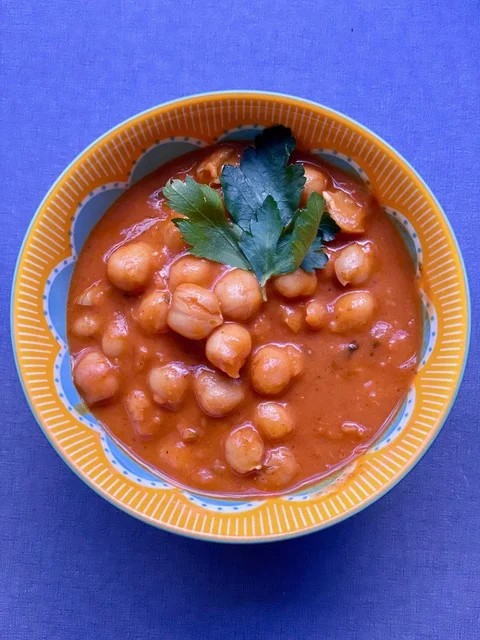
This chickpea curry simmers chickpeas in a gently spiced coconut and tomato sauce, finished with lime and fresh coriander. It makes a warming vegan meal in about 30 minutes, with plenty of flavour from a short spice-cooking step.
Ingredients
- 800 g (2 cans)chickpeas
- 1onion
- 30 gginger
- 2 clovesgarlic
- 15 ml (1 Tbsp)ghee, coconut oil or neutral oil
- 15 ml (1 Tbsp)brown sugar
- 400 mlcoconut milk
- 200 mltomato passata
- 1lime, for zest and juice
- 4 stalksfresh coriander
- 30 ml (2 Tbsp)curry powder
- 5 ml (1 tsp)ground cumin
- 5 ml (1 tsp)ground coriander
- to tastesalt
- to taste, optionalchilli
Instructions
- 1
Chop the aromatics
Cut the onion, garlic and ginger into small cubes.
- 2
Prepare the herbs
Chop the coriander. For a hotter curry, deseed and chop the chilli.
- 3
Brown the aromatics
Heat a wok and add the ghee or chosen oil. Brown the onion, ginger and garlic. If using chilli, add 1 deseeded chilli.
- 4
Cook the spices
Add the sugar and spices, then stir in half of the chopped coriander. Cook for 1 minute to release their flavours.
- 5
Simmer the sauce
Pour in the tomato passata and coconut milk and simmer for about 10 minutes. Meanwhile, drain the chickpeas in a sieve.
- 6
Add the chickpeas
Stir the chickpeas into the wok and simmer for another 5 minutes.
- 7
Finish with lime
Grate some lime zest over the curry and add 1 teaspoon of lime juice.
- 8
Garnish and serve
Scatter the remaining coriander over the curry and serve.
What is chickpea curry?
Chickpea curry is a broad family of spiced dishes found in many South Asian food traditions, with countless regional and home-cooked versions. This quick version combines chickpeas with coconut milk and tomato for a creamy, gently tangy sauce.
The method builds flavour by briefly cooking the spices with the aromatics before adding the liquids. Lime and fresh coriander bring a bright finish that balances the richness.
Nutrition and macros by portion
The nutrition label shows one serving as written: 425 calories, 13g protein, 42g carbs, 25g fat.
| Portion | Adjustment | kcal | Protein | Carbs | Fat |
|---|---|---|---|---|---|
| Lighter | Use light coconut milk | 298 kcal | 9g | 29g | 18g |
| This serving | As written | 425 kcal | 13g | 42g | 25g |
| Hungry | Add rice or flatbread | 638 kcal | 20g | 63g | 38g |
Chickpeas provide most of the carbohydrates and contribute plant protein, while coconut milk and the cooking fat account for much of the fat. Serve a moderate portion with extra vegetables, or add rice or flatbread if you want a more substantial plate.
The aromatics and spices
Onion, ginger and garlic: Cut them into small, similar-sized pieces so they soften and brown evenly in the wok.
Curry powder and ground spices: Stir them with the sugar and aromatics for 1 minute. Keep them moving so they become fragrant without catching on the pan.
Choose your cooking fat
Ghee: It gives the curry a rich flavour, but it is not vegan.
Coconut or neutral oil: Either works as a plant-based alternative. Use the same 1 tablespoon measure, and let the aromatics brown gently rather than scorching.
Getting the sauce texture right
Coconut milk and passata: Together they make a creamy, tomato-based sauce. Simmer them for about 10 minutes before adding the chickpeas so the flavours have time to come together.
Chickpeas: Drain them before they go into the wok. Simmer for 5 minutes more, just long enough to heat them through and coat them in sauce.
Finish with fresh flavour
Lime: Add the zest and 1 teaspoon of juice at the end, rather than simmering them in the sauce. This keeps their fresh, sharp flavour noticeable.
Coriander: Half goes into the curry with the spices and the rest is used as a garnish. If you prefer a milder finish, add less of the raw garnish.
Adjust the heat
Chilli: The optional chilli is added with the aromatics, so its heat spreads through the sauce as it cooks. Removing the seeds makes it milder, while leaving them in gives a hotter result.
For a curry without chilli, simply leave it out; the curry powder, cumin and coriander still provide plenty of spice.
What to serve with it
Serve the curry with rice or flatbread to make a more filling meal and to catch the sauce. A simple side of greens or another lightly cooked vegetable adds freshness and texture.
Recipe notes & tips
- Drain the chickpeas well so excess canning liquid does not thin the sauce.
- Keep the wok at a moderate heat while browning the onion, ginger and garlic.
- Stir the spices continuously for their 1-minute cooking time to prevent them catching.
- Taste the curry before serving and adjust the salt, lime or chilli to suit.
- Add the lime juice gradually so its sharpness does not overwhelm the coconut sauce.
Variations
- Add spinach: Stir a handful into the curry near the end and cook until wilted.
- Use extra vegetables: Add diced pepper or courgette and soften it with the onion.
- Make it hotter: Add more deseeded or seeded chilli with the aromatics.
- Use a different bean: Swap the chickpeas for drained butter beans.
- Serve with rice: Spoon the curry over cooked rice to make it a fuller meal.
Common mistakes to avoid
- Underdone aromatics: Give the onion, ginger and garlic time to brown gently before adding the spices.
- Scorched spices: Stir them for the full minute and keep them moving over moderate heat.
- Watery curry: Drain the chickpeas thoroughly before adding them to the sauce.
- Overcooked chickpeas: Limit their final simmer to about 5 minutes so they keep their shape.
- Too much lime: Add the teaspoon of juice first, then taste before adding any more.
How to store
Cool leftovers promptly and refrigerate them in a covered container for up to 3 days. Reheat gently in a saucepan, stirring occasionally; add a splash of water if the sauce has thickened. Avoid repeated reheating.
Frequently asked questions
Is this curry vegan?
It is vegan when made with coconut oil or neutral oil rather than ghee. Check that the curry powder and other packaged ingredients suit your needs.
Can I use dried chickpeas?
Yes, but cook them until tender first, then drain them before adding them to the curry. The recipe's timing assumes ready-to-eat canned chickpeas.
Can I make it without a wok?
Yes. Use a large, deep frying pan or saucepan with enough room to stir the sauce and chickpeas comfortably.
How can I make the curry less spicy?
Leave out the optional chilli and choose a mild curry powder. You can also serve the curry with rice or flatbread to soften the heat.
Can I make it ahead?
Yes. Make the curry, cool it and refrigerate it in a covered container. Reheat gently and add the fresh coriander garnish just before serving.
Cook it from the original
This recipe comes from sabrinastable.com. Their page has the author’s own photos, notes and tips — the best place to cook it from.
Open the recipe on sabrinastable.com