
Chicken and pineapple curry – a curry for the whole family
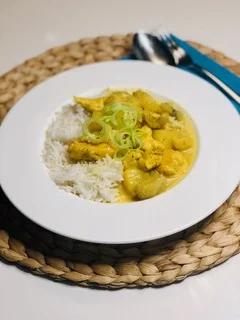
This quick chicken and pineapple curry pairs tender chicken and sweet fruit with creamy coconut milk and Madras curry powder. Serve it with basmati rice for a family-style meal with a fruity, gently spiced sauce.
Ingredients
- 500 gchicken breast
- 15 ml (1 tbsp)ghee
- 400 mlcoconut milk
- 1 tinpineapple
- 2–3 tbsp (30–45 ml)Madras curry powder
- to tastesalt and pepper
- 300 gbasmati rice
Instructions
- 1
Cook the rice
Cook the basmati rice according to the packet instructions.
- 2
Season the chicken
Cut the chicken into small cubes and season with salt and freshly ground pepper.
- 3
Brown the chicken
Melt the ghee in a wok or deep frying pan. Add the chicken and fry, stirring occasionally, until golden.
- 4
Chop the onion
Meanwhile, cut the onion into small dice.
- 5
Add the onion
Add the diced onion to the chicken.
- 6
Cook the spices
Once the onion is translucent, stir in 1 tbsp of curry powder.
- 7
Add pineapple juice
Pour a generous splash of juice from the tin over the chicken.
- 8
Reduce the juice
Simmer for 2 minutes, stirring from time to time.
- 9
Add coconut milk
Pour in two-thirds of the coconut milk and simmer for 5 minutes.
- 10
Prepare the pineapple
If the pineapple is not already cut into small pieces, chop it now.
- 11
Finish the curry
Add the pineapple pieces and juice from the tin, along with the remaining coconut milk. Adjust the flavour with Madras curry powder, salt and pepper.
- 12
Serve with rice
Serve the curry with the basmati rice and enjoy.
- 13
Enjoy your meal
Enjoy your meal!
What is chicken and pineapple curry?
Curry is a broad family of spiced dishes with roots in South Asian cooking, and versions made around the world vary widely. This international-style version combines chicken, coconut milk and tinned pineapple for a creamy sauce with a sweet-fruity note.
The method builds flavour by browning the chicken first, then simmering it with curry powder, pineapple juice and coconut milk. Basmati rice makes a simple base for the sauce.
Nutrition and macros by portion
The nutrition label shows one serving as written: 232 calories, 0g protein, 0g carbs, 0g fat.
| Portion | Adjustment | kcal | Protein | Carbs | Fat |
|---|---|---|---|---|---|
| Lighter | Less rice, more vegetables | 162 kcal | 0g | 0g | 0g |
| This serving | As written | 232 kcal | 0g | 0g | 0g |
| Hungry | Add more rice | 348 kcal | 0g | 0g | 0g |
The rice supplies most of the carbohydrates, while ghee and coconut milk contribute much of the fat. Chicken is the main protein source, with the pineapple adding sweetness. Pair a serving with vegetables or salad for a more balanced plate.
The key ingredients
Chicken breast: Cut it into small, even cubes so the pieces cook at a similar rate and are easy to serve.
Madras curry powder: The recipe starts with 1 tbsp, then calls for more to taste. Add it gradually at the end if you want to control the spice level.
Pineapple: Tinned fruit provides both the pieces and the juice used in the sauce. The method refers to an onion, but the ingredient list does not include one, so check the original recipe if you plan to use it.
Get the chicken golden
Dry the chicken surface if it is wet, then add it to the melted ghee in a single layer where possible. Stir occasionally rather than constantly to give the pieces time to colour.
A deep frying pan or wok gives you room to brown the chicken and simmer the sauce in the same pan. If the pan is crowded, cook the chicken in batches.
Build the sauce
Pineapple juice is added before the coconut milk and simmered for 2 minutes, followed by two-thirds of the coconut milk for 5 minutes. This lets the curry and fruit flavours mingle before the sauce is finished.
Add the remaining coconut milk and pineapple at the later stage, as directed. Taste and adjust the curry powder, salt and pepper before serving.
Check the texture
The chicken should be cooked through, with no pink in the centre; cut through a larger piece to check. Keep the sauce at a gentle simmer rather than a vigorous boil.
The finished sauce should coat the chicken while remaining spoonable. If it thickens more than you like, stir in a little water; if it seems thin, let it simmer briefly.
Time the rice and curry
Start the rice first and follow its packet timing while you prepare the chicken and sauce. The recipe gives 2 minutes for reducing the pineapple juice and 5 minutes for the first addition of coconut milk.
Keep the cooked rice covered until the curry is ready, then fluff it before serving so it separates easily.
What to serve with it
Basmati rice is the specified accompaniment and catches the coconut-pineapple sauce well. Spoon the curry over the rice or serve it alongside.
For a fuller meal, serve with a simple green salad or plain vegetables. Keep the sides lightly seasoned so they do not compete with the curry.
Recipe notes & tips
- Cut the chicken into evenly sized pieces so they cook at a similar pace.
- Brown the chicken in batches if it crowds the pan.
- Use the pineapple juice from the tin for the sauce as directed.
- Begin with 1 tbsp of curry powder and adjust the seasoning at the end.
- Check the rice packet for its cooking time and start it before the curry.
- The method mentions onion, although onion is absent from the ingredient list; check the original recipe for the intended quantity.
Variations
- More vegetables: Stir in quick-cooking vegetables during the sauce simmer.
- Milder curry: Start with less Madras curry powder and add more to taste.
- Fresh pineapple: Use chopped fresh pineapple and add a splash of water in place of the tin juice.
- Extra fruit: Add more pineapple pieces for a sweeter, fruitier curry.
- Rice alternative: Serve with another cooked grain instead of basmati rice.
Common mistakes to avoid
- Crowding the pan: The chicken may steam instead of brown; cook it in batches.
- Adding all the curry powder at once: Start with the 1 tbsp specified in the method and adjust at the end.
- Boiling the sauce hard: Keep it at a gentle simmer to avoid reducing it too quickly.
- Skipping the pineapple juice: Use juice from the tin to give the sauce its fruity flavour.
- Guessing the onion amount: The method mentions onion but the ingredient list does not; check the original recipe before adding it.
How to store
Refrigerate leftover curry and rice separately in covered containers and use within 2 days. Reheat until piping hot throughout, adding a splash of water to the curry if the sauce has thickened.
Frequently asked questions
How much curry powder should I use?
The ingredient list gives 2–3 tbsp, while the method first adds 1 tbsp and then says to season with more. Start with 1 tbsp and add more gradually to taste.
Is the onion included in the recipe?
The method calls for an onion, but the ingredient list does not provide one or specify a quantity. Check the original recipe if you want to follow that step.
Can I use fresh pineapple?
Yes, cut it into small pieces. The recipe uses juice from the tin as well, so fresh pineapple will not provide that same juice.
How can I tell when the chicken is cooked?
Cut into one of the larger pieces; it should be cooked through with no pink in the centre.
Can I make the curry less spicy?
Use less curry powder to start, then taste and add more if needed. Madras curry powder varies in heat between brands.
What can I serve instead of basmati rice?
Another rice variety or a cooked grain can be served with the curry, though basmati is the accompaniment specified in this recipe.
Cook it from the original
This recipe comes from sabrinastable.com. Their page has the author’s own photos, notes and tips — the best place to cook it from.
Open the recipe on sabrinastable.com