
Thai Peanut Dressing
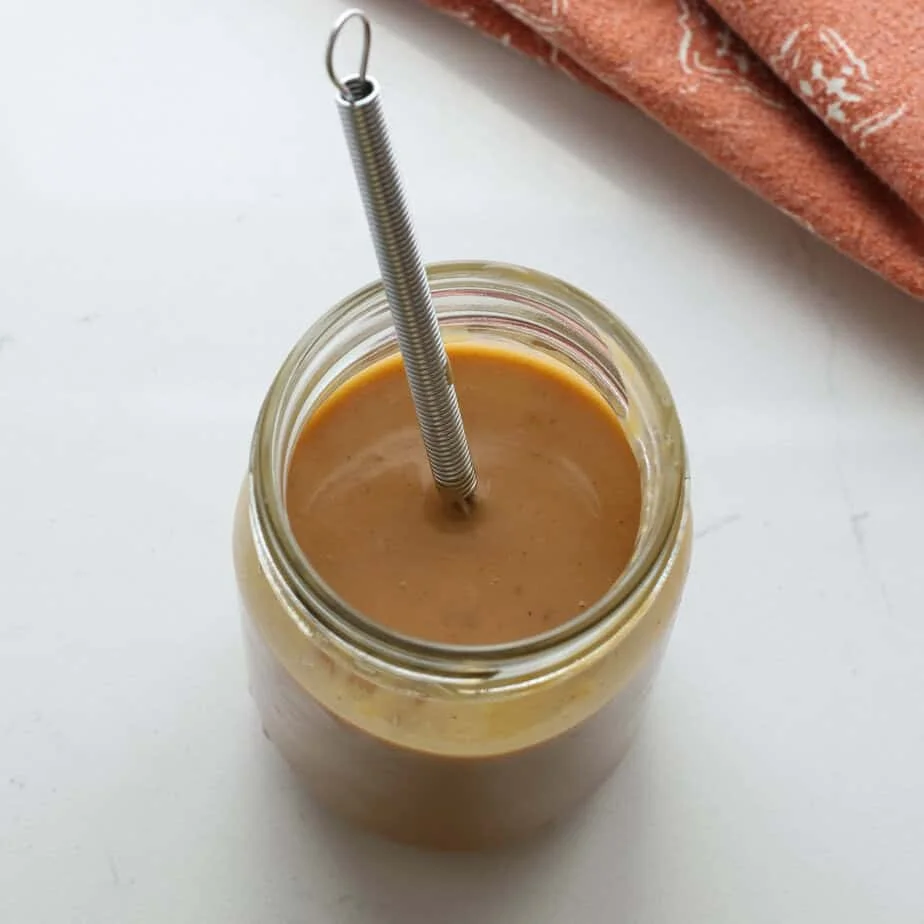
This creamy, Thai-inspired peanut dressing balances savoury soy sauce with honey and fresh lime. Make it in minutes to drizzle over salads and slaws, or use it in wraps and stir-fries.
Ingredients
- 120 g (½ cup)smooth peanut butter
- 45 ml (3 tablespoons)fresh lime juice
- 30 ml (2 tablespoons)reduced-salt soy sauce
- 30 ml (2 tablespoons)honey
- 1 tablespoonfreshly grated ginger
- 2 clovesgarlic, pressed
- 10 ml (2 teaspoons)toasted sesame oil
- 1–2 pinchesred pepper flakes
- 30–45 ml (2–3 tablespoons)cool water
Instructions
- 1
Whisk the ingredients
In a medium bowl, whisk together the peanut butter, lime juice, soy sauce, honey, ginger, garlic, sesame oil and red pepper flakes.
- 2
Adjust the consistency
Whisk in the water 1 tablespoon at a time, using 2–3 tablespoons in total or until the dressing reaches the consistency you want.
- 3
Chill for storage
Transfer the dressing to an airtight container or jar and refrigerate for 5–7 days.
What is Thai peanut dressing?
Peanut dressing is a creamy, savoury-sweet sauce often used with salads, slaws and other dishes. This version draws on Thai-inspired flavours, pairing peanut butter with lime, soy, ginger and a little chilli.
The ingredients are whisked together rather than cooked, so it is quick to make and easy to adjust. Water loosens the thick peanut butter into a dressing that can be drizzled or used as a dip.
Nutrition and macros by portion
The nutrition label shows one serving as written: 101 calories, 3g protein, 7g carbs, 7g fat.
| Portion | Adjustment | kcal | Protein | Carbs | Fat |
|---|---|---|---|---|---|
| Lighter | Use less dressing | 71 kcal | 2g | 5g | 5g |
| This serving | As written | 101 kcal | 3g | 7g | 7g |
| Hungry | Use a larger serving | 152 kcal | 5g | 11g | 11g |
Peanut butter and sesame oil provide most of the fat, while the honey and peanut butter contribute carbohydrates; peanut butter also supplies most of the protein. To balance a meal, serve a measured drizzle with plenty of vegetables and a protein-rich main such as tofu or chicken.
The key ingredients
Peanut butter: smooth peanut butter gives the dressing its creamy body and nutty flavour. Stir it well if the jar has separated before measuring.
Lime and soy: fresh lime juice brings acidity, while reduced-salt soy sauce adds a savoury note. Together, they balance the sweetness of the honey.
Ginger and garlic: freshly grated ginger and pressed garlic add a bright, aromatic edge. Toasted sesame oil rounds out the flavour with its distinctive nuttiness.
Getting the texture right
Water: peanut butter can make the mixture quite thick, so whisk in the cool water gradually, one tablespoon at a time. Stop when it is easy to drizzle or coat your chosen ingredients.
Mixing: whisk thoroughly, scraping the sides and bottom of the bowl so the lime juice and soy sauce are evenly incorporated. The dressing should look smooth and cohesive.
Balancing the flavour
Sweet and sharp: honey softens the tang of the lime, while soy sauce keeps the dressing savoury. Taste the mixture once it is smooth and adjust the balance to suit your palate.
Heat: the recipe uses just 1–2 pinches of red pepper flakes. Start with one pinch if you prefer a milder dressing.
Ways to serve it
Salads and slaws: drizzle the dressing over crisp vegetables, or toss it through a slaw just before serving. Add it gradually so the vegetables are coated without becoming overwhelmed.
Wraps and stir-fries: use it as a sauce for wraps or spoon it over a stir-fry. Its thick, creamy texture also makes it handy as a dip.
Make-ahead timing
Quick preparation: the dressing comes together by whisking, with no cooking required. Allow a few extra moments to add the water gradually and reach your preferred consistency.
Storage: refrigerate it in an airtight container or jar for 5–7 days, as directed in the recipe. If it thickens in the fridge, stir it before serving.
Recipe notes & tips
- Use freshly squeezed lime juice for a bright, clean flavour.
- Grate the ginger finely so it blends smoothly into the dressing.
- Add the water one tablespoon at a time to control how thick the dressing is.
- Begin with one pinch of red pepper flakes, then add the second if you want more heat.
- Whisk again before serving if the dressing has thickened in the fridge.
Variations
- More heat: add another pinch of red pepper flakes to make the dressing spicier.
- Thicker dip: use less water so the finished mixture stays thick enough for dipping.
- Looser drizzle: whisk in the water gradually until the dressing pours easily.
- Extra lime: add a little more fresh lime juice for a sharper, tangier flavour.
- Salad dressing: thin it with the recipe's water until it coats leaves lightly.
Common mistakes to avoid
- Adding all the water at once: the dressing may become too thin; whisk it in one tablespoon at a time.
- Using cold, stiff peanut butter: it can be difficult to blend; stir the peanut butter until smooth before mixing.
- Adding too much chilli: the heat can overpower the other flavours; start with one pinch.
- Stopping whisking too soon: streaks may remain; scrape the bowl and whisk until the mixture is even.
- Leaving it uncovered: the dressing can pick up fridge odours; store it in an airtight container.
How to store
Store the dressing in an airtight container or jar in the refrigerator for 5–7 days. Stir it before serving, and whisk in a little water if it has thickened.
Frequently asked questions
How can I make the dressing thinner?
Whisk in cool water a tablespoon at a time until it reaches the consistency you want.
Can I make it less spicy?
Yes. Use one pinch of red pepper flakes, or leave them out if you prefer no chilli heat.
How long does it keep?
Keep it in an airtight container in the refrigerator for 5–7 days.
What can I serve it with?
It works with salads, slaws, stir-fries and wraps, and can also be served as a dip.
Can I prepare it ahead?
Yes. Make it ahead and refrigerate it in an airtight container; stir it before serving.
Cook it from the original
This recipe comes from smalltownwoman.com. Their page has the author’s own photos, notes and tips — the best place to cook it from.
Open the recipe on smalltownwoman.com